
Saudi Arabia isn’t exactly a comedic place and its government just solidified that reality. There’s no longer room in the Middle Eastern country for jokes — literally. Saudi Arabia just declared that online satire is a punishable offense.
The country’s public prosecutor said in a tweet on Tuesday, “Producing and distributing content that ridicules, mocks, provokes and disrupts public order, religious values and public morals through social media … will be considered a cybercrime punishable by a maximum of five years in prison and a fine of three million riyals ($800,000).”
Newsweek reported afterwards: “Saudi leaders are treading a fine line between societal reform and political repression.” They have been treading that line for quite some time now, but outlawing online satire just landed them on the side of political repression.
Considering it’s a tyrannical monarchy, Saudi Arabia’s outlaw of online and social media satire shouldn’t be surprising, but somehow the Saudis consistently one-up themselves. To enforce their new law, authorities repurposed a 2016 app that allowed citizens to report things like traffic violations and burglaries, and turned it into something Saudis can use to report on each other. That’s right. The Saudi government is asking its citizens to watch each other and turn the transgressors in.
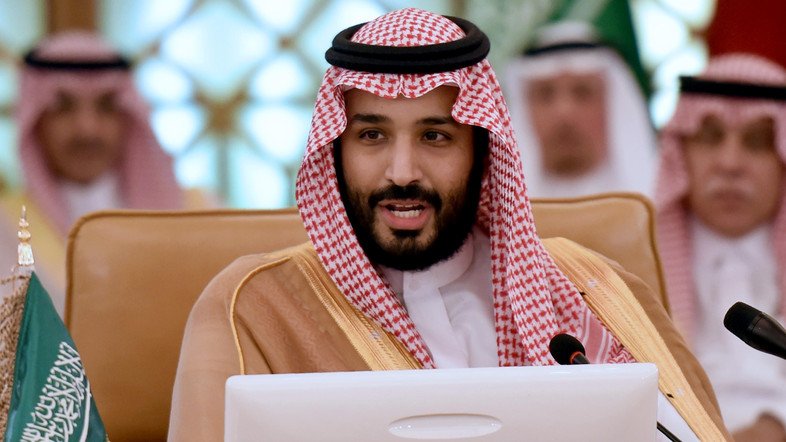
For the past 100 years, Saudi Arabia has been an ultra-conservative country. It’s one of places the strictest strains of Islam — notorious for their rigidity — were founded. But Crown Prince Mohammed bin Salman, known as MBS, has aggravated the existing problems, instituting changes that are both confusing and alarming.
As of late, Saudi Arabia’s policies have been touchy, to say the least. After finally allowing women to drive and restricting the religious police, the kingdom turned around a few months later and arrested several women’s-rights activists. Then, when Canada urged the government to release the women on Twitter, Saudi Arabia reacted by kicking the Canadian ambassador out of the country, freezing trade and investments with Canada, stopping all flights from the kingdom to Toronto, and selling its Canadian assets. This is just one example of Saudi Arabia’s confusing, infantile actions. And its new satire ban is another: What started out as a reform is quickly turning into tyranny.
Though he hasn’t made comments recently, MBS is behind most of the kingdom’s hopscotching from reform to suppression. As the heir to the throne of an absolute monarchy and the man behind almost every government agency, his whims are now dictating law.
Outlawing online satire violates what should be the inherent right of all humans to the freedom of speech, so human rights groups should be concerned about it. But as twisted as it may be, Saudi Arabia is a sovereign state and its form of government allows for this type of law-making. It would be a mistake for the U.S. or any other western power to try reprimand the kingdom or change the law. Canada illustrates the infutility of such an attempt.
But it wouldn’t be unreasonable to ask Saudi Arabia for a little consistency. If the kingdom could just decide which side it of the suppression-reform line to sit on, it would be a lot easier for the rest of the world to react.
Abby Liebing is a junior studying history.
