
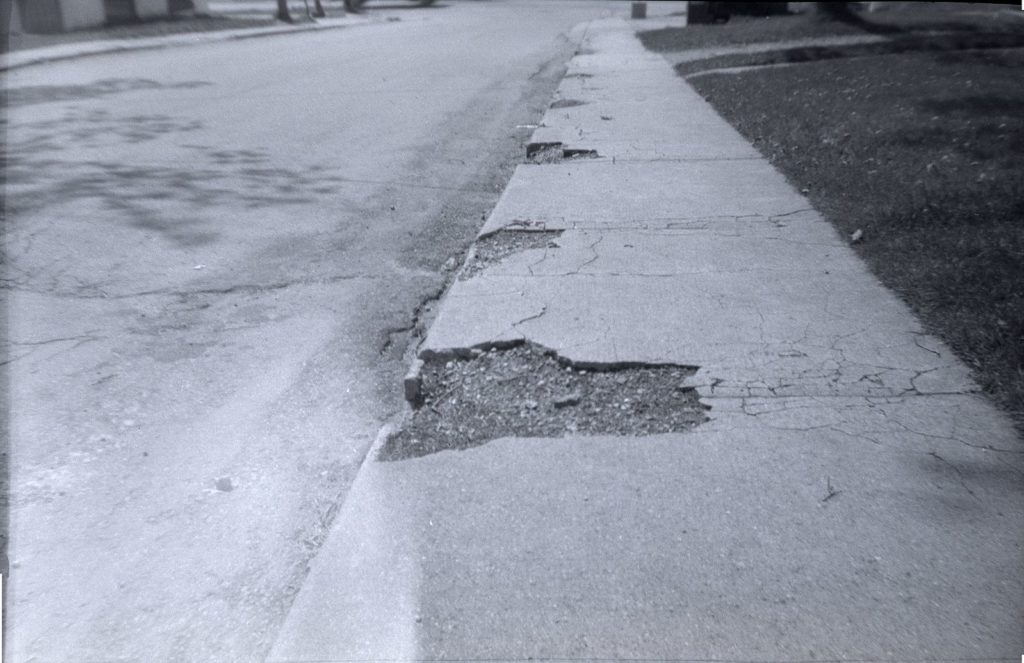
It is not only the roads in the City of Hillsdale that are cracking, but many sidewalks, too.
As Hillsdale looks to invest in its infrastructure, including its nearly $2.8 million investment in roads, the city also is planning to restart its sidewalk program. After Hillsdale ended the initiative in 2011, City Manager David Mackie announced at the April 2 city council meeting that the city is looking to budget about $50,000 to assist residents with the cost of replacing their sidewalks now that the city is more financially stable.
“It’s in the city’s best interest to have sidewalks looking nice,” Mayor Adam Stockford said. “It’s a small thing, but it’s symbolic of something bigger. It’s a sure sign to show residents: This city is back on track.”
If the city council approves the line item in the budget before June, the city would pay 25 percent of the costs to replace a block of sidewalk from its general fund, and the residents would pay for the remaining 75 percent. For those unable to make the costs upfront, the city also could cover the costs and have the homeowners pay their share in their taxes across the next 10 years.
“We want as many residents to take advantage of this as possible,” Stockford said. “If you live in the city, we’ll make it happen.”
The program replaces sidewalks by block to take advantage of economies of scale, said Jake Hammel, the director of the Public Services Department. The program requires a special assessment of the sidewalk, a public notice, and the participation of all the property owners on the block.
“Just a flag of sidewalk here or there is quite expensive,” Hammel said. “The cost is much more affordable if you do the entire block at once.”
City Councilman Bruce Sharp, who has advocated for the return of the sidewalk program, added that sidewalks in good condition reduce liability risks since homeowners, not the city, own the pathways, and they increase homesale prices.
Hammel also noted replacing the sidewalks would make the paths compliant with the American Disabilities Act. Many sidewalks in the city currently are not, which is one of the reasons why the Public Services Department requires homeowners obtain a permit and have an inspection when replacing their sidewalk.
“We want everyone to be safe, and we certainly want to be handicap friendly,” Hammel said.
Between 1997 and 2011, the sidewalk program helped to replace about one side of 20-30 blocks.
Hammel added that for the past few years, the city did have a sidewalk program in which the city would remove old sidewalk at no cost. The property owner paid for the new concrete slabs themselves. This “plan B” initiative should still be available in particular cases, should the city approve the sidewalk program.
As Hillsdale is a “tree city,” according to City Councilman Bruce Sharp, who has advocated for the return of the sidewalk program, growing tree roots over time often push up against the sidewalk’s concrete slabs, causing them to crack and become trip hazards. Sharp said he hopes the program will provide for a safer, friendlier community.
“If you have nice sidewalks and roads, you have nice neighborhoods,” he said. “People will go out, and they’ll enjoy it. I will walk and talk with the people in my ward. My wife and I will take our dog out and get some ice cream, but there are so many sidewalks that need to be repaired in town.”
Although the city council has until June to pass the budget, Stockford said he is confident the sidewalk program will receive approval.
Sharp said he looks forward to an even more walkable Hillsdale.
“Exercise is good for the soul,” he said. “I’d love to be able to get out and walk more easily, get to know what’s happening in Hillsdale.”
