
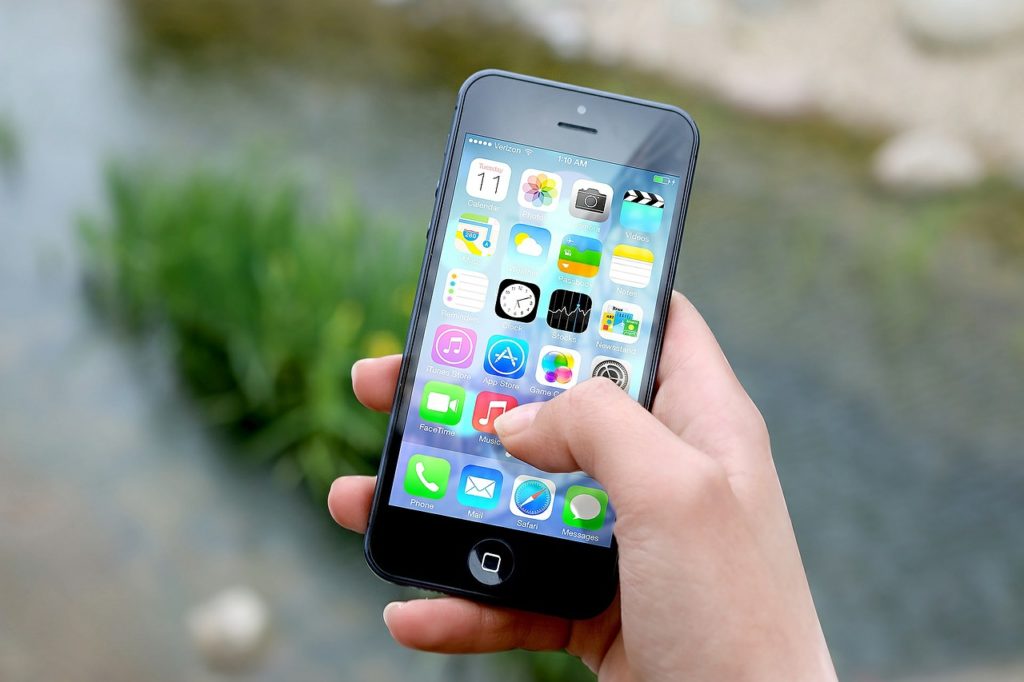
The average iPhone user looks at his phone about 80 times per day, according to Apple. That’s nearly 30,000 times a year. In the Wall Street Journal, novelist Nicholas Court wondered whether these devices “hijack our minds.”
This got me thinking: How often do I look at my phone? Why do I look so constantly? Is there any truth to this business about hijacking our minds?
So I put my phone in a cupboard for two days.
Friday at 6 p.m., I set my phone in an empty cabinet above my stove, with the determination not to touch it until the following Sunday evening, 48 hours later. The moment I put my phone down, it got caught in a Facebook group chat. The whole cabinet started vibrating. I made it about five whole minutes before I asked my girlfriend, Ellen, to reach in and turn it off.
Then I was able to forget about it — that is, until I tried to tell the time. Over the next two days, I probably reached for my phone ten times to check the time.
Phonelessness brought tension to my Friday night. While I had planned to go to a jazz concert in Howard Music Hall, Ellen wanted to take my car to party with her friends downtown. After handing over the keys and realizing that I now had neither a phone nor a car, I asked to borrow her watch. We set up a time for her to pick me up after the concert. I held her hand and gave her a look of such sincere anxiety that she felt genuine pity. “Please don’t forget me,” I said.
She didn’t forget, but the concert ended sooner than I had expected, and so I stood around on the curb, waiting for my ride. Passers-by gave me funny glances. That’s when I realized that standing around without a phone looks weird. It felt weird too. I just stood there like an idiot, looking around the dark parking lot and clutching my girlfriend’s watch like a lifeline.
The next morning, I got out of the shower to find that I did not have Siri to give me a weather forecast. I stood naked in front of my dresser, scratching my head and wondering what to wear. Eventually, I realized that I could just look out the window and guess.
That day I took Ellen to Ann Arbor. Though I tried to navigate by memory, eventually she had to whip open iMaps on her phone. I was struck again that day by how many times I reached for my phone to check the time, but aside from that, I didn’t miss it much. I’m not sure how we would have gotten around without Ellen’s phone though.
On Sunday evening, I retrieved my phone from the cupboard. After a full 48 hours, I figured that I would have around ten texts from people wondering where I had gone. But when I checked iMessage, all I found was a middle finger emoji from my dad.
No, I’m not making that up. He had just discovered emojis over the weekend and decided to try out a few.
All middle finger emojis aside, my experiment was inconclusive. I had hoped it would teach me something groundbreaking about myself and my device, either revealing my absolute dependence on my phone or showing me the glory of imagination unhindered by the shackles of modern technology.
My conclusion is that life without a phone is about the same, if slightly more inconvenient.
While I’m not convinced that my phone has “hijacked my mind,” I do have a better understanding of its benefits. I recommend this experiment to anyone who is wondering what their phone is really good for. In my experience, the things that you really miss are actually important. While I didn’t waste a thought on Facebook, Instagram, Snapchat, or Twitter, I missed being able to text people to coordinate meetings, I missed the daily weather forecast, I missed Spotify, and most of all, I missed knowing what time it was.
Hey Siri, remind me to buy a watch.
Aaron Andrews is a senior studying English.
