
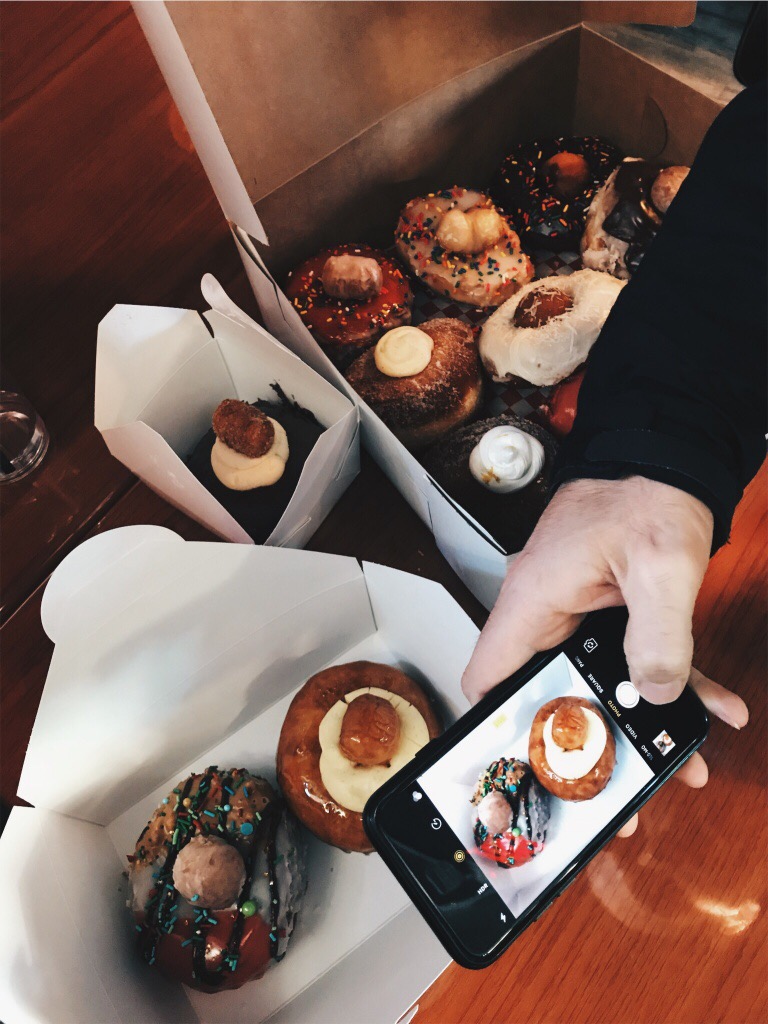
As I picked up my fork to dig into my food, my friend grabbed her phone.
“Wait, let me take a picture.”
I rolled my eyes and placed my fork down while she took a few pictures of our perfectly-plated entrees.
A few hours later, she posted the picture on her Instagram story.
Participating in millennials’ social-media obsession with images of food without regard to how it contributes to problems of body image and even eating disorders is one of the biggest problems in our generation. By limiting the number of food photos on the internet, we can create a healthier atmosphere surrounding food and diet expectations.
In today’s culture, being fit is “in.” Purchasing the highest quality foods at the finest grocery stores and high-end gym membershipd both equate a status of wealth with health.
Eve Turow is the author of “A Taste of Generation Yum: How the Millennial Generation’s Love for Organic Fare, Celebrity Chefs, and Microbrews Will Make or Break the Future of Food.” She claims millennials think about food more than anyone else in history has – ever. Turow suggests people post pictures of their food in order to show off.
“There’s a commodity fetishism around organic kale at this point because we’re using it as an identifier,” Turow told the Atlantic. “We’re using it as a signal of education, of knowledge, of income.”
What I didn’t mention at the beginning was that my friend had wanted to order the french toast, but seeing the avocado toast on the menu, and knowing how popular avocado toast is online these days, had chosen to order that instead. The influence of social media had infiltrated her mind so deeply as to affect her food order. And it wasn’t that the avocado toast was a healthier option, it was that she did it for the picture, not for the food.
The problem isn’t so much that we show off by posting pictures of our food, but that we let social media control our food choices by critically examining our choices of food, compare them to those of others, and then basing our body image off our conclusion of that comparison.
Take fad diets. The University of Pittsburgh Medical Center defines a fad diet as a diet that helps people lose weight quickly without exercise. Sounds like an easy fix, but these diets often fail to offer a balanced approach to weight loss. Diets such as liquid diets, high-protein diets, or single-food diets cut out important keys of nutrition, therefore leading to inability to maintain weight loss and increased risk of chronic diseases such as heart disease, cancer, and high-blood pressure, according to the UPMC.
One popular Instagram fad diet is FitTea. This 14-day detox tea blend promises to help drinkers increase energy and lose weight, with a money-back guarantee. Celebrities from the Kardashians and Vanessa Hudgens to David Henrie have promoted the drink on their Instagram accounts. Yet, while a tea detox might offer initial results for consumers, the health benefits don’t last.
Crystal Karges is a registered dietitian nutritionist with a specialization in nutrition counseling for eating disorders, she, along with Jacquelyn Ekern, a licensed counselor and founder and president of Eating Disorder Hope and Addiction Hope, co-authored an article titled, “Diet Fads and Eating Disorders.” They claim that buying into diet fads can lead to eating disorders.
“What may begin as a seemingly harmless attempt for losing a few pounds or getting ‘healthier’ can quickly escalate to an all-consuming eating disorder, such as anorexia, bulimia, or binge eating disorders,” the article said.
One problem the article directly points to as a leading sign to an eating disorder is when body image becomes an obsession. Social media feeds this obsession.
There’s nothing wrong with posting a few pictures of food on social media. It becomes dangerous, however, when it becomes an obsession, when a person’s focus solely surrounds both food and diet.
Next time, pick up your fork and not your phone. It might not last longer, but it’ll taste better.
Josephine von Dohlen is a junior majoring in American studies.
