
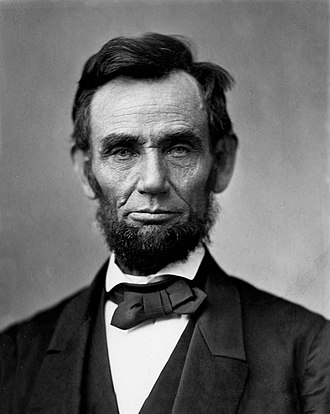
Abraham Lincoln was always telling stories. When a Virginian once suggested that he appease the South during the Civil War by giving up Fort Sumter, Fort Pickens, and all government property in the southern states, the President responded with the fable of “The Woodman’s Daughter.”
“A lion was very much in love with a woodman’s daughter,” he began. “The fair maid referred him to her father, and the lion applied for the girl. The father replied: ‘Your teeth are too long.’ So the lion went to a dentist and had them extracted. Returning, he asked for his bride. ‘No,’ said the woodman, ‘Your claws are too long.’ Going back to the dentist, he had them drawn. Then he returned to claim his bride, and the woodman, seeing that he was unarmed, beat out his brains.”
His point was this: If the North surrendered its positions, the South would destroy it.
Conservatives should learn a lesson from Lincoln and try to persuade with storytelling. As it is, they often rely on cold, hard facts. Consider Ben Shapiro’s coinage of the popular conservative expression, “Facts don’t care about your feelings.” Of course it’s true: Facts are facts, regardless of a person’s feelings. But feelings don’t care about your facts either, and everyday conversation between liberals and conservatives proves the futility of facts as a persuasive tool.
In a video that went viral on social media last November, a conservative high school student known online as “Kid Gadsden” challenged his teacher on her political views. The teacher, determined to prove racial or religious bias in the criminal justice system, argued it is wrong for law enforcement to label Muslim attackers as “terrorists” and not label the white man responsible for the Las Vegas shooting a terrorist. The student countered her assessment, explaining that terrorism requires a political aim, which the Las Vegas shooter did not have, as far as law enforcement could tell. When the teacher objected to the dictionary definition of “terrorism,” the student responded, “What do you mean? You’re not smarter than the dictionary.” The teacher’s response: “Yes I am. I bet you I am.”
Ironically, the argument took place in a creative writing class. Perhaps the teacher of that class is there because she finds stories more powerful than Merriam Webster’s boring definitions. And that’s just the point: Facts do not help conservatives much in the culture war; we need more stories.
Adam Bellow, who serves as editorial director of All Points Books, an imprint of St. Martin’s Press, promoted this idea in a talk he recently gave on campus. Throughout his career as a nonfiction editor, he believed that publishing fiction would be “beside the point” in promoting conservative ideas, but he now helps to bolster conservative fiction through a media publishing platform he founded called Liberty Island.
“For years conservatives have favored the rational left brain at the expense of the right,” Bellow wrote in an article for National Review. “With apologies to Russell Kirk, the conservative mind is unbalanced — hyper-developed in one respect, completely undeveloped in another. It’s time to correct this imbalance and take the culture war into the field of culture proper.”
This is not to say we need what Bellow labels “cause fiction” or “literary propaganda,” but rather, stories that more subtly incorporate political themes. For example, Charles Dickens did this in his novel, “Bleak House.” He dramatized the failure of government bureaucracies to solve human problems and showed the success of individual human attempts to help others. Dickens based the fictional “Jarndyce and Jarndyce” lawsuit on an actual case that lasted 53 years. But the power of the story is that it shows rather than tells. And that is the difference between appealing to feelings and assaulting with the facts.
Becoming a better storyteller does not necessarily mean jumping into the creative writing club next semester. It might mean incorporating stories into everyday conversation, like Abraham Lincoln did. And perhaps when we get good at this, our liberal friends will begin to say, as Stephen Douglas did during the famous Lincoln-Douglas debates of 1858, “Every one of his stories seems like a whack upon my back. When he begins to tell a story, I feel that I am overmatched.”
Or maybe, at the very least, they’ll start listening.
Brooke Conrad is a junior studying English.
