
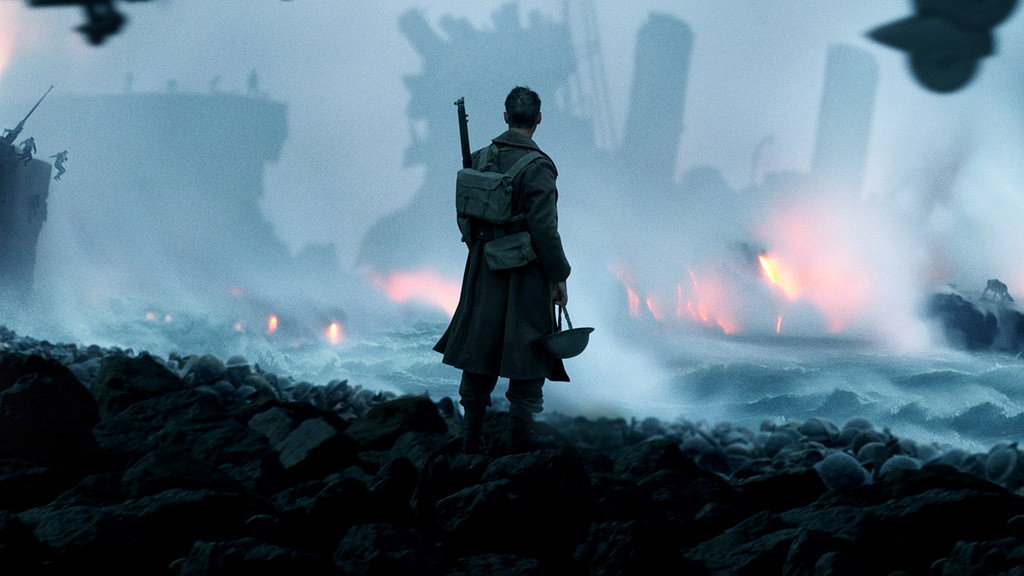
As the Oscars draw near, so come musings about which film will win the Best Picture award, and this year nine movies are looking to claim the coveted gold man.
And while “Dunkirk” is about bringing men home, it shouldn’t bring home an Oscar for Best Picture. It lacks the character development and backbone that elevates good movies to great ones.
Don’t get me wrong, I loved “Dunkirk” when I saw it in theaters with my girlfriend, and I have to admit (because she will always hold it over me) that I cried just a sniffle. I think it was after the British commander, played by Kenneth Branagh, sees all of the English boats coming to save the soldiers in an amazing display of patriotism. He turns to another officer and says with perhaps the first smile of the film, “It’s home.”
In case you missed it, the movie follows the stories of three different men involved in the evacuation: First, a common soldier in the water at Dunkirk trying to escape to England. Second, an elderly British man crossing the channel on his own boat, and third, a Royal Air Force pilot in a Spitfire shooting German dive bombers.
The valor and the courage of each of these characters overwhelmed me, along with the swelling music and the heartwarming shots of men in boats with Union Jacks flying high behind them. Indeed, the bravery depicted in the film is inspiring in any age, and well worth remembering in our own.
The movie focuses on the emotions of war and the military miracle that occurred at Dunkirk rather than the specific people; it provides a broad scope rather than the gritty interpersonal drama that often dominates the silver screen, especially the award-winning films.
But we see ourselves more in the small conflicts between people than in large conflicts such as war. Most of us have had a fight with someone or felt wronged emotionally or left devastated by the failings of another. Few of us, however, have had the experience of battling a nameless, faceless enemy.
So while “Dunkirk” does a good job of bringing you into the moment of desperation, it doesn’t really say anything about people, about who we are, though it does speak volumes for the men in that time and their heroism and freedom.
Their heroism is what kept Britain from falling to the Nazis, and the film captures that: Never in my life have I wanted to be British or respected the British people as much as I did during the movie. The depictions of war and the hopelessness of the situation create a massive sense of relief upon the success of the operation.
But there has to be more than heroism and emotional impact for a movie to become truly great. There has to be more than great victory to win an Oscar for Best Picture. There ought to be reflections or insights into human nature along with a captivating story.
For this, you need character development, but in the movie we aren’t even given any characters’ names. There’s no one you can really look back at and say, “I identified with that character.”
Interpersonally, it falls flat compared to films like “Saving Private Ryan” and “The Hurt Locker.” Both war movies achieve a sense of victory and national pride for military heroes, yet they do it through characters with whom the audience sympathizes.
“Dunkirk” fails to achieve an entire end of drama which is, as Aristotle says in his “Poetics,” connecting the audience with the characters through sympathy. The relationship the audience has with the protagonist in his struggles and successes is paramount in the effect of the film.
Unfortunately, the bird’s-eye-view that director Christopher Nolan uses doesn’t allow for a real bond between the viewer and the heroes. Moments in the film border on relatability, but only in the sense of duty or patriotism, and these are few and far between.
In sum, these moments don’t add up to a great movie, despite all the swells of emotion and sound and stormy waves of the English Channel. They add up to a good movie, one that depicts only a military operation, not the workings of the human heart.
