
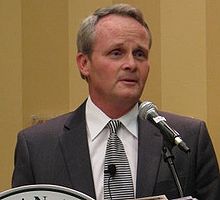
Lawrence Reed is the President of the Foundation for Economic Education and also served as the president of the Mackinac Center for Public Policy for over 20 years. Reed holds a bachelor’s degree in Economics from Grove City College and a master’s degree in history from Slippery Rock University. He taught economics at Midland’s Northwood University for seven years and chaired the Economics Department for two years. He has authored over 1,000 newspaper columns and seven books. His work has been published in the Wall Street Journal, USA Today, Detroit Free Press, and more. Reed gave a speech at Hillsdale titled “Learning the Lessons of Ancient Rome,” in which he gave three main reasons for the fall of Rome.
How does Rome’s army compare to America’s?
Rome had their military conquest, and ours is evidenced by that we have troops in way over 100 countries in the world. And we’ve committed American personnel for years on end in far-flung places with dubious outcome and value. So I think there’s a good case to be made that this is too costly and we need to retrench. We need to tell the world, “We aren’t your policemen,” and focus on defending this country.
What’s an example of one country defending another, but then leaving once no longer needed?
We see this in World War II. Even though it would have been avoidable had we done World War I right. Nonetheless, once we were in it, I think it was important to be an American presence during the rebuilding of Europe and mostly with the Soviet menace. But that’s history now. I don’t know why we’re still all over Europe with tens of thousands of American troops.
What consumes the majority of America’s budget?
Today something like three-fourths of the federal budget is “uncontrollable” because it’s entitlement spending. So effectively the government has said, “Look we have this massive, overwhelming share of our budget that even we don’t want to claim control for.” The welfare state isn’t just in the form of traditional welfare like food stamps, or AFDC [Aid to Families with Dependent Children]; I mean the whole process of anybody, including corporations, using the government to get something at someone else’s expense. We’ve got corporate welfare, personal welfare, half of the world is on American welfare. It isn’t sustainable.
What is a final comparison of Rome and America?
Sacrificing constitutional norms is done every day in Washington, sadly. There aren’t very many people in Congress who ever really say, “Maybe we can’t do this because the Constitution doesn’t allow it.” They just do what will get them re-elected or to keep a group happy. A lot of people think the Constitution is just antiquated, that it was for an old agrarian society that stands in the way of all of the wonderful things we can do. But they don’t realize that’s the process to tyranny: when you say, “Let’s toss the rulebook out the window.”
What attracts you to teaching?
Teaching comes to me naturally. I don’t have regular classes or tests to grade. I like public speaking and sharing ideas with people. There’s no better way to convey them by the spoken word. It’s possible that it might take more of a crisis. Historically, there was an awful lot of inertia even among people who know what the right thing to do is,but they can’t get themselves to do it because it’s too hard in the short term.
How can America diverge from Rome’s path?
My preferred method is that people start reading and thinking through these things and calling upon their inner character to realize, “Hey, this is dirty business, calling upon the government to take from other people and give to me. I had better quit doing that.” I hope for a moral renaissance, an inner reawakening.
