
“Life is pain, Highness. Anyone who says differently is selling something.”
A harsh message for 400 eager graduates—but maybe the one we need the most.
It’s a line from The Princess Bride, a movie that my generation grew up watching and rewatching. It was my favorite movie as a child. Nothing else quite catches that sappy-sarcastic tone, that romantic cynicism that somehow both mocks and champions the fairy-tale genre.
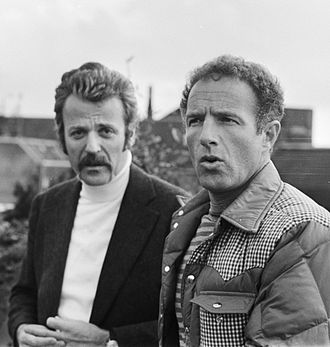
I wonder how many people know the man behind movie: not the director or the actors, but William Goldman, the man who wrote the story.
Bill Goldman’s most popular story may have been a fairy tale, but his early life was anything but. His mother was deaf, and his father was an alcoholic who committed suicide when Goldman was still in high school. In college, he failed creative-writing classes, teachers thought he was stupid, and editors rejected his work.
And then he became one of the most successful writers in the history of Hollywood. Aside from creating a cult classic (hello, The Princess Bride), he wrote the screenplays for Butch Cassidy and the Sundance Kid, All The President’s Men, and Marathon Man, among many others. He fell into screenwriting almost by accident; he set out to write novels and found that he was good at writing stories, regardless of the medium. He’s written novels, children’s books, screenplays, stage plays, memoirs. Prolific, popular, financially successful—Goldman has lived every writer’s dream.
In his second memoir, Which Lie Did I Tell?, Goldman writes: “Someone pointed out to me that the most sympathetic characters in my books always died miserably. I didn’t consciously know I was doing that … I think I have a way with pain. When I come to that kind of sequence I have a certain confidence that I can make it play. Because I come from such a dark corner.”
In other words, “Life is pain, Highness. Anyone who says differently is selling something.”
A note for the uninitiated: The Princess Bride is a spoof of a classic fairy-tale. It’s the story of the beautiful Buttercup, her true love Westley, and their struggle against evil and death and the conniving Prince Humperdinck. As the narrator asserts at the beginning of the movie, the story has it all: “Fencing, fighting, torture, revenge, giants, monsters, chases, escapes, true love, miracles…”
It’s remarkable, really, that The Princess Bride came out of Goldman’s “dark corner.” I think the story perplexes Goldman himself. The writing process was unlike anything he had ever done; apparently the story opened itself up to him, just like that. He wept when he wrote the scene about Wesley’s death. Looking back on his work, he said that The Princess Bride and Butch Cassidy and the Sundance Kid are the only things he ever wrote that he looks back on without humiliation.
How did he do it?
It’s a secret, I think, hidden behind hard edges and gritty realism. It’s a secret tucked away in a storyteller’s soul. It’s a paradox—the paradox of life and death, good and evil, light and darkness. The best storytellers don’t resolve the paradox; they lean into it. Life may be pain, but there is more than pain in life; in the words of Miracle Max, “true love is the greatest thing in the whole world.”
We don’t need someone to tell us that we’re special or that we’re going to change the world. We don’t need someone to elaborate on Aristotle or the Constitution. What we need now is a storyteller. This is what Goldman has to offer us.
Because life may be pain—but that doesn’t mean there can’t be a happy ending.
Ellen Sweet is a senior studying English.
