
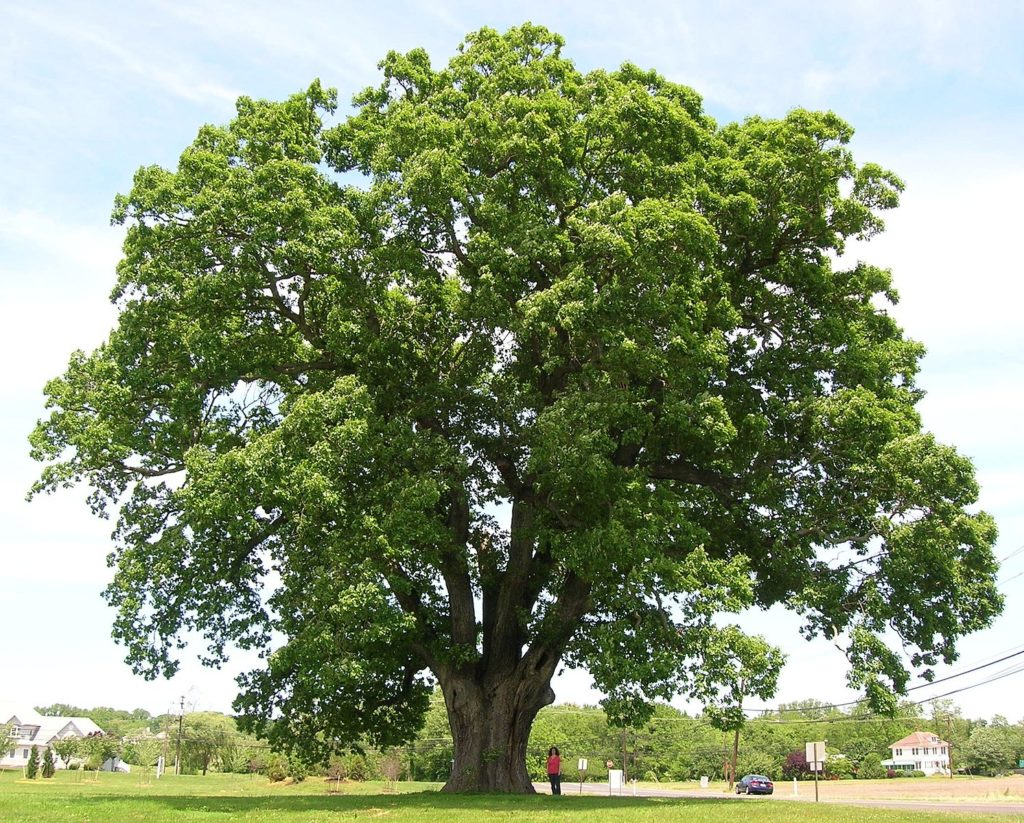
Oak wilt, a fungal disease that can infect and kill certain oak trees in a matter of weeks, is a growing problem across Michigan and the eastern United States, according to Plant Pathologist David Roberts from Michigan State University’s College of Agriculture and Natural Resources.
Roberts will present about the disease, its spread, and how to prevent or contain the infection of oak trees March 1 from 5-7 p.m. at the Hillsdale Community Library. The talk is sponsored by ReLeaf Michigan, a nonprofit tree organization, and will educate homeowners and attendees about how to protect local oak trees that are susceptible to oak wilt.
Oak wilt has a confirmed presence in Michigan, and is spread through the root systems of infected trees or by sap beetles, which feed on the fungus and spread the disease to new trees through wounds in the bark that can be caused by pruning trees, Roberts said. He said about 90 percent of oak wilt cases are due to root graft, when the root systems of two trees naturally grow together.
Roberts said transport of firewood or timber from infected trees can also spread the disease to different locations.
Preventative measures, such as avoiding pruning oak trees while the beetles are active from approximately mid-April to mid-July, help prevent the spread of oak wilt, according to Hillsdale College Horticulturalist and Hillsdale County Shade Tree Committee member Angie Girdham said.
“The silver lining with oak wilt is that proper tree care management techniques goes a long way in controlling the spread,” Girdham said in an email. “The biggest factor is pruning at the correct time of year to prevent the transportation of the disease by the beetles that move the spores into fresh wounds.”
Red oaks, which are especially susceptible to oak wilt, can die within two to three weeks of becoming infected, according to information from the Michigan Department of Natural Resources. Roberts said the primary symptom of oak wilt is premature leaf fall, but since managing the disease can be an expensive process, anyone who suspects an oak wilt infection should consult an arborist to confirm the diagnosis.
Once a tree is infected with oak wilt, there is no way to cure the tree, making it all the more important to prevent the spread of the disease, Roberts said. Preventative measures include digging trenches around infected trees to prevent the spread of oak wilt through the tree’s root system or injecting trees with a fungicide.
City Forester Gary Stachowicz said he is not aware of any cases of oak wilt in Hillsdale County. He said the city’s trees are predominantly maple, but include a small number of both white and red oaks along the road, and there are more oaks in the city’s parks and cemetery.
“The idea is to educate as much as possible to slow the spread of the disease,” Stachowicz said.
Stachowicz said the two-hour presentation is free of cost, and is open to anyone in the community. He said he has also invited tree cutting businesses and tree companies from Jackson, Michigan, to attend the oak wilt presentation.
“Anybody who is interested in learning more about oak wilt is welcome to attend the presentation,” Stachowicz said.
According to the DNR, a 2011 Forest Inventory and Analysis data and with the current average stumpage price for red oaks indicate that the value of red oak timber in Michigan is approximately 1.6 billion dollars. Girdham said one of the most valuable trees on campus is a large White Oak near Howard Music Hall valued at $39,025.50.
Based on a 2013 survey of campus trees, there are approximately 19 oak trees on campus, although the city’s oak trees and trees in the arboretum, Hayden Park, or at Hillsdale Academy were not included in the survey. There have been no known cases in any oaks at Hillsdale College, according to Arb Program Coordinator Laurie Rosenberg.
“As far as I know, we do not have any oak wilt on any of the trees at the arboretum yet,” Rosenberg said in an email. “We are very careful about trimming them and protecting them from damage, which is about all you can do to prevent the disease from having an entry point into the tree. I am also shifting any future plantings of oaks to white oak species, which are less susceptible to the fungus.”
Although official recommendations from the DNR advise against pruning oak trees from mid-April to mid-July, Roberts said the sap beetles that spread the fungus can become active anytime temperatures rise above 45 degrees for several days, although the risk for transmitting oak wilt is not high during short stretches of warm weather toward the end of winter.
“One of the major purposes of having ReLeaf Michigan and Hillsdale offer this presentation is to educate our property owners and the local tree trimming companies of this awful pest and the steps each of us can do to prevent it from moving into our community,” Girdham said in an email.
