
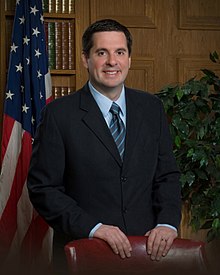
Since the House Intelligence Committee released the now declassified memo written by Rep. David Nunes, R-California, the overall reaction by Americans has been mixed.
The left utterly disregards the statements made by the memo and claims its damaging to the integrity and reputation of the American intelligence community. The right, the alt-right especially, sees it as bigger than Watergate and proof that the government conspires against parties and private citizens. The Never-Trumpers say it is insignificant; proving neither politicization of federal agencies nor the exoneration of the Trump campaign. The memo’s contents have a definitive takeaway: that the FBI did something right and something wrong.
According to the memo, the Federal Bureau of Investigation and Department of Justice used a dossier assembled by former British spy Christopher Steele as evidence to acquire a Foreign Intelligence Surveillance Act warrant on Carter Page, a voluntary adviser to the 2016 Trump campaign.
Steele performed a private investigation into the Trump campaign on behalf of the DNC and the Clinton campaign, being paid through Fusion GPS and Perkins Coie — a research firm and law firm, respectively. Steele himself admitted to the former Associate Deputy Attorney General Bruce Ohr that he was desperate to stop Trump and that he would do what he could to stop him from getting elected.
The FBI received the requested warrant, which is valid for 90 days, and renewed it three times. According to federal law, the FBI needed to prove probable cause at every point of renewal, and they were required to have new evidence to support it. The FBI could not use Steele’s dossier the first time it sought renewal and thereafter.
Say what you will about FISA’s’ existence, the hope and intent is that these courts protect American citizens’ rights as much as possible, which is why their warrants are valid for only 90 days and new evidence is required to continually conduct surveillance.
Nunes is right, then, to be alarmed when the FBI and DOJ did not disclose to FISC all relevant facts to their investigation and their source, Steele. He had been dismissed by the FBI as a “unreliable source” whose dossier could only be “minimally corroborated” and without which the FBI would not have pursued the warrant.
Both the DOJ and FBI knew exactly who Steele was, the quality of his information, and who paid him to assemble the information in his dossier. Yet, they only dismissed him when he committed “the most serious of violations” by disclosing to a Mother Jones journalist, David Corn, that he was connected to the FBI, though he had previously done so with other media outlets before the interview with Corn.
The FBI and DOJ officials involved in the FISA warrant application clearly acted inappropriately and politicized a supposedly impartial federal law enforcement agency. It is unethical and unprofessional for two U.S. agencies to collaborate with other intelligence agencies against American citizens.
U.S. law defines what evidence is permissible and impermissible in court. The U.S. has just as many professional and ethical regulations that govern intelligence, but the FBI and DOJ ignored them.
This is not bigger than Watergate, but it is not nothing. It does not change the fact that there is an investigation into collusion between Trump’s campaign and the Russian government. It should lead Americans to question the ethics of the FBI (as if they did not have enough reason to do so before).
The FBI and DOJ used “unverified” information as a basis for probable cause to acquire a warrant. No other law enforcement agency would have obtained as much as a search warrant with Steele’s questionable information.
Another takeaway from this situation is that the U.S. intelligence community is cumbersome, extensive, and in serious need of consolidation.
There is no reason why the U.S. needs seventeen member agencies of the “intelligence community” gathering intelligence separately from each other, conducting operations and investigations independently, competing for federal funding, and keeping secrets from each other.
Ian McRae, a senior, studies history and politics.
