
Freshman Paul Kerrigan uses a $40,000 camera rig to send volleyball footage back to a remodeled bowling alley.
Kerrigan is one of 28 student employees who work in the basement of Hillsdale College’s Knorr Student Center (the former bowling alley), which houses a TV studio capable of broadcasting nationwide.
“We were on Fox yesterday,” said Director of Technical Media Ted Matko last Tuesday, as he directed his crew in Phillips Auditorium from his chair in the TV studio. The day before, he’d taped Victor David Hanson’s appearance on the cable news station.
Matko and his crew film the college’s sporting events, Center for Constructive Alternatives conferences, speeches, and off-campus activities. Aside from a control room containing Hillsdale College banners from multiple eras, nearly a dozen screens, and an array of buttons, the media center houses the studio for Hillsdale’s online courses and shelves containing decades of event footage.
“There’s always a lecture or something going on every night of the week,” Matko said. “This is support for the college. We do all the major videotaping and audio recording.”
After taping Hanson, Matko said he had to cover College President Larry Arnn’s speeches in Ann Arbor on Wednesday, at the Detroit Athletic Club Thursday, and at the Constitution Day Celebration in Washington, D.C. this week.
The students are responsible for events on campus and fill a variety of roles, from recording video and audio to distributing copies to Moss Hall.
“We try to get everybody experienced in everything,” Matko said.
Because of the college’s event schedule, students like Kerrigan are often busy at odd hours of the week, at times when other students can study. Despite this, he said the job’s hours were reasonable. He signed up at The Source student activities fair because of his experience with cameras, as well as soundboard skills he developed while working at his home church in Toledo, Ohio.
“It’s been pretty enjoyable so far,” he said.
Senior Keyona Shabazz, who’s worked in the media center for over two years, commented on the friendly work environment.
“People you talk to are friendly and want to work with you,” she said.
Shabazz found the position through Assistant Dean of Men Jeffrey Rogers. Since she started working in the media center, she has gained experience filming basketball games and managing records in the archive library.
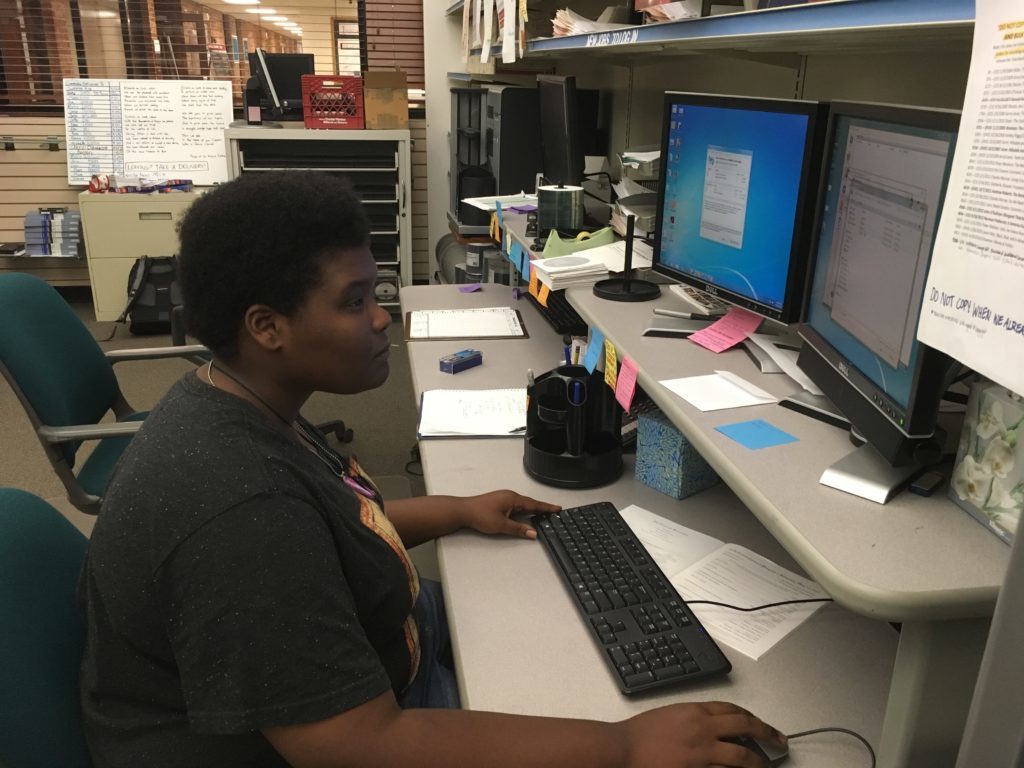
The computers that passerby often see students working on in the media center, for example, are used to make copies of DVDs to distribute to customers, she explained. If a donor requests a speech from 1975, Shabazz has to rifle through the archive library’s “shelves on shelves” of VHS tapes before converting it to DVD. The system looks like the bottom floor of the Mossey library, but with video cassettes instead of books.
“If a donor wants a copy of the recent CCA, we can get that for them,” Shabazz said. “They want a speech from a German lecture series from the ’80s? We got it.”
Next to the computers sits a large whiteboard covered with orders waiting to be filled. CCA sets, Arnn’s speeches, and deceased celebrities’ appearances at the college are the most common requests. Customers email administrators at Moss Hall, who send the order to the media center. Students hand-deliver the copies to Moss Hall before they are mailed. Shabazz emphasized the reasonable prices, noting an entire lecture series could cost as little as six dollars.
Kerrigan said he decided to specialize in slow-motion recording for the athletic events, such as the women’s volleyball games. While a manager — usually Matko — directs the crew and manages the video feed, Kerrigan looks over footage and submits clips to put up on the viewers’ screens.
“The way the schedule is set up, you can sign up to do whatever job you want for an event,” Kerrigan said. “I personally have signed up for slow-motion because I want to practice doing that.”
Matko said the campus’ fiber-optic network has become more connected with the construction of new buildings. The college’s fiber optic cable network is all routed back to the TV studio in the ex-bowling alley. The Searle Center and future Christ Chapel are also included in the network.
“As we add places on campus, we expand the fiber network to pick them up,” Matko said.
The media center has 28 student employees, but with seniors like Shabazz graduating, there is room for new help. Matko emphasized that working in the center is an opportunity to handle professional equipment.
“It’s not Best Buy,” he said. “It’s a lot of hard work, but they have fun.”
