
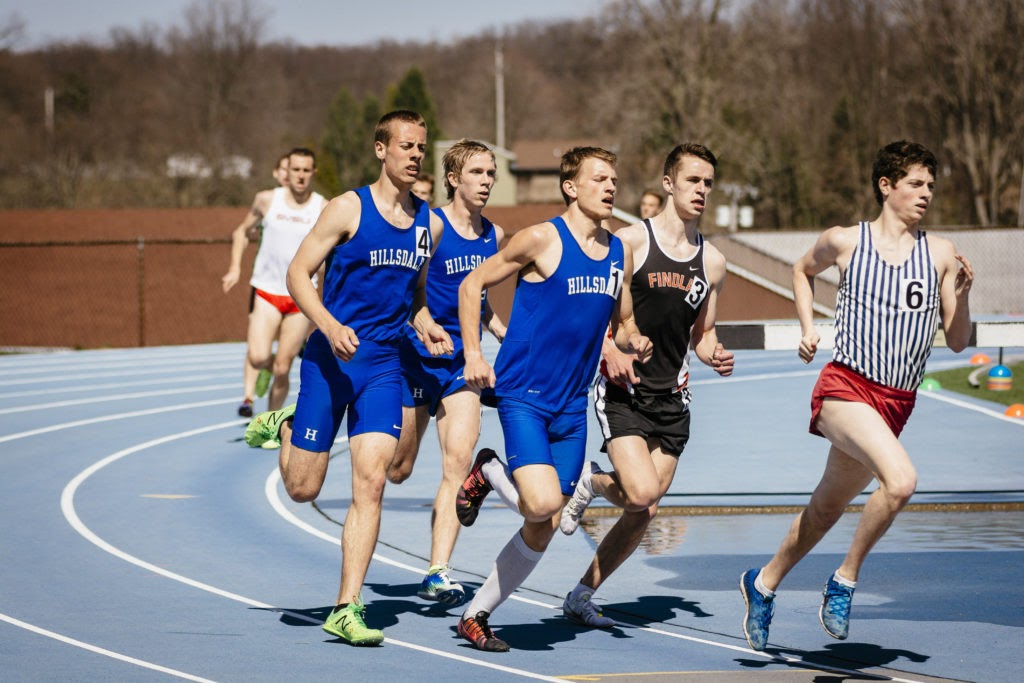
In a weekend of competition that saw athletes compete in five meets across three states, two athletes stood out above the rest with performances that both qualified them for the outdoor national meet in late May and ranked them in the top 10 of their event group for all of NCAA Division II.
Senior Caleb Gatchell ran a personal best time of 3:48.03 in the 1,500 meter at the Stanford Invitational, putting him within a second and a half of the current school record, which was set in 1997. Junior Daniel Čapek bounded back from a disappointing hammer throw performance at the Texas Relays on Thursday, to throw 59.26 meters in hammer on Friday at the Bobcat Invitational, less than 0.5 meters off of his personal best.
Head coach Andrew Towne said he thought Gatchell and Čapek led the team over the weekend. He also said that although he wasn’t pleased with every performance, he thought overall it was one of the team’s best opening weekends.
“The biggest thing I’d like to see moving forward, across the board, is a little bit more of a sense of urgency to take advantage of every opportunity,” Towne said. “Typically, it’s a lot easier for our kids to see at this point, especially if they’re paying attention to older kids.”
Towne also highlighted the 4×100 meter relay team’s 41.71-second performance at the Texas Relays, the sub-11 second 100-meter dash times of seniors Sergio San Jose Lorza and Todd Frickey at the Texas Relays, sophomore Nate Eldridge’s sub-22 second performance in the 200 meter dash at the Bobcat Invitational, and sophomore Nick Fiene’s 3:57.42 1,500-meter race at the San Francisco State Distance Carnival. If Lorza’s 100-meter time of 10.53 seconds had been “wind legal” for NCAA qualifying, meaning that the tailwind on the straightaway of the track wasn’t in excess of 4.0 meters per second, he would have been ranked 12th in Division II following the meet.
Other notable performances were sophomore Tanner Schwannecke’s 1:53.58 800-meter run and freshman Joe Humes 3:56.37 1,500-meter run at San Francisco State Distance Carnival.
Reflecting on his performance, Gatchell said he believes he was able to run so fast in his first outdoor race because of his strong indoor track season — he placed sixth in the mile at the Division II NCAA indoor national championship last month. At the same time, Gatchell isn’t putting too much stock in the race.
“The school record would be nice, but I’ll work on cutting down and finishing out races to put myself in a good place for nationals” he said.
Čapek attributes his poor performance in the hammer throw at Texas Relays to thinking too much because it was a larger meet. He said being seeded higher at the smaller Bobcat Invitational made him relaxed and allowed him to compete better.
“I think it boosts my self-esteem when I have the potential to make finals,” he said.
Čapek also said that even though he didn’t have a personal best throw, the total performance of the six throws he had at the Bobcat Invitational was the best he has ever had.
The men’s track team will split up again this coming weekend, with some athletes traveling to the Western Kentucky University Hilltop Relays and others traveling to Ohio Wesleyan University’s Marv Frye Invitational.
“Outdoors you just end up splitting up a little bit more because it’s hard to accommodate everything that you’re trying to do, whether it’s event-groups or ability-levels,” Towne said.
