
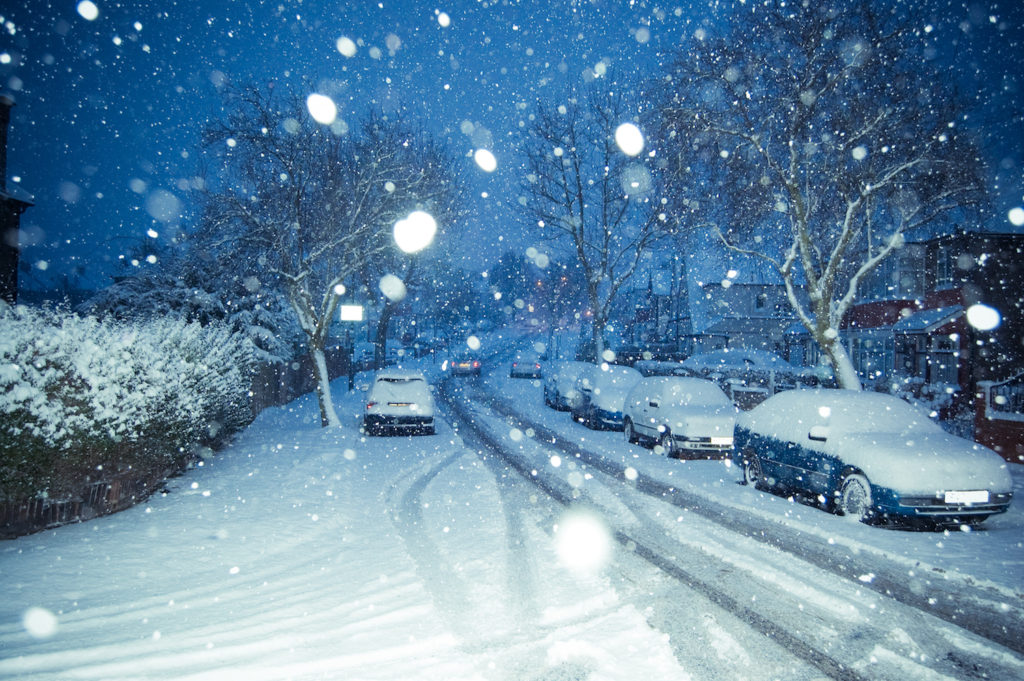
As temperature drops, memories of wiggling toes in soggy socks and hobbling to class after slipping on icy sidewalks warn students of the forthcoming winter.
To intensify our autumn chill-induced premonitions, according to a Collegian article from last week, Judah Cohen, director of seasonal forecasting at Atmospheric and Environmental Research, predicts colder-than-normal temperatures for Michigan this year.
If summer glistens with sunlight, then winter marks the reign of the moon, all in silver, feebly illuminating the incessant dusk. Why does the season seem so cruel?
In poetry, as in familiar thought, winter is synonymous with all that is cold and dark in the human soul. This is a shame, because the season that dominates nearly half of our time at the college is much more than that.
Senior Hank Prim, native Chicagoan and head RA in Simpson Dormitory, said he enjoys winter for its expanded fashion selection (specifically, elegant coats and classy attire “to impress the women-folk”) as well as the variety of activities the season affords.
“It’s a different kind of spontaneous,” he said. “There’s something to be said about being able to have random snowball fights across the quad with the people you live with as you walk to class. You can’t just pick up dirt and do that.”
Because it offers unique opportunities, winter means much more than the antithesis of summer, an unfortunate transitional season that we endure simply for its contrast to the pleasantness of spring.
British poet Edith Sitwell described the season as like an evening dinner party with friends: “Winter is the time for comfort, for good food and warmth, for the touch of a friendly hand and for a talk beside the fire: it is the time for home.”
Summer, perhaps, is the season of action. Winter, on the contrary, directs souls inward and turns our minds toward reflection on the deeper things.
German philosopher Josef Pieper, in his book “Only the Lover Sings: Art and Contemplation,” described an incident while returning to Europe from New York in which he noticed how infrequently we are willing not simply to look, but truly to see what’s going on around us.
“…at table I had mentioned those magnificent fluorescent sea creatures whirled up to the surface by the hundreds in our ship’s bow wake,” he said. “The next day it was casually mentioned that ‘last night there was nothing to be seen.’ Indeed, for nobody had the patience to let the eyes adapt to the darkness. To repeat, then: man’s ability to see is in decline.”
Let us adopt the measured pace of winter. The shrinking sunlight and growing chill may impede certain activities (and often our mood), but dimmed light ignites contemplation. If we let our eyes adapt to the darkness, our thoughts turn from events to ideas, and often we notice beauty we once overlooked.
Each season has its benefits, and winter affords us the time and disposition for contemplation and innovation and wonder.
Philosophy professor Howard L. Parsons, in his essay “A Philosophy of Wonder,” argued that we lose the experience of wonder as we become familiar with our environment, but a change can reorient our thoughts.
“…the conditioning effects of habit tend to determine not only what we regard as ordinary but also what we are ready to respond to as wonderful,” he said. “Centuries ago an eclipse, comet, or thunderstorm was an invariable occasion for wonder, since such occurrences had not yet been integrated into the system of expectations and meanings of men.”
As we anticipate winter, we need not expect the mundane.
Historically, winter is a time of expectant pause. Farmers reap the fruits of summer’s toil as they prepare for the unfolding of spring. And we, too, bearing in mind what we’ve learned in warmer days, can enjoy this time of reflection, so we may emerge in spring not from hibernation’s stupor, but in deliberative readiness.
Ms. Fry is a junior studying French and journalism.
