
Our social media posts, phone calls, and emails are all being monitored. Since 2013, American citizens have known they are being watched. With Edward Snowden’s disclosure of 9,000 to 10,000 government related documents to the Guardian, the question of government overreach has inspired everything from conspiracy theories topolitical headlines proclaiming the destruction of freedom as we know it.
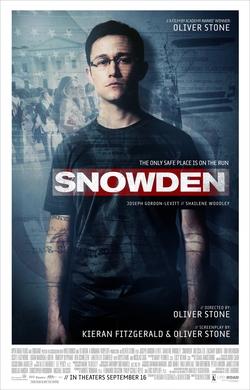
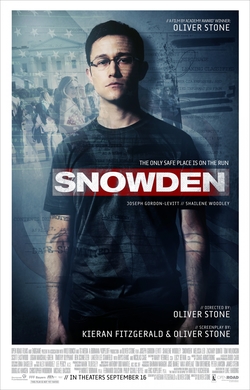
On Sept. 16, 2016, Open Road Films released their latest thriller “Snowden,” a film that was marketed as an intense dramatization of Snowden’s transition from a medically discharged private in the United States army to one of the most famous whistleblowers the world has ever seen.
While “Snowden” boasts an intricate story and a powerful moral dilemma, the film quickly loses its focus – and its audience – with a plethora of continuity issues, a repetitive romantic sub-plot, and a failure to present Snowden’s actions with impartiality.
“Snowden” did a decent job of gradually introducing the internal conflict that plagues Snowden throughout his career in the intelligence industry. This conflict raises a question that is repeatedly addressed throughout the film: Should Snowden obey his country regardless of the moral implications or disobey in the name of virtue?
In addressing this compelling central conflict, “Snowden” suffers from three immense flaws.
First, the film quickly loses its focus on Snowden’s personal conflict. Early in the film, Snowden’s head professor at a CIA training facility tells Snowden, “The people don’t want freedom; they want security.” This is the foundation for Snowden’s later moral dilemma. Surprisingly, this rich, philosophical and politically themed question is never again mentioned, neither in the film’s conclusion nor anywhere else. Instead, the film gives audiences a stereotypical romantic subplot, one that is both unnecessary and repetitive. By the time audience members see the third argument between Snowden and his unstable girlfriend, the perception of “Snowden” as a “drama thriller” is thrown out the window for a “romantic drama.”
Secondly, there is a gross lack of continuity. The art of ensuring each scene smoothly transitions to the next is not easy. Director Oliver Stone attempted to use a non-linear style of storytelling by beginning the film in the future and periodically jumping back to the past through flashbacks, memories, and other recollections. Several scenes are sloppily introduced, one even leading to low murmurs from a whiplashed audience, thrown from one stage of Snowden’s life to another.
Finally, “Snowden” presents only one side of the issue. To quote an anonymous audience member: “I felt like I was being sold something.” The truth is, when Snowden released those 9,000 to 10,000 classified documents to the world, he did break U.S. law, specifically the Espionage Act of 1917. Even today, people debate over whether or not Snowden is a traitor to his country. Despite this, the film never once contemplates this second side to the story and instead condemns critics of Snowden’s actions, despite their grounded objections.
While “Snowden” could have been a golden opportunity to focus on the nuances of the balance between freedom and security, it instead settles for an uninteresting, repetitive, and simple-minded view of a relevant question. “Captain America: The Winter Soldier” and the latest “Jason Bourne” movie, for example, did a far better job of analyzing the conflict between freedom and security and illustrating the possible consequences of unchecked government overreach.
