
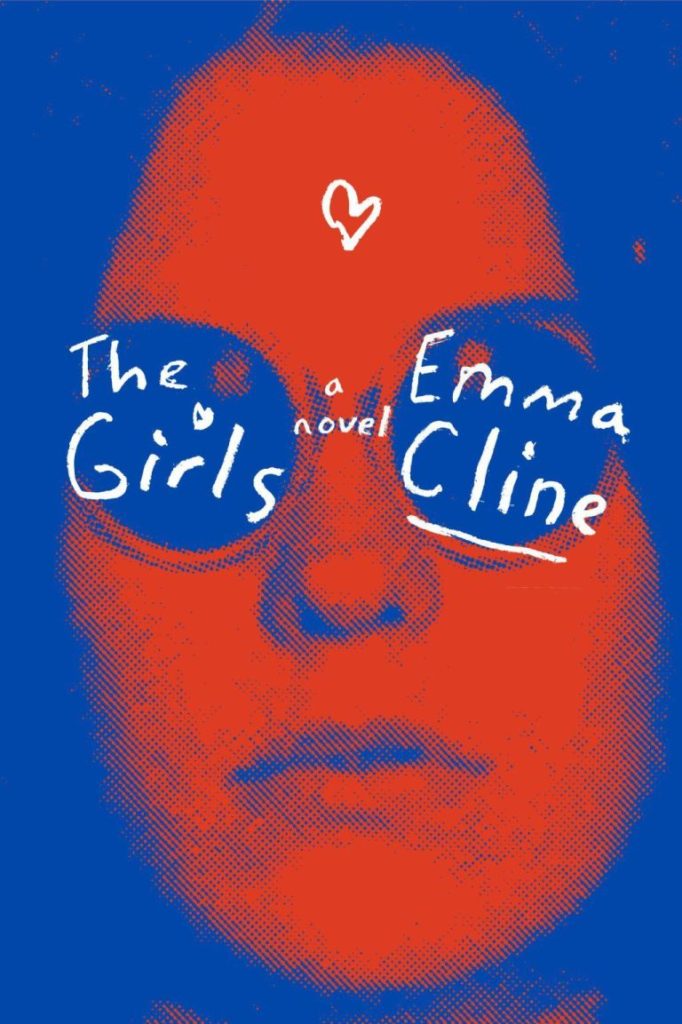
“Poor girls.” The refrain resonates, echoing with regret for generations of victims of circumstance. Simple and elegiac, the central phrase of “The Girls” mourns the unsung potential of women shattered by societal expectations.
Emma Cline’s eagerly anticipated debut novel about a woman haunted by memories of the Manson murders earned a prominent place in beach bags and bestseller lists this summer. Though “The Girls” invites readers to bask in sympathy for the tortured position of women in society, the novel rings hollow for those who believe that women deserve more than pity.
“The Girls” is haunted from the start; Evie Boyd, an aging recluse, reflects on her ill-fated transformation from a normal suburban teenager into a liberated, devil-may-care member of a fictional version of the Manson cult in California, circa 1969.
It doesn’t start well, and it doesn’t end well; young Evie begins as a lonely, confused 14-year-old who spends her time fantasizing about her best friend’s brother and fighting with her mother’s boyfriends.
Then, on what seems like another long, teenage-angst-ridden summer afternoon, she meets Suzanne, a black-van-driving bombshell of a woman who spends her days dumpster-diving and shoplifting with her friends. Later, after a night of drinking, smoking, and sexual revelry, she discovers these women belong to the harem of a man named Russell.
This is, of course, Cline’s stand-in for Charles Manson, the charismatic cult leader responsible for plotting and executing the murders of nine people around Los Angeles in 1969.
Cue ominous music. Sunburns blossom across the backs of women across the country as the stempy plot drives away all thoughts of shade and sunscreen.
Young Evie is enthralled by the women of the commune. She feels welcomed. Loved. Cherished. For the first time in her short life, something better than “poor.” The novel follows the familiar tune of coming-of-age stories as she begins to “find herself” at Russell’s commune: “I was starting to fill in all the blank spaces in myself with the certainties of the ranch,” she remembers.
But the fateful foregone conclusion continues to rumble in the background.
As anyone who’s read about the Mansons knows, the story crescendos quickly toward disaster. Suzanne’s wild side leads her to dark places, and Evie is left to deal with consequences that haunt her for the rest of her life.
The novel is framed by an older Evie’s memories of this troubled past, and her struggles to create a new life for herself out of the ruins. Throughout the novel, Evie lives an empty life whose governing principles are discontent, horror and pity. Her memories are her chief companions until she runs into Sasha, a new “poor girl” who seems to be reliving Evie’s rebellious, boy-crazy, vagrant life.
Cline’s voice is subdued and appropriate to her young, confused narrator, but it’s the older Evie who shows just how dismal Cline’s “poor girls” refrain is: “Poor girls,” the older, wiser, sadder Evie says. “The world fattens them on the promise of love. How badly they need it, and how little most of them will ever get.”
This deprivation, not its violent culmination, is the center of Evie’s and Sasha’s – and according to Cline, her entire gender’s – tragedy.
As a pot-smoking hippie in the late 1960s, Evie is — or should be – free, according to the common view of the time period.
Yet Cline follows familiar themes of the then-burgeoning feminist movement and women’s coming-of-age novels in general: Girls are penned in, held back by expectations, afraid of the world and struggling to find themselves.
Evie was lost in suburbia long before Russell drew her into his dark world. Evie was hollowed out by empty friendships long before her misguided adoration of Suzanne blasted her apart.
Cline may be right to point out the stifling, empty lives that many women led in the supposedly liberated era of the 1960s, but she doesn’t offer a way out. For Cline, Evie’s traumatic past has defined her, and she’s never been able to grow up or move on. In the end, the faded Evie is defeated, unable to offer comfort with her refrain: “Poor girls.”
Though Cline’s “The Girls” is an elegy for the struggles of adolescence, readers may find small comfort in a refrain that never lets “The Girls” receives anything more than pity. Despite – or because of – her struggles, Evie’s life deserves a better rating than “poor.”
Before nodding in identification with the miserable and mistreated Evie, women should ask themselves whether the world ruined Evie or whether Evie allowed the world to run roughshod over her. Further, they should ask whether Emma Cline, in casting her main character as a dark symbol for all “poor girls,” shuts off not only Evie, but all readers and sympathizers with “The Girls,” from the light.
