
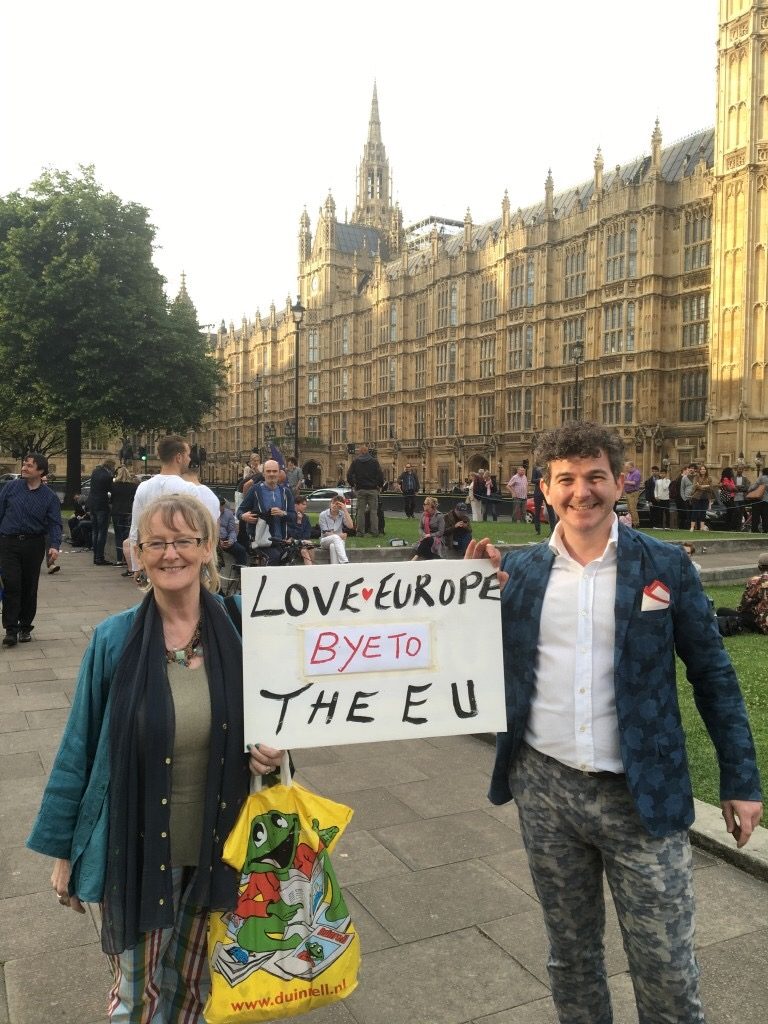

LONDON – Voters in the United Kingdom elected to leave the European Union Thursday, making the UK the first independent nation to exit the EU.
The UK had the second largest GDP within the union when its voters decided to leave, marking a momentous decision for the EU and the world economy.
The referendum saw one of the highest turnouts in UK election history, at 72.2 percent, and although 1 million more voters chose “leave” than chose “remain,” the margin of victory was only 3.8 percent.
While Wales and England voted overwhelmingly to leave, Scotland and Northern Ireland voted to remain, which has already driven Scottish and Northern Irish leaders to announce their decisions to seek independence from the UK within their countries.
The only voting district in England that voted to remain was London, causing a fracture between the Labour capital and UK Independence party countryside and driving more than 200,000 Londoners to sign a petition asking the Mayor of London, Sadiq Khan, to begin the process for an independent London.
Amid the fractured politics of the UK, British voters gathered at the College Garden outside the Houses of Parliament and spoke about how they voted and what they thought about Britain’s future.
Patience, from Colindale, London, voted to leave and said she was very happy with the vote, although she never thought leave would win—referring to polls that predicted the UK would remain in the EU in the final hours before the vote.
“I’m just shocked,” Patience said. “The people have chosen, and that’s a powerful thing. Not much will change, but what does will be for the better.”
She believes the economic turmoil felt after the vote was declared is a result of the fear tactics used by Prime Minister David Cameron and Chancellor George Osbourne, two British MPs who campaigned for the UK to remain in the EU. The Great British Pound fell to a 30-year low this morning, and its rate against the dollar dropped nearly 12 pence.
“The markets will settle. They allow some wiggle room in their predictions to let sterling have a chance to bounce back. It will be fine,” Patience said.
Rachael and Tom, from Cambridge, England, looked visibly shaken by the outpour of support for British independence in Westminster. They both voted remain, and are shocked that leave triumphed with a margin of more than 1 million votes.
“I thought it was a joke,” Rachael said. “It’s really quite sad and I’ve been in a state of shock. There’s so much uncertainty, and it will make daily life so much more different.”
Neither Rachael nor Tom had heard about the petition by disappointed remain voters for a second referendum but were supportive of it after being asked about it.
The petition was launched through England’s government website – which promises each one receiving more than 100,000 votes will be discussed on the floor of Parliament – and after UKIP and leave campaign Leader Nigel Farage said a vote closer than four percentage points would merit a second referendum. Leave won by a 3.8 percent margin.
“There’s just so much conflict in the EU, and us leaving is only making it worse,” Tom said. “The point of the EU is to be together, but after this we look like racist idiots.”
A large proponent for the leave campaign was a worry in English voters over the migration mandates from Brussels, Belgium, the EU headquarters. Before the vote, UKIP leaders promised a leave vote would result in a refigured immigration policy, one that worked for England and those seeking citizenship in the kingdom.
Mark and Liz, British citizens living in Wexford, Ireland, voted leave yesterday, and “are quite happy,” according to Liz, with the results, although worried about the way the EU will handle the vote going forward.
“The EU has not been known to take kindly to national votes on their policies,” said Mark, who used to work at the EU headquarters. “We’ll have to see how they handle this.”
Neither Mark nor Liz was aware of the EU’s statement on the leave vote, where EU parliamentary leaders said Britain must begin the separation “as soon as possible, however painful.” UKIP leaders had forecast the divorce would take up to two years of negotiations, but the EU has made it clear that the break must come swiftly.
Mark, who was smoking a celebratory cigar, said he believes former Mayor of London Boris Johnson, a member of the ruling Conservative Party, should take over after PM Cameron’s resignation. PM Cameron announced his decision to leave 10 Downing St. after hearing the results this morning, at 8 am GMT. The member of parliament from Witney had campaigned heavily for remain and has said he understands it would be impossible to lead a nation that has voted against him.
“I think Boris is really the best choice,” Mark said. “He did a good job for London, and he has been all-in for leave since the beginning.”
