
The first semester of freshman year at Hillsdale College is a wake-up call — particularly when students find themselves facing their first graded writing assignment. Deciphering the red scrawl covering the page, students find a letter grade barely visible at the top of the page: D.
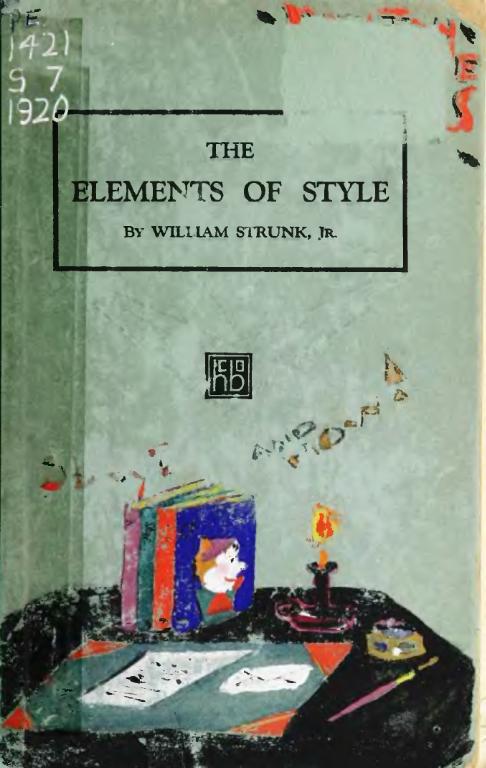
The college should require students to read Strunk and White’s “Elements of Style” before arriving on campus in the fall.
Hillsdale College boasts each incoming class to be smarter than the previous. Despite their supposedly increasing intelligence, freshmen still struggle with the adjustment from high-school level writing to Hillsdale College-level writing.
Students come from different backgrounds. Some students hear Strunk and White’s rules from a young age. Teachers drill rules such as “Use the active voice” into students’ heads, but the origin or the reason behind the rule remains a mystery.
Other students are even more lost, never hearing of Strunk and White’s rules of writing during their primary education years. By requiring entering students to read the text, they will gain a basic understanding of what comprises clear, concise writing.
Hillsdale already requires incoming freshmen to read Aristotle’s “Nichomachean Ethics” and “Founding Father: Rediscovering George Washington” by Richard Brookhiser. While both titles offer students valuable advice on how to live a good life, neither one lends itself to freshmen’s immediate need: not to completely bomb their Intro to Great Books class.
If Hillsdale introduces students to the widely acclaimed and accepted style rules within Strunk and White, students can adopt them and adapt their own writing to better their chance of achieving a passing grade on their first Jackson paper.
Additionally, the purchase and reading of Strunk and White will save teachers time and effort in the classroom.
Strunk and White’s classic little handbook is already the number-one selling college textbook in the nation. In 2011 Time magazine listed the “Elements of Style” as one of the 100 best and most influential books written in English since 1923.
In my college career, “The Elements of Style” was a required text for at least four classes and a recommended text for an additional four.
Why should the college wait for students to need the information provided within Strunk and White’s pages before presenting the book to them?
As American writer Dorothy Parker once proclaimed, “If you have any young friends who aspire to become writers, the second-greatest favor you can do them is to present them with copies of ‘The Elements of Style.’ The first-greatest, of course, is to shoot them now, while they’re happy.”
When freshmen already know Strunk and White, teachers can focus more on their subjects and less on how to write well. And when they focus on how to write well, they’ll start to form a more advanced position.
Requiring incoming students to read Strunk and White’s “The Elements of Style” does not offer deep insight into life or a better understanding of the human condition. Instead it offers students a more practical application. It gives freshman students the tools necessary to grow their writing skills and the potential to decipher a scribbled-out C+ on their first graded paper.
