
With a bike, a generator, and some light bulbs, Hillsdale College’s Physics Club is building a machine that converts manpower to electrical power. Students will have the opportunity to use the device at a demonstration in the Grewcock Student Union in the fall.
Physics Club Moderator Ken Hayes said the project is part of the group’s series of lunchtime physics demonstrations.
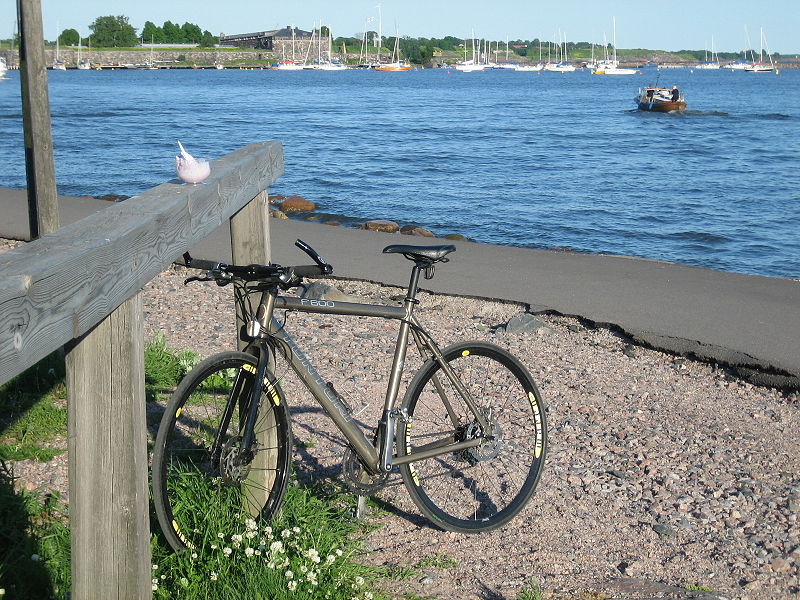
“We have a regular old bike,” junior Michael Tripepi said. “It’s going to be mounted on a stand kind of like an exercise bike, but when you pedal, it’s going to be hooked up to a generator, which then allows us to power these lightbulbs.”
Most of the machine is built except for the wiring.
“The eventual idea is to get it hooked up to a computer, so you can actually see how much power you’re putting out,” Physics Club President junior Jake Ross said.
The organization is still building the stand for the lights, as well.
“The back wheel of the bike will be suspended by the stand, and there’s a little rotator wheel that touches the back wheel. That rotary wheel is hooked up to the generator,” Tripepi said. “As you’re pedaling the bike, friction will cause the rotary wheel to turn, and that causes the generator to start spinning and producing electrical power.”
As the generator spins, magnets inside it will create an electrical current. This current is sent through equipment that converts it into electricity the lightbulbs can use.
Tripepi said this isn’t the first time someone has hooked a bike up to a generator, but this model is unique because the students are wiring multiple types of lightbulbs to the device. The group began working on the project in the fall of 2015.
“Part of the mission of the Physics Club is to perform physics demonstrations for the student body and generate interest in physics,” Tripepi said.
Hayes said he suggested the idea to the club. The goal of the project is to show the differences between the types of light bulbs.
“It’s not easy to develop a physical understanding of the difference between the energy required to light an incandescent light bulb versus the energy required to light the equivalent high-efficiency light bulb, just by looking at the electrical power parameters,” Hayes said in an email.
Hayes said the bike would allow students to feel the difference between a 60-watt incandescent bulb and a more efficient 11-watt bulb.The project will demonstrate the physical effort it takes to power each light.
Next semester, the club will bring the bike, generator, and lights to the union. Students will then have the opportunity to see how their pedaling power affects each type of light bulb.
“What we want to show is the level of resistance that incandescent light bulbs have that the LED lighting and the CFL lighting don’t have,” Tripepi said. “So you can see which light bulbs are easier to power, which ones require more power to be brighter.”
Ross said the project not only educates the student observers but also improves the engineering abilities of the physics students involved.
“Those are skills they can take to graduate school,” he said. “It’s always good to know how to handle equipment and be able to talk to technicians about what you’re wanting to do.”
On April 28, the Physics Club is holding a public meeting at 8 p.m. in room 108 of the Strosacker Science Center to discuss its next project.
