
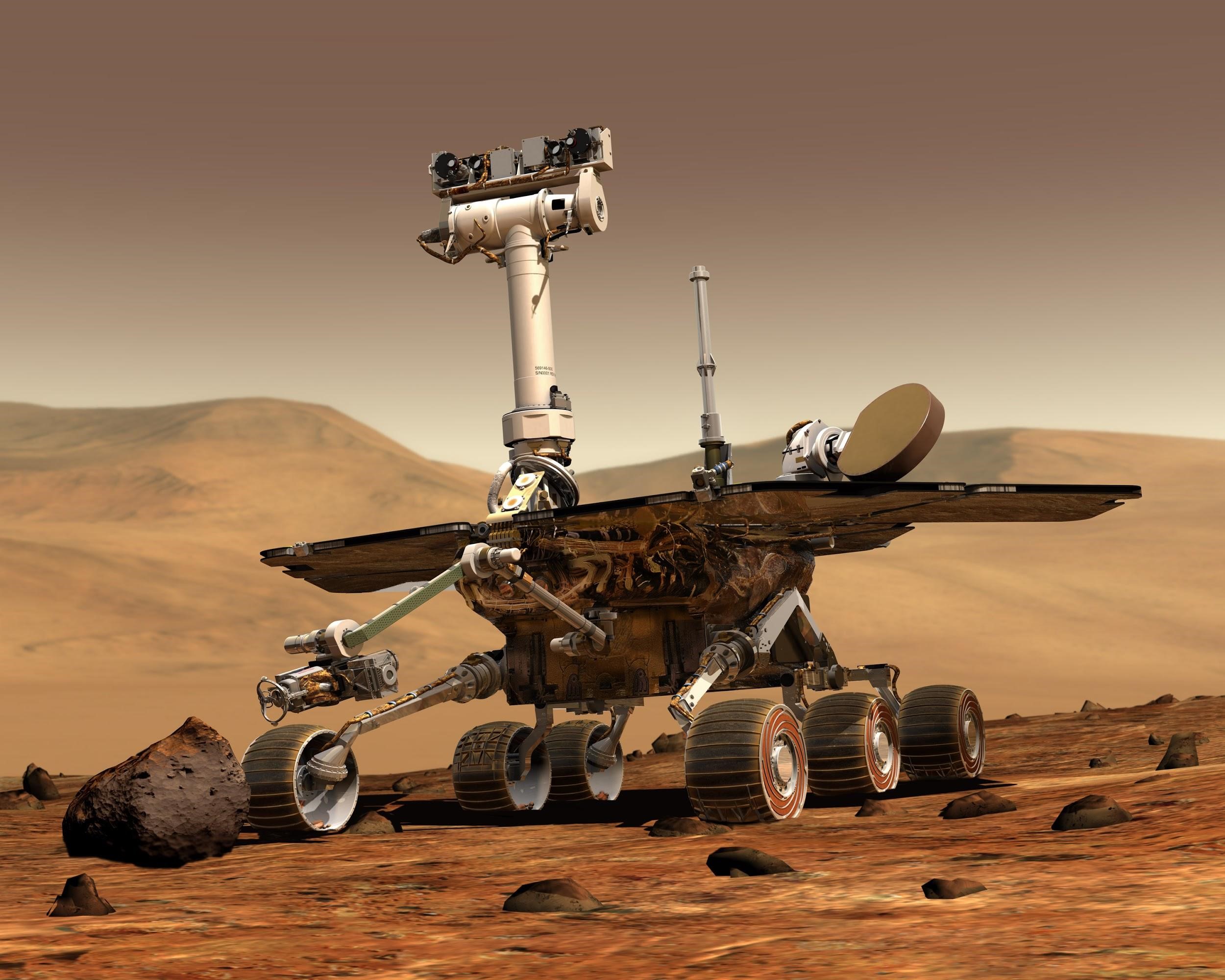
The next “giant leap for mankind” should be made on Earth.
Hollywood hits like “The Martian” have reinvigorated excitement about space exploration. Adding to the hype was the Pluto flyby in June and recent evidence of water on Mars flooding news and social media feeds. More than 100,000 people have already signed up for a one-way ticket to Mars to establish a permanent human settlement.
Space intrigues people, which has led some to question the Obama administration’s cuts to NASA’s funding.
Amid harsh criticism, President Barack Obama has slashed government funding for NASA since 2010, and it’s because the cost to taxpayers is absurd.
After his cuts, $18 billion, about 0.5 percent of America’s federal budget, is still allocated annually to NASA. Space proponents point to that percentage to argue it’s a measly amount, but 0.5 percent of $3.4 trillion is still a lot.
NASA administrator Charles Bolden explained that this will fund launching commercial crew vehicles to orbit, advance plans to send humans to Mars, and contribute to the International Space Station. That 0.5 percent spent in space could pay for electricity to power a U.S. city of 2 million people for a year, or 900 billion gallons of fresh water. The expense of sending a few astronauts to space could cover housing for more than 10 million U.S. citizens.
While NASA squanders some of the world’s brightest minds and billions of dollars determining how to help humans survive on a planet with traces of water more than a 100 million miles away from earth, millions of people suffer without access to clean water on a planet perfectly suited to sustaining human life.
Cancer continues to kill 20,000 people a day, and much of the human brain remains beyond scientists’ understanding, but NASA fritters away America’s money and intellect on solving problems with little bearing on our daily lives.
There are many more practical ways to invest taxpayer money than on research with few tangible benefits.
In NASA’s magazine, Spinoff, which features discoveries from aerospace research that benefit consumers, NASA claims practical contributions such as memory foam, advances in MRI technology, and GPS navigation, but those shouldn’t serve as excuses to continue funding its billion-dollar expeditions.
“Proponents claim that, on its route to the stars, NASA has completed research that has benefited the rest of mankind,” Massachusetts Institute of Technology graduate student Keith Yost wrote in an article in MIT’s student newspaper.
“But let us not deceive ourselves into thinking that all of NASA’s budget can be recompensed by the occasional
spin-offs from its R&D program. Let us not buy into the delusion that all of the low-hanging fruit that NASA has picked over the years would have gone undiscovered forever, or that we would never have achieved satellites without luxuries such as the Apollo missions.”
If those scientific advances were discovered as byproducts of other research, imagine what could be accomplished with that funding and brain power applied directly to bettering human life on Earth.
And if the government stops funding NASA, that doesn’t mean space exploration will end. Private money may not make NASA the world’s trailblazer to the galaxies, but what’s more important: being the leader in space or on Earth?
Considering America’s $18 trillion deficit and Congress’s constant bickering over raising the debt ceiling, there’s not enough government money for both. And a small step for man in space isn’t worth it right now.
