
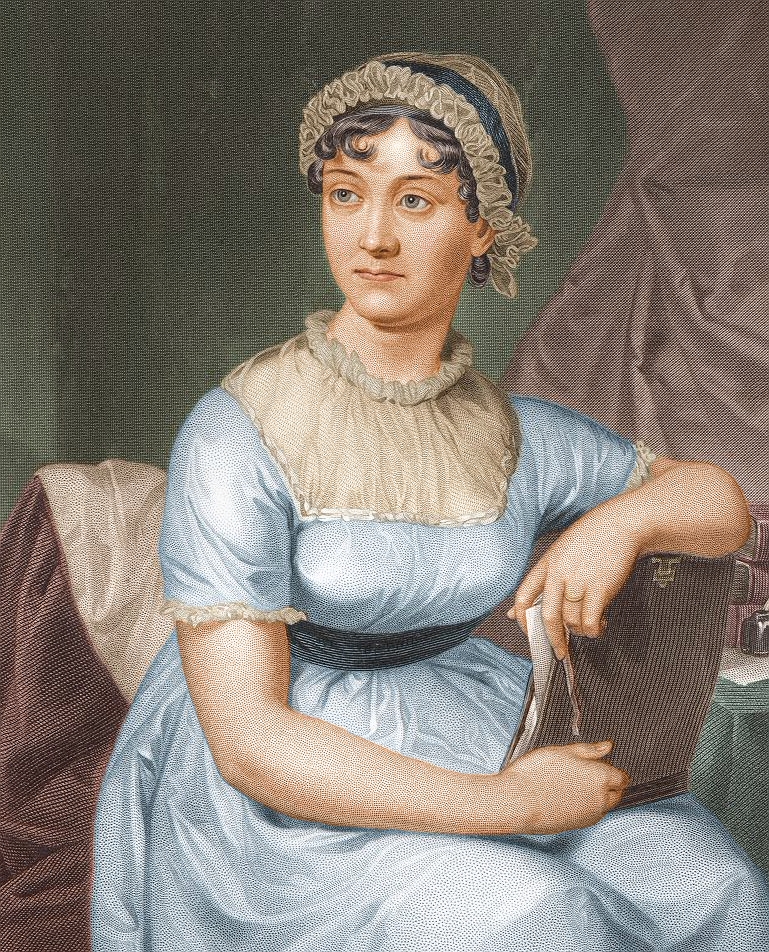
Jane Austen’s novels boast more than ball gowns and busybodies.
According to Assistant Professor of English Dwight Lindley, “Pride and Prejudice” and its companions depict human character in a way from which both male and female readers can benefit. In his lecture “Why Men Should Read Jane Austen” on Oct. 9, Lindley argued that men shouldn’t be repelled by the stigma of femininity in her novels.
“Our men today have been educated to favor certain kinds of thinking over others,” he said.
Austen transcends stereotypes because she is a master of narrative, character reading, and probability, Lindley said. Aristotelian in her philosophy, Austen uses her knowledge of human character to construct realistic narratives and predict behavior. Studying and emulating these methods enables readers to better understand themselves.
Over 60 students, parents, and professors attended the lecture. Almost half of the attendees were male.
Sophomore Dustin Pletan said after attending the lecture, he realized Austen’s books are not about women but people.
“Jane Austen is so quintessentially feminine,” Pletan said. “I always thought her novels were about the psychology of women, but Dr. Lindley’s thesis made me see the male characters in a new light.”
Sophomore Ilsa Epling, an officer of the Cravats and Bluestockings, which held the talk, said she first gained appreciation for Jane Austen through a Hillsdale College high school trip, but the lecture made her even more intrigued.
“I know the talk was geared at men, but I was never much of a fan of romance novels as a child,” Epling said. “So to discover Jane Austen and romance novels that were engaging and exciting was a wonderful experience. Then, to come and talk about other aspects besides the romance — like the analysis of the characters and what we can learn from them — is just fascinating.”
Already a fan of Austen prior to the lecture, junior Jared Eckert attended the talk to hear more about her narrative style.
“Her works have continued to interest me, especially after reading Alasdair MacIntyre’s ‘After Virtue,’ in which he argues that she is one of the defenders of the narrative conception of self. In other words, Austen’s characters, in order to be intelligible, are fundamentally shaped in a large part by their personal history, culture, and relationships,” Eckert said. “For guys not to read Austen is to miss out on some great, worthwhile literature that really explores what it means to be human — what it means to be a good human — in a fruitful way.”
