
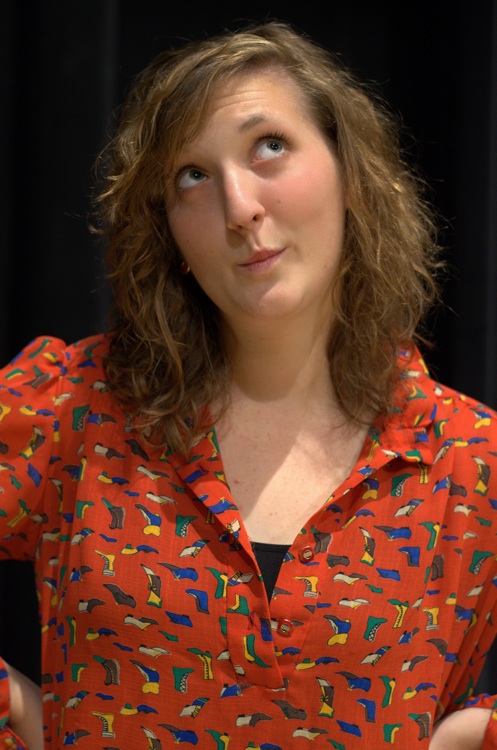
Auditions are finished, the cast is decided, and the Hillsdale College theater department has released its final list of upcoming performances, including “The Trojan Women” and “Medea.” Both plays were written by the Greek playwright Euripides.
With only four weeks until the premiere, preparations have already begun for “The Trojan Women,” with both new and experienced performers, including freshman Catherine Coffey as Andromache, senior Lauren Hughes as Cassandra, junior Katherine Denton as Helen, and senior Mark Keller as Talthybius. Immediately following the performances of “The Trojan Women” beginning Wednesday, Oct. 3, and ending Saturday, Oct. 6, preparations for “Medea” will commence.
Freshman Matthew Sauer was cast as King Aegeus in “Medea.”
“It’s exciting to have a chance to act already in my first semester here,” he said.
Both “The Trojan Women” and “Medea” have been adapted and translated so as to be clearly understood by a modern audience.
“Ellen McLaughlin does what she calls an adaptation of Greek plays,” Denton said. “She has great respect for the Greek playwrights because they were soldiers themselves and wrote from their own experiences of war.”
Denton said McLaughlin remains true to the classical source and Euripides while attempting to remain contemporary.
“It looks at what war really does and what happens to people caught in it,” Denton said.
“Medea” is adapted from its original form as well.
“The technical term for our version is a translation,” she said. “We are translating the people into a new era,” said senior Maggie Ball, who acts the part of Medea.
Though originally written about the clash between the culture of Athens and the culture of “barbarians” in outlying cities, the theater department’s “Medea” is set against a background of strife between Europeans and Native Americans, instead of Greeks.
For both plays, outside sources have assisted with design, dialogue, and approach, so as to incorporate the variety of cultures and to emphasize the shock and impact of different groups of people, Ball said.
A Native American dancer will teach traditional dances, connections from a Native American pow-wow that several members of the cast learned, and images and research from modern wars.
“We’re bringing in a native dancer; our composer is working with a Native American musician; it’s going to be really great,” Ball said.
The actors, especially the leads, are conducting research into their roles to be able to demonstrate the schisms between the widely different cultures who meet in “The Trojan Women” and in “Medea.”
“The characters [in ‘Medea’] will be mixtures of the two [cultures] there were at the time, some will look more French and others more native,” Ball said. “This is also my senior project. It’s pretty intensive role researching. I am really excited, this is exactly the kind of stuff I love to do. What makes this play different is the historical content of the play, being Greek, as well as cultural research for the Native American aspects.”
Although transforming the ancient plays into contemporary circumstances, the directors and performers aim to maintain the power of the stories and classics, while creating a more sympathetic atmosphere.
“They bring Euripides forward in time so that is applies to any war, in any time period, and in any human catastrophe,” Denton said.
“The classics reconcile with other cultures; they all deal with the same issues,” Ball said.
