
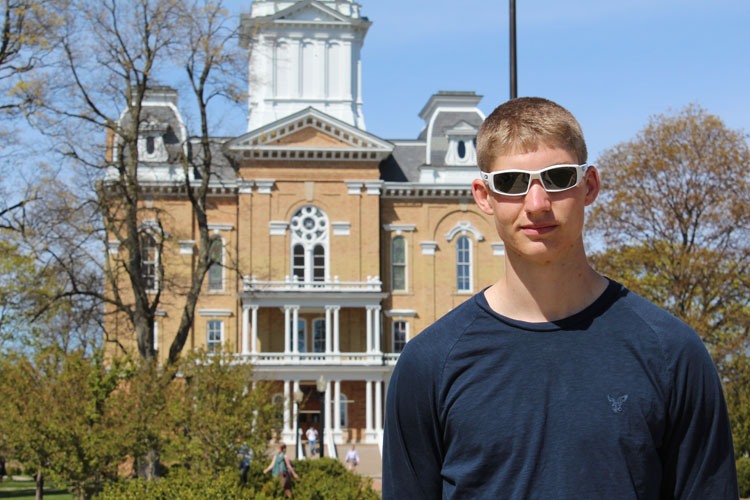
 Junior Blake Scott is studying international business and Spanish. He is also the president of the firearms club and captain of the Hillsdale College shooting team, which just won the Division III national title.
Tell us about the national competition.
There are six different events, one per day. We won enough of them to win the division title and we also won $15,000 of endowment money for the college. The best part of the team is that only two of us were competitive shooters before coming to Hillsdale. So we all started from scratch and have gone to a level where we can compete nationally and win a Division III title.
What is the format of the tournament?
The events are skeet, international skeet, American trap, international trap, sporting clays, and five stand. You do one each day. Most events are out of 100 targets, but some of them are out of 50. You can’t just be good at one event. You have to be well-rounded shooters in every event, and that’s why we do well. We’ve been with each other for two weeks straight, so it’s been a long trip. We had early mornings. We were up at 5:30 a.m. several days of the week. Sometimes the competitions last for two hours. You have to focus and … make that decision: “I’ve got to go shoot right now.” And then you can take a break, but right after that you’re back into competition again, sometimes twice a day. We won the title by four targets. So every target mattered.
How did the team hold up?
Most of us are used to shooting several thousand rounds a week, so we’re used to that. It’s definitely mentally taxing more than anything. Your eyes – you have to concentrate for a long amount of time.
What is the difference between events?
Sporting clays and five stand are targets with different sizes and speeds that you get presented on the spot. You have to make on the spot decisions. That’s a lot harder of a game. Other games require a lot more precision — you know where your target is going to be generally, but you need a lot of precision. The winner in that kind of event will be 100 out of 100. There’s a wide range of skills needed for these events.
How does competitive shooting compare to other sports?
I was on the track team for two years. With injuries, I realized that was physically taxing on the body and that it wasn’t for me. So I chose something where I can compete on the same level. Shooting has allowed me to do that. It’s pretty similar. You’ll be practicing many days a week. Even though it’s not a fitness-oriented sport, it still requires a lot of practice. I think that it’s just as much of a commitment as any sport on campus, and I think that’s the way the college views it too. You have to practice four of five or six times a week, often for several hours, rain or shine, if you want to compete.
— Compiled by T. Elliot Gaiser
