
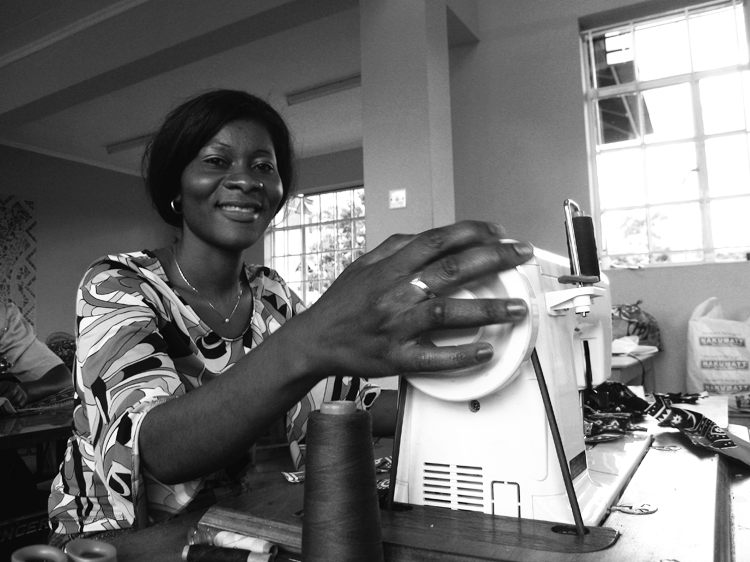
 Amani ya Juu is a handicraft company that provides Kenyan women with livelihoods, by training them and then selling their goods internationally, especially in America.
Amani empowers women to earn an income, inspired by the motto, “Women reaching out to women.”
This weekend, one Hillsdale College mom brought the company to campus.
Mary Nelson, mother of sophomore Collegian web editor Sally Nelson, lived next door to the Amani complex when she and her family stayed in Kenya during the year they adopted their African daughter, Josie Nelson. She has been a volunteer and distributor for the company for four years and has sold the merchandise at Hillsdale College for two years.
She said her relationship to the organization started as a relationship with the Amani women.
“We became endeared to them,” Mary Nelson said. “I know the structure of Amani, and selling the product is the way to bring in more income to the women. It wasn’t that I sell the product because they’re such cute bags. My goal is to really help the women earn more money.”
Mary Nelson receives a shipment of the different items Amani makes: purses, jewelry, quilts, Christmas décor, aprons, and more. She then hosts shows, like the one during this past Parents’ Weekend, and sends the profit back to Kenya. This past Saturday, the Nelsons sold $1,662 of merchandise.
“Sales like Hillsdale really mean a lot to Amani,” Mary Nelson said. “Our family last year sold $18,000 last year.”
Junior Wesley Steeb has bought Amani products in the past and said she thinks they are unique and beautiful. She also said the business model of Amani is very inspiring.
“I love the model of Amani in that it’s providing income and teaching skills and giving jobs to empower women in Africa,” Steeb said. “It’s empowering them to improve their own lives. I love supporting that.”
Steeb said she enjoys listening to the stories Mary Nelson has to tell about each of the products. Nelson knows the African women behind every item.
Kimberly Gehrke, executive assistant to the director of the President’s Club, said she also enjoys the personal connection Mary Nelson shares with the company.
“Anything that expands our horizons and lets us know of the needs that are out there is a great benefit. I admire Mary for doing it. It’s a labor of love on their part,” Gehrke said. “It’s certainly an example to the rest of us.”
Mary Nelson and her family share a deep personal connection with Kenya, and love has a great deal to do with it. They work with Amani in order to give back to the women they met — the women that are a part of 6-year-old Josie Nelson’s culture. It is a process full of emotion and dedication, and Mary Nelson chokes up talking about it.
“Not one Amani woman is out of poverty. It’s just horrific. It’s a very sad way of life. Even though they have an income, it’s expensive to live in Kenya,” Mary Nelson said.
Mary Nelson said the opportunity to get to know the women helped her confront her conception about skin color.
“I love the women… They have the same heart that I do,” she said. “They want to love their children, and God gave me eyes to look past their color.”
