
Of all the seniors walking the stage this May, 17 will be honors students. That means almost half of the honors students of the original class of ’12 will not complete the program.
The Hillsdale College Honors Program admits 30 students each fall plus a four-person waiting list, said Richard Gamble, associate professor of history and head of the honors program.
Gamble said the college expects some attrition because of the rigorous standards of the program — honors students must maintain a 3.4 GPA — and because of various personal reasons.
“There is going to be a certain type of attrition that maintains the standards of the program,” Gamble said. “The attrition rate usually speeds up as seniors start having to make hard life decisions. This is certainly something we want to improve on. My goal is to keep students in the program. We’d like to see all 30 complete the program each year.”
To accomplish this goal, Gamble said he is going to work on building the right ethos and on communicating the benefits more effectively.
Attrition
This year’s small honors class size seems to be a recent trend. In 2009, the honors program graduated 15 students. It graduated 20 both in 2010 and 2011.
Senior Trevor Anderson officially dropped the program this past fall, even though he said he started thinking about dropping it after his freshman year.
Anderson said he dropped because of the calculus and advanced science requirements.
“I was intimidated by the academic rigour,” he said. “Now I think that was a foolish thing to do.”
Anderson’s strongest incentive to stay was the quality of people in the program.
The program could be better, he said, by fostering its distinctive community more. The highlight of Anderson’s time in the program was the bonding experience provided by the freshman honors core classes.
“We are considering some additions to the program that will help with retention,” Gamble said.
Gamble said he could not mention specific additions and changes but said decisions are weeks away.
He said he wants to make sure students are committed to the program from the beginning and said the annual fall retreat seems to be successful in that regard. In addition, he said he wants to communicate why the program deserves retention.
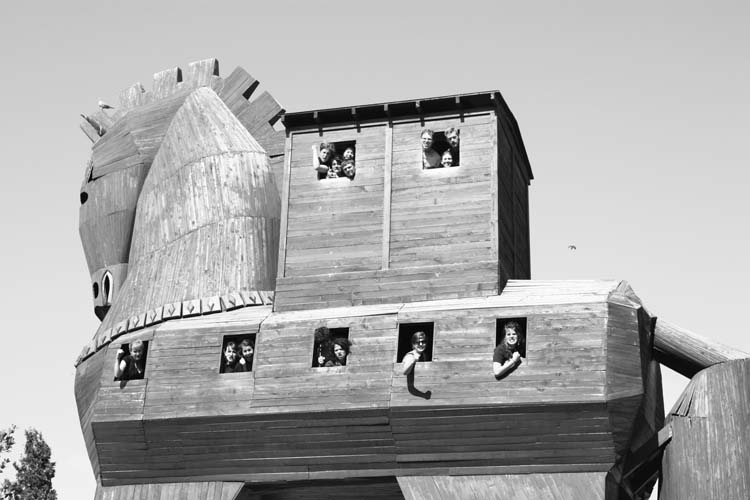
The honors program is completely voluntary and does not include any additional scholarships. The program does boast other benefits though — an annual spring break trip, a trip to Turkey for juniors, community service projects, and weekly meetings. Gamble said he wants to communicate these benefits more effectively.
Senior honors student Kirsten Block remained in the program because of these benefits. Even though she did not go to Turkey, Block said she stayed to finish what she had started freshman year.
“I loved being integrated into a community of peers right away,” she said.
The benefits of community were not enough to keep senior David Gordon in the program. He dropped out his freshman year.
“I don’t think I ever really fit in with other people in the program,” Gordon said. “I enjoy learning, but I’m not particularly academic.”
Gordon said he decided to major in finance while most of the other honors students decided to major in the humanities.
“The program catered to a different kind of student than I am,” he said.
Another factor in Gordon’s decision was his grades from fall semester. Gordon said he needed to drop something for the spring semester, especially since he wanted to play rugby.
The Senior Thesis
The biggest challenge to graduating students from the honors program seems to be the honors thesis, Gamble said.
Some seniors tend to drop out of the program at the beginning of the spring semester. When they are 10 weeks away from the first oral presentation, reality starts staring them in the face, Gamble said.
Senior Michael Blank dropped the program this year because of the thesis requirement.
“I was planning to complete the program,” Blank said, “but the thesis was a big component. The honors program has been disorganized. I didn’t start working on my thesis until senior year and even then there was no pressure.”
Blank said by the time he decided on a topic, there was not enough time to research, write, and complete his normal academic coursework.
To help overcome this obstacle, Gamble said he plans on helping students start their thesis early. He would like to have students solidify their topic and committee by the end of their junior year. This should help improve retention and create a better overall experience.
Honors students who need to complete theses for their major have a hard decision. To stay in the program, they would need to write two theses. Gamble said he is willing to work with these students to create some overlap on a case by case basis.
But just how much overlap is allowed depends on each department’s requirements. Gamble works with each department to make sure the honors thesis does not interfere with departmental requirements.
In the past, some students have been able to simply expand their major thesis and do a second presentation to complete their honors thesis; however, some students have had to write two completely separate theses.
Block said writing the honors thesis was actually an incentive to stay in the program.
“I wanted to be able to write a thesis and it wasn’t required in my major [Greek],” she said. “I wanted a capstone project. I wanted to tackle something I wanted to research and to be my own director of a project.”
Increasing Retention
“Gamble is adding organization,” Blank said. “You’re not going to see the mass drop outs you do this year in the future.”
Block said she advised against eliminating requirements from the the program to make it more attractive.
“If you got rid of the things that make students leave,” Block said, “you wouldn’t really have an honors program. It’s all part and parcel of the program.”
Instead of subtracting, Gamble seems to be restructuring.
This year, the weekly honors meetings, or forums, have followed up on the “As You Leave this Place” project from last year.
Last week, Professor of History Mark Kalthoff shared on one of his additions to the book project, Chesterton’s “Orthodoxy.” Earlier this year, Associate Professor of Art Barbara Bushey discussed one of her favorite books, Matthew Crawford’s “Shop Class as Soulcraft.”
“One of our goals is that professors model the life of the mind,” Gamble said. “This is especially effective when they share about something outside of their area of expertise.”
Gamble said it is difficult overseeing over 100 students in a single program.
“Often why [students] leave is out of the hands of any director,” he said. “I try not to guilt trip them.”
For Gordon, the honors program served its purpose his first semester by helping him meet new people on campus.
“The program could appeal to more students by being more practical,” he said.
Gamble said more changes are coming but he took this year as a learning year, watching and observing so that he can base his actions next year on experience.
“I think [Gamble] is going to do great things for the program,” Anderson said.
