
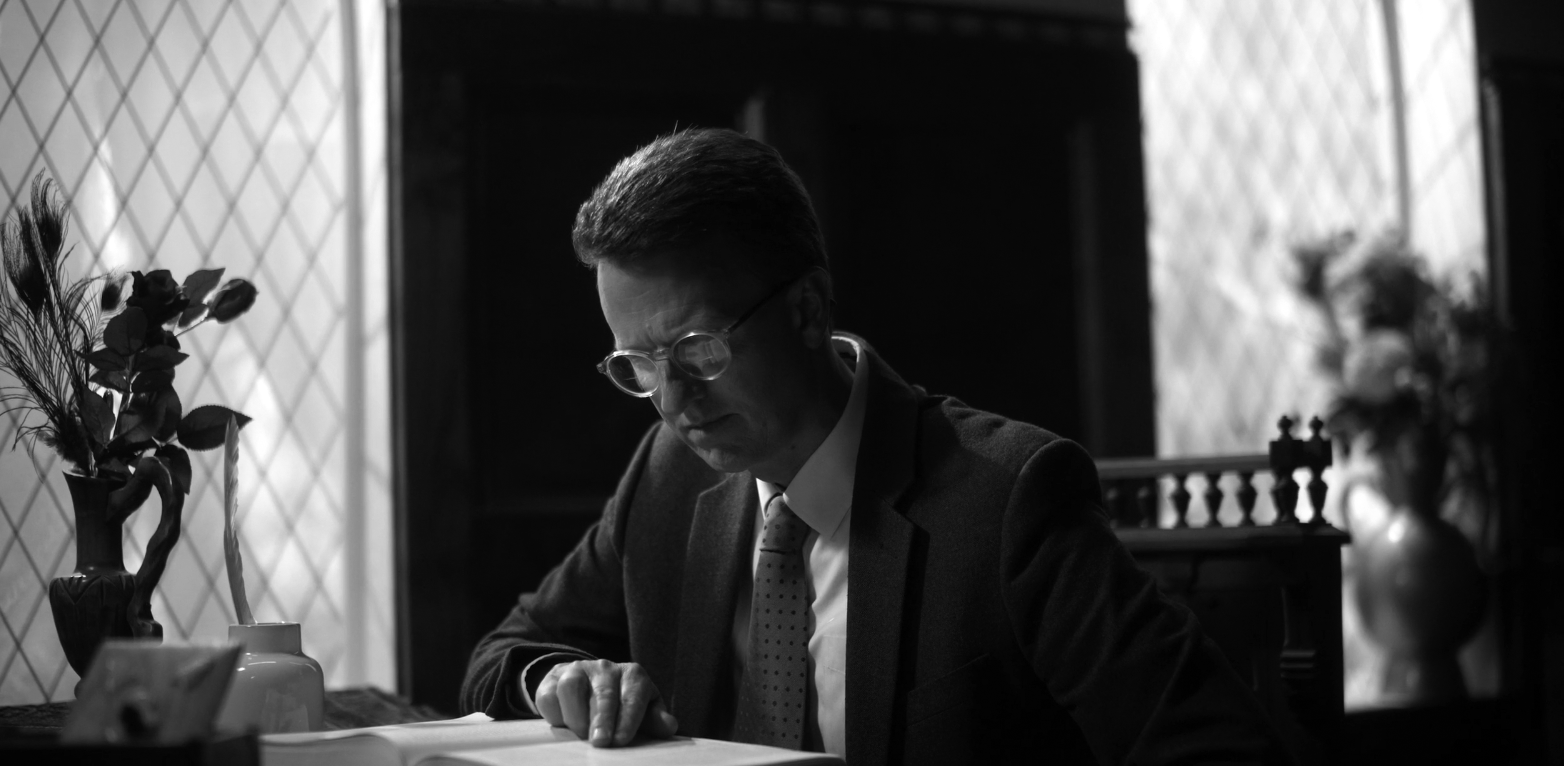
Dean of Humanities Stephen Smith introduces the life and writings of Thomas More in an online course released by the Center for Thomas More Studies Oct. 31, the 25th anniversary of Pope John Paul II’s declaration of More as patron saint of statesmen.
“He’s a free, artful, and daring thinker who lived and wrote and thought under a very powerful monarchy,” Smith said. “He also served his country with great distinction throughout his life, and so he is an author and thinker who was also a practical statesman.”
The eight lectures guide the viewer through More’s major works, personal correspondence, and moral conscience. In the early 16th century, the English statesman refused to swear an oath acknowledging King Henry VIII as supreme head of the Church of England and the annulment of Henry’s marriage. More was executed in 1535 and canonized as a martyr by Pope Pius XI four centuries later.
Smith co-edited “The Essential Works of Thomas More,” published by Yale University Press in 2020, and edited “For All Seasons: Selected Letters of Thomas More,” released in 2012.
The course can serve as an introduction to the saint, Smith said, including for those who may know him from the famous play-adapted movie “A Man for All Seasons” but want to “know more.”
“For More, to be a practical statesman meant to have the ability to pilot the ship of state in both calm waters and in a real storm,” Smith said. “To do that, a person needs the best education, the best preparation, the best habits, the best experience possible. You don’t just magically become capable of statesmanship, in More’s mind.”
After decades of studying Thomas More, Smith said it was difficult to choose what to include in a course so short compared to his other scholarship on the saint.
“You have to accept the real limits of time, and then choose wisely,” Smith said. “In this case, I knew that we needed to introduce his character, his personality, his mind, his wit. The first thing I thought was, ‘Why don’t we let a real friend of Thomas More’s tell us what he thought?’ So we started with Erasmus and his famous letter on Thomas More.”
The course then turns to More himself and letters he wrote to one of his famous mentors and the teacher of his children. Smith also introduces the viewer to his “major writings that need to be much better known,” including More’s “Utopia” and “The History of Richard III,” which inspired a young William Shakespeare to pen his “breakthrough tragedy.”
“There’s a huge More-Shakespeare connection that I want everybody to know about,” Smith said.
After moving through More’s writings during the Reformation, Smith also teaches on his writings while imprisoned in the Tower of London, including “A Dialogue of Comfort against Tribulation.”
“C.S. Lewis thought this was a book that should be on every man’s shelf,” Smith said.
Distant Moon, the same production company contracted for online courses by Hillsdale College, produced the video lectures, which can be found online at thomasmorestudies.org.
