
Six government interns deemed non-essential
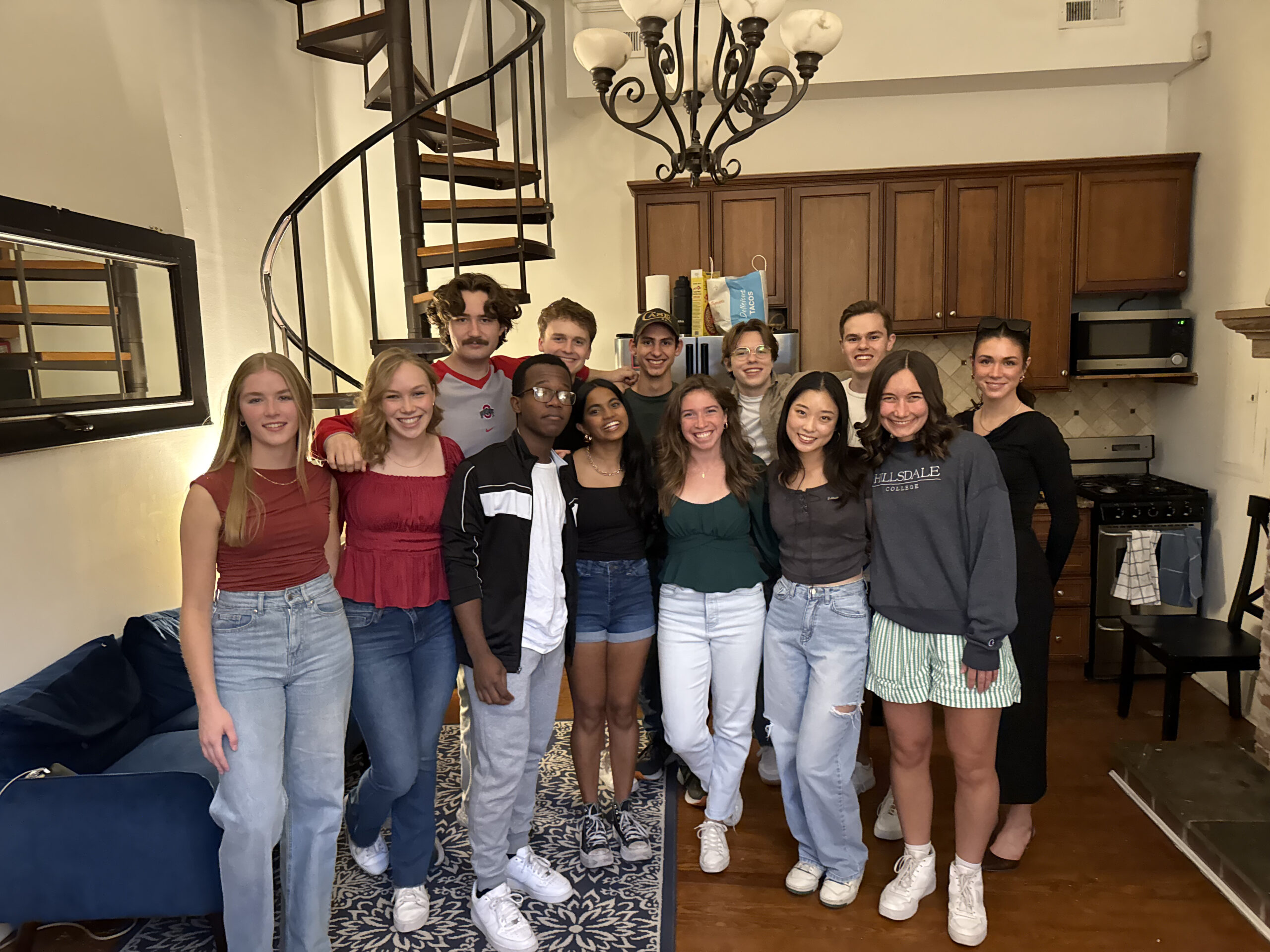
The Fall 2025 WHIP class stand together in Apartment B of the Hillsdale House.
Courtesy | Elizabeth Soeleman
Six Hillsdale students completing the Washington Hillsdale Internship Program are non-essential — according to Congress at least.
All non-essential government employees have been furloughed since Oct. 1 because Congress did not meet the deadline to pass appropriations legislation for the 2026 fiscal year. Most federal employees will receive no pay until after the government reopens.
Although they are not working the jobs they were hired to do, students who were working “on the hill” are instead spending their time off working on a college research project — and exploring on the side.
“We’re not allowed to be in contact with our supervisors at our office. We are doing nothing for our internships right now, and it’s been that way for two weeks,” said junior Gabriella Lovins, a furloughed federal intern. “The day before the government shut down, all of the interns were called into a meeting and told if the government shuts down, you will not be permitted to come into work, and you will not be able to contact your supervisors.”
Hillsdale in D.C. has been providing work for the furloughed students, according to junior Elizabeth Soeleman, an intern at the House of Representatives for congresswoman Young Kim.
“We’ve been just doing work for the school over here, specifically, the D.C. campus, just kind of little projects here and there,” Soeleman said. “I think it’s really cool to get really connected to the D.C. campus over here while I’m on WHIP, and obviously I wouldn’t have been able to have done that if I continued my internship.”
Although the unemployed interns currently cannot work their internships, they have kept busy, according to junior Alex Mooney, a federal intern.
“There have actually been a lot of opportunities. I’ve been surprised. There’s tons of stuff to do in D.C. normally, but we’ve gone to several events at different think tanks and nonprofits,” Mooney said. “Some of them have ramped up or had specific events for furloughed interns or furloughed staff. So we’ve gone to some of those.”
The students have been able to take advantage of opportunities they wouldn’t otherwise have time for if they were still working their internships, according to Soeleman. “I haven’t had a bad experience not working. Obviously, the internship is such a big part of the WHIP experience and expecting to not go into the office for a few weeks is kind of daunting, but it also allows me to really explore the city and see what other opportunities are out there,” Soeleman said. “For example, we were able to go to an intern workshop and networking events, which we probably wouldn’t have been able to if we were still working nine-to-five jobs.”
The furlough has given the students time to focus on their school work and explore other activities around the city, according to Mooney.
“It’s honestly been a good chance to catch up and get ahead on school work,” Mooney said. “There have been plenty of things to do. Also just going around, visiting monuments, visiting all the things that there are to see in the city.”
The work the students are doing for Hillsdale in D.C. has been keeping them busy, but they have a more relaxed schedule than they did with their full-time internships, according to Lovins.
“It’s a little bit like a weekend with an independent research project,” said Lovins.
Junior Elizabeth Gaines, an intern at the House of Representatives Judiciary Committee, used her newfound free time to get out of D.C and visit a new city.
“On the first day of the shutdown, or maybe the second day, me and a couple of friends went to Philadelphia, so that was a fun little thing we got to do,” Gaines said. “We went to the Museum of the American Revolution, and we saw the Betsy Ross House and just walked around and saw some of the historic downtown area.”
Although furloughed employees are prohibited from working, Soeleman still stays in contact with the people from her office.
“I can’t touch any work at all, but I’m invited to hang out in the office to talk to them. A few weeks ago, they hosted a little potluck in the office, so I came in with cookies and just was able to talk to them and see how the office was holding up despite everything,” Soeleman said.
Since employees who do lower bureaucratic work and interns are not allowed to work, the responsibility to cover their workload falls onto those deemed essential, according to Lovins.
“Everything is harder for the people who are still at work because they don’t have all of the support staff, and there’s a much larger burden on them right now,” Lovins said.
There seems to be no urgency for reopening the government, Lovins said, so it is difficult to gauge the duration of the furlough.
“We can’t have a good timeline of when the government’s going to reopen. They could come to a deal tomorrow, hypothetically. They’re not going to, but they could,” Lovins said. “It probably will be shut down all of next week, if I had to guess. I’ve heard some people say it’s going to be shut down until Nov. 1. So everybody has different theories.”
There has been less action in the Capitol Hill area, where WHIP students are housed, since the shutdown, Mooney said.
“Because of the shutdown, there’s less traffic around here. Not as many people are driving into the city each day. So it’s less busy,” Mooney said. “But not that much has changed other than that. Some restaurants will have discounts for furloughed interns and staff. That’s pretty nice, but it hasn’t changed all that much.”
Now that she is not working, Gaines says the city feels different as she spends time out and about during her usual working hours instead of the hours after work.
“I would say I personally have not noticed a huge change. It’s funny, because now, I’m walking around in the middle of the day going places, and it’s hard for me to say whether it’s different now, because I would have just been in the office in the middle of the day,” Gaines said. “Also, taking the metro, I don’t really notice a huge change. But then again, that’s just because normally I would have been working.”
Even without a full-time internship, WHIP still has a lot to offer students, according to Mooney.
“The part of WHIP that is so valuable is the connections that you build and the people you get to meet, and I’m still able to do that really well even though I’m not in the office full time,” Mooney said. “We’re making the most of the furlough and the shutdown and everything, just trying to stay positive to stay positive and do the most that we can. I think we’ve done that really effectively.”
