
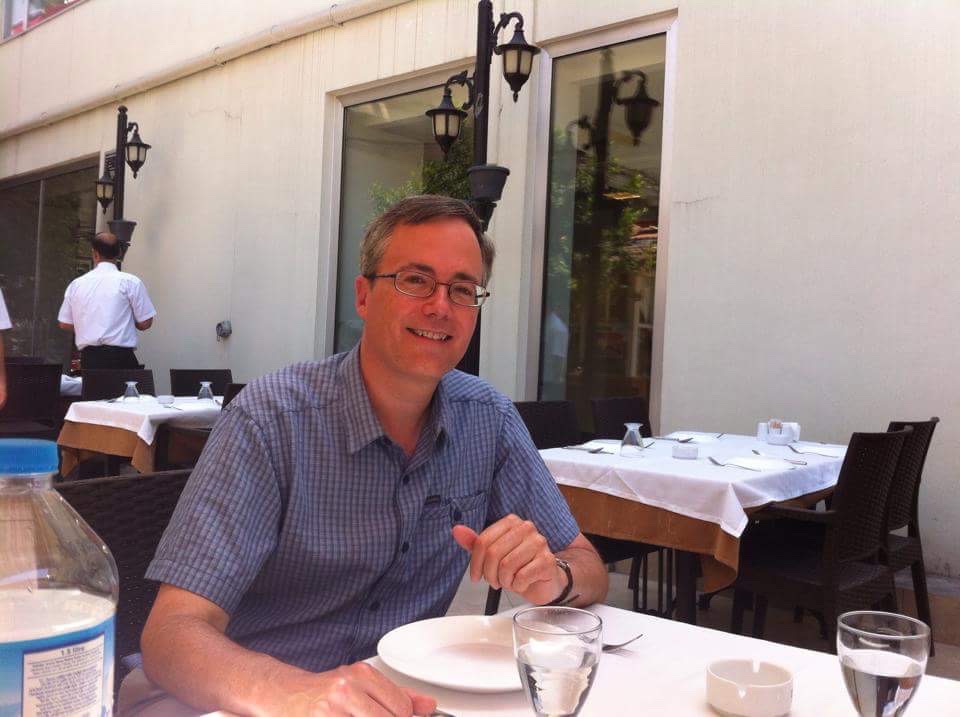
Three Hillsdale students spent the summer in Budapest, Hungary, as interns researching never-before-studied correspondence between Otto von Habsburg, the son of the last Austro-Hungarian emperor, and American conservatives such as Russell Kirk and Willam F. Buckley through the rise and fall of the Soviet Union.
Otto von Habsburg would have become emperor of the Austro-Hungarian empire, but when it disintegrated in 1918 at the end of World War I, von Habsburg went into exile with his mother and siblings, according to Hillsdale Professor of History Richard Gamble.
He then became a member of the European Parliament and a distinguished statesman who carried out years of correspondence with the conservative American intellectuals, Gamble said.
Senior Ethan Bourgeois was the first Hillsdale intern at the Habsburg foundation in summer 2024 and returned this past summer.
“We got to go through all his papers, worked with his archives,” Bourgeois said.
Von Habsburg wrote back and forth with American thinkers like William F. Buckley and Russel Kirk, as well as with statesmen like then-national security advisor Henry Kissinger, Bourgeois said.
“He has a lot of correspondence with these people that has never been touched before. It’s all new, and it’s all in English, so we could work with it,” Bourgeois said.
The internship with the Habsburg Foundation was the result of Gamble’s ongoing work on the biography of prominent Hungarian conservative John Lukacs.
While visiting the foundation in 2024 for a conference on the 100th anniversary of Lukacs’ birth, Gamble realized the foundation’s trove of correspondence in English between von Habsburg and American statesmen and thinkers would be perfect for Hillsdale students to study. When he returned, Gamble began finding donors and putting the internship together.
“Ethan was in American Heritage at the time, sitting at the desk right in front of me. I said, ‘Ethan, how’d you like to go to Budapest?’” Gamble said.
After the first one-student internship in 2024, Bourgeois returned this summer with Njomëza Pema ’25, and Lydia Chenoweth ’25 to continue the research and prepare a paper for the foundation that will be translated into Hungarian and published in an academic journal.
“I had never heard Otto von Habsburg’s name mentioned even once. I was interested in the internship at first just because it was in Hungary and because Dr. Gamble recommended it,” Chenoweth said. “The personal correspondence was my favorite, because it really gave an insight into his personal character, as well as all of his relationships with these people.”
The interns all said they knew little, or nothing, about von Habsburg before their internship. They said they now believe they have a more personal understanding of the man.
“There was a very aristocratic gentility to the way that he would continue to keep up with correspondences over the course of decades,” Pema said. “This man would never have left a text message on ‘read.’”
Bourgeois said that he found von Habsburg’s letters to be as revealing about American thought during the Cold War as they were a reflection of the Hungarian statesmen himself.
“America maybe did not understand Europe during the Cold War as well as they thought they did,” Bourgeois said. “These Americans are worried that de Gaulle is pulling away from the U.S., and Otto von Habsburg is coming in and saying, ‘no, what de Gaulle is doing is good. He is fighting for an independent Europe. He is fighting for a unified Europe that it’s able to work independently from America or from the Soviets.’”
All three of the students said they walked away with a deeper appreciation for Eastern European history and culture.
“I have fallen in love with Hungary,” Bourgeois said. “I now pretty much know Budapest better than I know any American city. The culture, the literature, and the music is so beautiful.”
Chenoweth said that her internship inspired her to go to graduate school in Budapest, and Bourgeois hopes to begin studying Hungarian. He plans on pursuing graduate school for a doctorate in Eastern European history.
“I love taking students to places that aren’t on their bucket list,” Gamble said. “They don’t need my help going to London or Paris someday. But if they’re going to travel, they’re probably not going to go to Istanbul, and they’re probably not going to go to Budapest.”
