
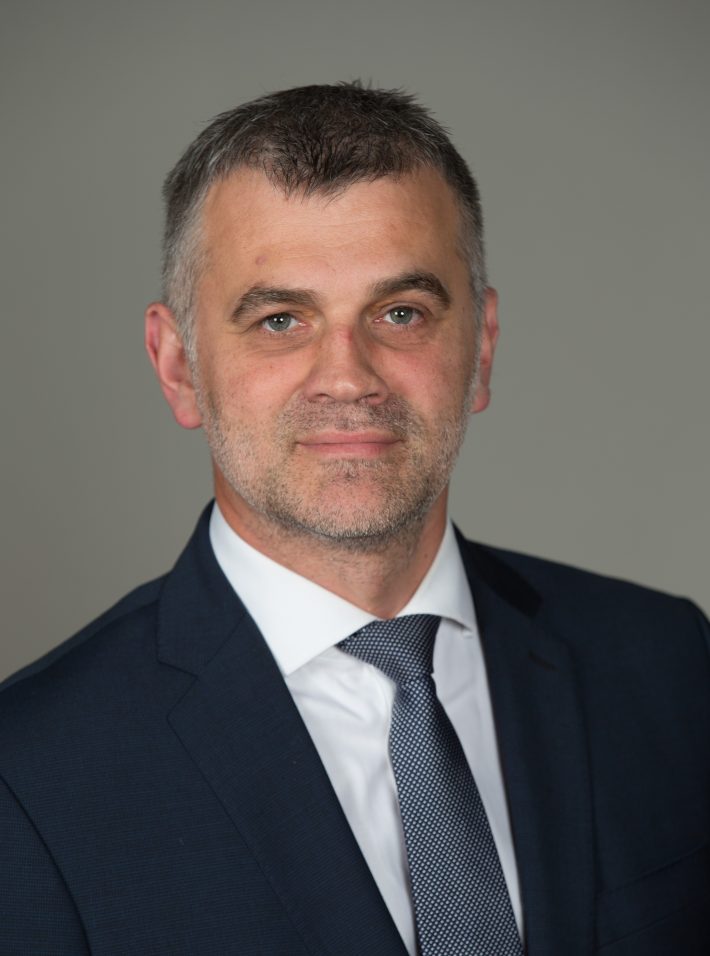
Europe and America must continue their interdependent alliances because of their shared history and heritage, Estonian ambassador Kristjan Prikk said in his talk, “The Future of Europe: Why Should It Matter to America,” hosted by the Center for Military History and Strategy in Plaster Auditorium Feb. 25.
“If we really take a look back far, no closer overlap culturally, economically, politically exists than that of Europe and the U.S.,” Prikk said. “We would both benefit by sticking together.”
Prikk argued America and Europe share the religious, political, and economic heritage of the West, which determine their ideas, policies, and alliances. Prikk traced the history of his native country, Estonia, to demonstrate these shared values. Estonia did not become an independent state until 1918 when World War I ended and four empires of Europe crumbled — Germany, Ottoman, Austria-Hungary, and Russia, according to Prikk.
Estonia soon had to defend her independence in a 14-month war against Soviet Russia, which ended with a peace treaty in February of 1920, Prikk said. Twenty years later, however, the Soviet Union claimed Estonia.
Throughout World War II and the Cold War, the U.S. never recognized Estonia as a legal part of the Soviet Union, Prikk said. Estonia gained official independence with the collapse of the Soviet Union in 1991 and declared its motto, “never alone again,” to credit the U.S. alliance that supported the small country during the 50-year occupation. Estonia joined both NATO and the European Union in 2004, which Prikk said provide economic stability and national security, respectively.
“Estonia will only succeed if it sticks together with countries who share our religious and cultural roots,” Prikk said.
These historical alliances ground the need for present-day and future ones, according to Prikk.
Associate Professor of History and Department Chair Korey Maas said Prikk’s presentation of Estonian history is an important context for American and European relations.
“I appreciated that he spent a fair bit of time first orienting the audience to some basic facts about Estonia and its history,” Maas said. “That struck me as an admirably humble thing to do — to implicitly acknowledge that, ‘Hey, Estonia’s a small place on the fringe of Europe, so I understand that you probably don’t really know anything about it.’”
Prikk said more than 60% of European investments impact the U.S. and vice versa.
“If there is a serious crisis in Europe, if Europe goes under, there will be an effect in the pensions and savings of every American,” Prikk said. “The mutual dependencies, the positive dependences, these dependencies have been built because Europe and America have always been a trusted place to invest.”
Senior Alexander Vietor said he appreciated Prikk’s perspective but thinks many Americans may disagree.
“The ambassador was quite sincere and happy to be here,” Vietor said. “He expressed a desire for continued US political, military, and economic cooperation with Europe. However, I don’t think many Americans share his level of commitment at the present time.”
Maas said he appreciated Prikk graciously answering direct questions after his presentation. After meeting several alumni in Washington D.C., Prikk contacted Hillsdale for the opportunity to speak, and the Center for Military History and Strategy was a logical host, Maas said.
Maas said hearing Prikk discuss history from a personal, lived experience was engaging.
“The personal anecdotes stood out,” Maas said. “For American students today, the Cold War can seem like ancient history, but of course it was nightly — and local— news during his own childhood.”
