
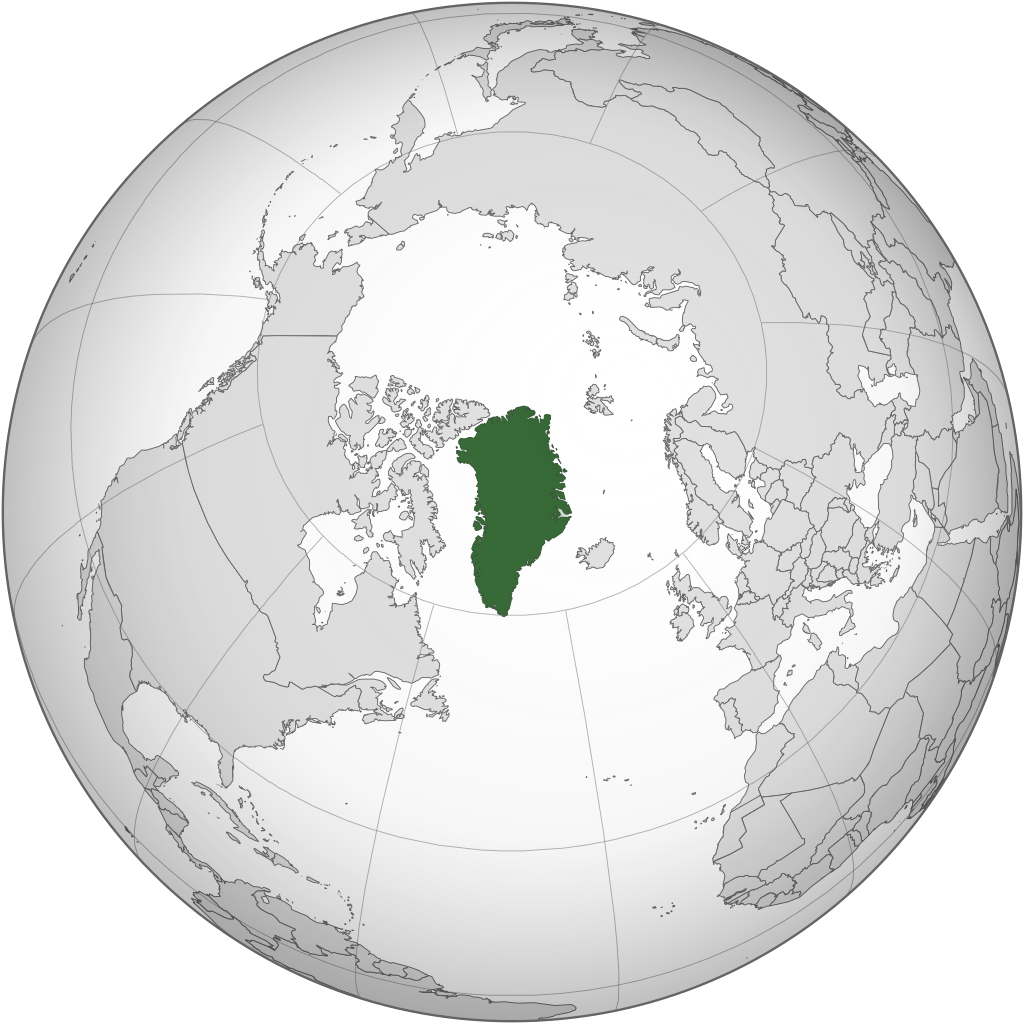
Everyone should agree, across the aisle: America needs to invest in Greenland.
Greenland is a Danish territory whose location is critical for American national security and offers an untapped wealth of resources and economic growth mutually beneficial to both countries.
In light of recent Chinese and Russian economic and military aggression in the Arctic, the U.S. has renewed its interest in Greenland because of its geographical location and rich mineral deposits. It serves as the buffer between North America and its largest adversaries: Russia, China, and North Korea. Greenland also has deposits of 39 out of 50 minerals critical for the growth of national security and economy.
President Donald Trump has spoken about his desire to buy Greenland since 2019, and since winning re-election, has reiterated his goal many times.
“We need Greenland for national security purposes,” Trump said at a press conference in January. “We need it for national security that’s for the free world. I’m talking about protecting the free world.”
Trump has received pushback from Denmark, Greenland, and groups in the U.S., who propose everything from alternative trade and association agreements to maintaining the status quo.
“Our country’s sovereignty and independence are non-negotiable,” Greenland’s Prime Minister Múte Egede said in December. “We are not for sale and never will be for sale.”
Though Trump did not rule out militarily forcing American influence over Greenland, the American people and Congress would likely veto any military operations on the island, which American allies and enemies would see as decisive proof of America’s belligerence.
Many of Trump’s possible actions are predicated on Greenland gaining independence from Denmark. This could be achieved through a vote in the Danish Parliament and a referendum of the people of Greenland — 67.7% of whom support independence, including the current prime minister.
One alternative to outright buying the island is for Greenland to enter into a Compact of Free Association with the U.S., which would both preserve Greenland’s independence and secure American security and economic interests. In return, the U.S. would be obliged to subsidize the island and grant its citizens access to American federal programs and job opportunities.
John Rahbek-Clemensen, associate professor at the Royal Danish Defense College, wrote in a national security magazine that even a U.S. free association deal would be too strong a commitment. Rahkbek-Clemensen believes any overt move toward an American CoFA offer or outright purchase would strain its alliance with Denmark and other European allies. He thinks this, as well, would display American disregard for foreign nations’ sovereignty.
Both Rahbek-Clemensen and Otto Svensden of the Center of Strategic International Studies argue the U.S. has already achieved its national security goals in Greenland. A 1951 military cooperation agreement with Denmark allows the U.S. to create and maintain military infrastructure in Greenland, as it has done with the Pituffik Space Base (formerly known as the Thule Air Base).
Any purchase or official association with Greenland would increase America’s burden from its current $50 million investment to at least $700 million, though miniscule compared to America’s $820 billion military budget.
The CSIS analysis, however, focuses on maintaining America’s relationship with Denmark. When — and this is a when, not if — Greenland declares independence, it will lose its tie to Denmark. Countries like Russia and China will look like beneficial trade partners, especially China with its Belt and Road Initiative, which connects and develops countries to enlarge China’s global influence.
The best option for America to take advantage of Greenland’s assets and guard it from our adversaries is to make overtures of friendship to both Greenland and Denmark by including them in the North American Aerospace Defense Command and Greenland in the U.S. Mexico-Canada Agreement.
By bringing Greenland and Denmark into another mutual defense alliance, the U.S. could pacify its European allies while simultaneously creating a reason to become more involved in Greenland’s civilian and military infrastructures.
The free trade offered by the USMCA would increase private U.S. business interest in Greenland, thus benefiting Greenland and providing Americans a new business frontier, especially for mining. Greenland’s plentiful minerals include lithium and cobalt, rare earth metals essential for batteries and electronic vehicles.
By the time Greenland fully decouples from Denmark, it will be so entangled in beneficial American defense and trade agreements that it won’t be able to take Russian or Chinese bribes if it wanted.
Trump would then be responsible for expanding trade, improving national security, and strengthening alliances all over the free world. Both America and Greenland would both be stronger for it.
Malia Thibado is a junior studying international studies in business and foreign language.
