
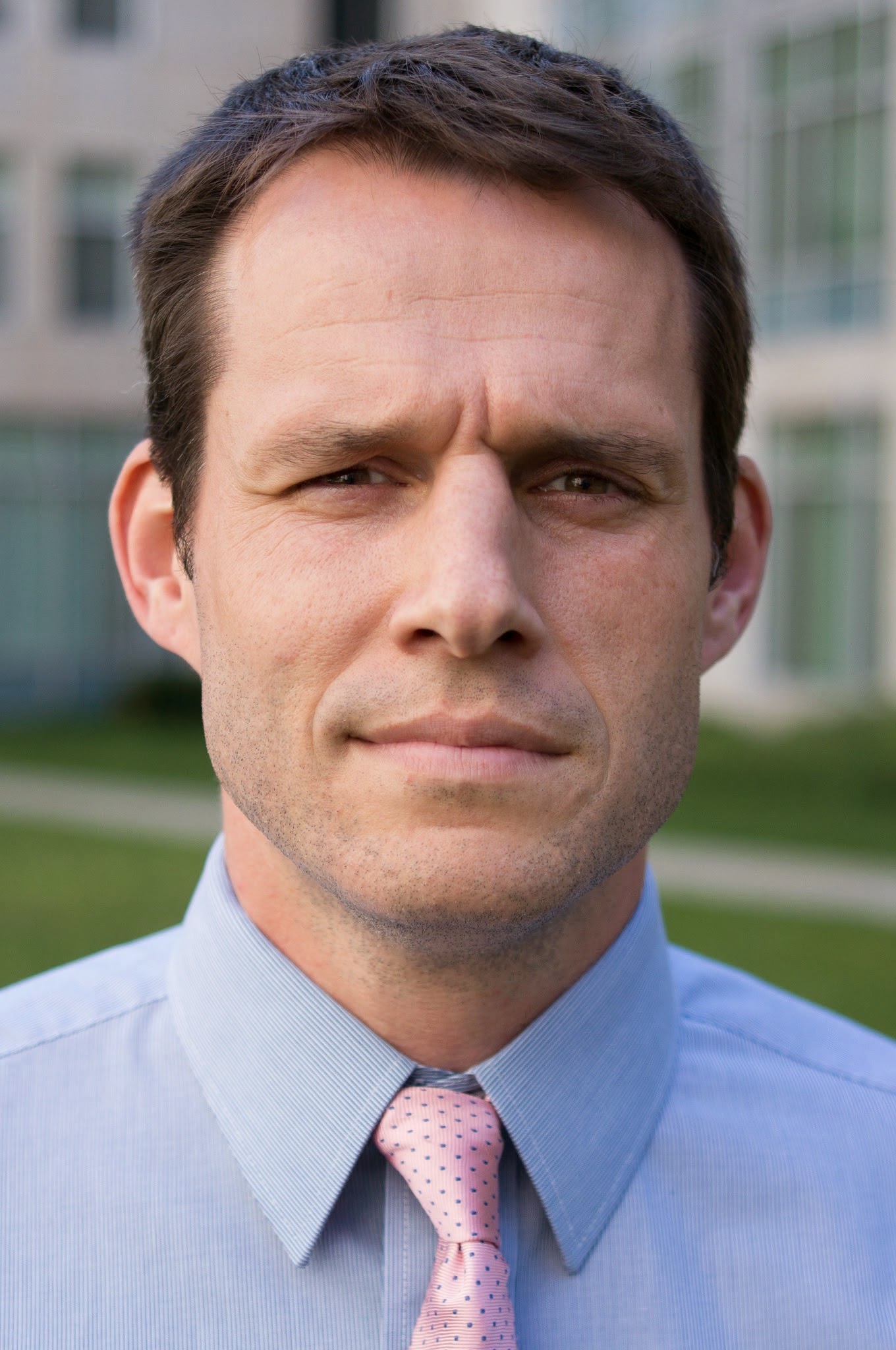
Religion is not the deciding factor for most Christian conservative voters, guest lecturer Samuel Perry said in a talk Oct. 25 hosted by Hillsdale’s Sociology and Social Thought Department.
In his speech, titled “What the Christian Right Gets Right (and Wrong) about American Religion and Politics,” Perry said Christian conservatives are fundamentally misunderstanding the role of religion in America and how it affects their decisions.
Professor of sociology at the University of Oklahoma, Perry is one of the five most cited sociologists worldwide. Perry’s areas of research include American politics, culture, religion, race and ethnicity, and sexual behavior, according to Christopher Robertson, visiting assistant professor of sociology at Hillsdale.
Perry has written and co-written numerous books like “Growing God’s Family: The Global Orphan Care Movement and the Limits of Evangelical Activism,” “Addicted to Lust: Pornography in the Lives of Conservative Protestants,” and “The Flag and the Cross: White Christian Nationalism and the Threat to American Democracy.” This month, he released his newest book, “Religion for Realists: Why We all Need the Scientific Study of Religion.”
“The religious makeup of nations, including our own, has less to do with the truth or moral worth of ideas or doctrines, but more of the natural processes of fertility and immigration,” Perry said.
Perry said three misconceptions that are pervasive in Anglo-Protestant conservative beliefs. The primary source of decision making is religious belief in a deity, the religion grows based on its correctness, and individual agents affect change.
“The primary cognitive force shaping human behavior may include beliefs,” Perry said. “But even before that, we are belongers before we are believers.”
Religion, ethnicity, even living in rural or urban neighborhoods drive the formation of a person’s group identities. Perry said individuals feel that these identities need to be protected from perceived threats by competing group identities, thus producing a political environment without rational or coherent thought.
Fertility and immigration create a sort of population flow. While the fertility of white Catholics remains steady, immigration of Hispanic Catholics is inversely proportional to the population of disaffiliated white Catholics.
“You don’t see religious change primarily as a period effect, but as one younger generation replacing an older generation,” Perry said. “What you have is an acceleration effect of people becoming less and less religious.”
Perry said the very foundations of the liberal, western society could smother religion.
“The role of the church is being replaced by the competition in the market,” Perry said. “Even more than the market, the state. It actually provides the tools that make the secularization of society available.”
The church is no longer the place of socialization or counseling, he said. Childrens’ schedules are filled with public schools and extracurricular activities. Church, according to Perry, seems to have become just another thing on the weekly schedule.
While Christian conservatives directly diagnose issues they’re facing — being a Christian increasingly means being conservatives, white Christians are being demographically replaced, and Western society inherently decentralizes religion –- they are still unable to solve them, according to Perry.
“Partisan and ideological identities aren’t just overlapping with religious identities,” Perry said. “They’re subverting and replacing Christian identities.”
The Christian fertility rate is declining proportionally to the secular one, Perry said. Christians cannot outbreed secularism in America.
Perry said he believed changing the structure of the country would also remove many of the state and market provided benefits and comforts that Christian conservatives enjoy, making a restructuring of the western society a net negative for both religious and secular people.
Perry said the policies in Oklahoma, which he identified as a Christian conservative state, centralize identity over ideas, constantly hitting the outgroups of immigrants, outsiders, China, Muslims.
Robertson, who first proposed bringing Perry to campus, said he believed Perry is one of the few sociologists who address the center of Hillsdale culture and interests.
“He and his work address a lot of the topics and questions that we wrestle with at Hillsdale related to politics and faith and the changes in the broader western, especially American, culture,” Robertson said.
Graduate student Stephen Sills said he’s fascinated by the recovery of America as a Christian nation.
“I learned that a successful recovery of America will require the proper usage of power, structure, and institution because that is what moves people, not just their private beliefs,” Sills said.