
Despite the darkness in Simpson Asylum this week, there were two words visibly scrawled above a number of door frames. Those two words are “carpe diem,” or “seize the day,” a Latin exhortation originating from Horace, but one which the modern listener remembers mainly as Robin Williams’ refrain in the 1989 film “Dead Poets Society.”
For those who participated in homecoming or toured Simpson Asylum, the words of a Roman poet probably never came to mind when considering Simpson. In these two events alone, we Simpson residents displayed a level of seriousness — in spite of the crazy costumes — that often eluded us in the classroom during those very same weeks. Those who say “that’s just Simpson” are correct, but they don’t understand why. The answer in two words is “carpe diem.”
Those words perfectly express Simpson Residence’s central idea, the one we cherish above all others, written and spoken about for a decade, taught to every resident: the idea of the “boyman.” It’s an idea that “Dead Poets Society” encapsulates: the good, the true, and the beautiful don’t merely demand the manly reverence of our reason, but the boyish awe and wonder of our imaginations.
The danger of a place like Welton Academy or Hillsdale is that in creating wise, strong, and disciplined young men, we can lose the beautiful boyish wonder which animates minds and bodies. “Carpe diem” ceases to be the resounding counsel of generations past; instead, it’s reduced to the sentiments of an ill-fated English teacher.
To borrow from “Hook,” another Robin Williams movie, Peter Pan didn’t lose who he was by letting the man, husband, and father in him live, but by letting the boy in him die. Simpson, like the Dead Poets’ Society and the Lost Boys, exists to keep the boyish wonder alive in its residents even as they become men. We dress up in silly costumes for wacky traditions to foster real brotherhood in wonderful, ridiculous ways — engaging in all the pastimes of the Dead Poets Society.
Like Charlie Dalton, we make brash decisions and get in trouble. Like Todd Anderson, we give our absolute best shot at things we’re terrible at doing. Like Knox Overstreet, we take moonshots for girls far, far out of our league. Like Richard Cameron, we get in spats, most of the time with one another. But at the end of it all, we shed tears when the boymen we’ve loved and looked up to, our John Keatings, walk out the door for the last time.
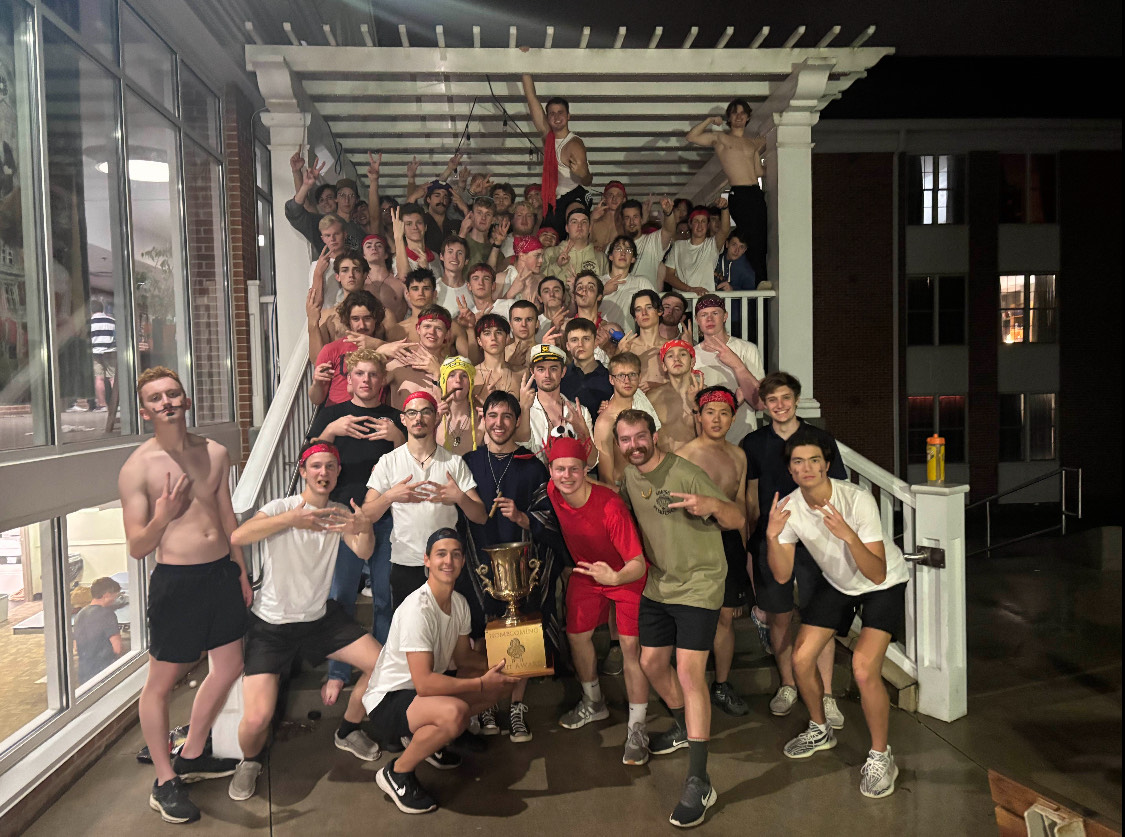
That’s why homecoming week means so much to us. It’s the truest embodiment of “carpe diem” for Simpson boymen. It’s our way of remembering boymen long past and carrying on their legacy, our time to paint an average banner and drop it front and center, our time to stand before everyone and dance our hearts out in outlandish costumes. It’s our time to cheer ourselves hoarse when an upperclassman eats an Oreo off his forehead, and again when a freshman correctly recognizes Blackbeard’s flag. Most of all, it’s our time to approach manly tasks with boyish eagerness: we replace sleep with volunteering, we fire up chainsaws and pile brush, we mow lawns as the sun sets and clean trails as it rises, and we mobilize to deep clean entire churches.
Homecoming is how our Dead Poets know the day won’t escape, how our Pans know Neverland won’t die, how we upperclassmen know boyish wonder won’t graduate with us, and how our underclassmen know that they’ve earned our mantle. That’s why we spend hours on banners that won’t place. That’s why we cry when we win. That’s why, this year, we rallied behind a boyman we called “Captain my Captain.” It’s ultimately why we hoisted the trophy. To Simpson, homecoming is the faces of the past whispering their legacy to us: “Carpe diem — seize the day, boys!”
Lewis Thune is a junior studying politics.
