
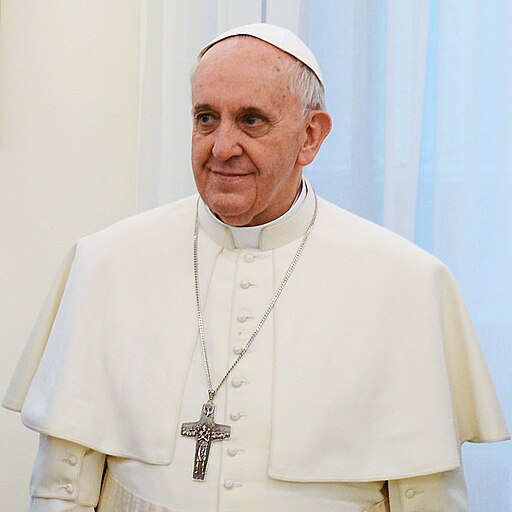
It’s all over the news: in the most recent Vatican declaration, Pope Francis permitted gay marriage in the Catholic Church.
Except he didn’t.
Released on Dec. 18, the declaration from the Vatican’s Dicastery for the Doctrine of Faith made for a perfect storm of headlines right before Christmas. Many have seen the now-viral image of the Rev. James Martin — an American priest famous for advocating acceptance of the LGBTQ agenda in the Catholic Church — blessing a gay couple.
Martin’s actions, however, are grossly out of line with both the spirit of the document and the teaching of the Catholic Church.
Fiducia Supplicans, a “Declaration on the Pastoral Meaning of Blessings,” is a poorly-timed document with obvious flaws, yet one that continues to uphold the beauty of the Catholic Church’s teaching on marriage. It struggles to straddle the political divides of the modern Church, while having a heart for the many Catholics who struggle with same-sex attraction.
From the very beginning, Fiducia Supplicans is clear that nothing in the Catholic Church’s teaching on marriage has — or can — change.
“This Declaration remains firm on the traditional doctrine of the Church about marriage, not allowing any type of liturgical rite or blessing similar to a liturgical rite that can create confusion,” Prefect Cardinal Fernández wrote in the preface.
The Catholic Church defines marriage as the “exclusive, stable, and indissolvable union between a man and a woman, naturally open to the generation of children.”
“It is only in this context that sexual relationships find their natural, proper, and fully human meaning,” as explained in Fiducia Supplicans.
We are all called to holiness and to uphold the virtue of chastity in our relationships, whether married or single, opposite- or same-sex attracted. The Catholic Church asks a hard thing of same-sex attracted people to forgo the kind of sexual relationships they desire in the name of a truer Love, but provides the resources, communal support, and supernatural grace to make such a request possible. Fiducia Supplicans invites same-sex attracted people to “draw ever closer to the love of Christ,” not condoning their sin but giving them the means to transform their lives and live in accordance with the Gospel.
Fiduccia Supplicans encourages not the blessing of same-sex unions but of same-sex attracted people whose interest is in drawing closer to Christ and his Church and amending their fallen lives.
It is here, in expanding on the pastoral meaning of blessings in hopes of offering same-sex attracted people greater avenues by which to seek and find Christ, that Fiduccia Supplicans seems to stumble.
It has been widely misinterpreted, and some of that responsibility falls on the way the document was worded.
Fiducia Supplicans stumbles on the point that same-sex couples must approach a blessing — and priests must give it — so that they have the grace to break from sin and live according to the teachings of the Catholic Church. This is particularly important in the context of the modern Church, in which advocates of the LGBTQ agenda are hungry for any sign from the Vatican that the Church will cave to their demands and practices.
The men who drafted the document cannot have perfectly foreseen its reception by the media, but should have done a better job anticipating the way it would be received. Right from its release, it became an object of polarization and confusion for Catholics and non-Catholics alike, wounding many who have made great sacrifices to remain faithful to Church teaching and (mistakenly) saw Fiducia Supplicans as a break from that.
Catholics have a right to charitably criticize the actions of the Vatican, moreover, Pope Francis has encouraged them to do so before. If, as a Catholic having read Fiducia Supplicans, you feel discouraged or confused, you can express those sentiments in a way respectful of the Church. Take, too, those sentiments to prayer, and ask God to continue helping Pope Francis and the Magisterium guide the Church.
Fiducia Supplicans is in part an ambitious response to the political divides within the modern Church: particularly, a response to the German bishops whose Synodal Way threatens to lead to a schism within the Church and the many faithful Catholics outraged by their actions. Pope Francis and his cardinals are eager to avoid a schism without caving to the German bishops’ practice of ‘marrying’ same-sex couples. Fiducia Supplicans imperfectly seeks a middle road, neither allowing same-sex ‘marriage’ nor being so stringent with blessings as to bar people in same-sex relationships from receiving them.
The document loses many of its Hydra-qualities upon a humble reading of it. Surely, it isn’t a perfect document, but it has real truth and beauty to offer. To anyone who has seen headlines about the matter or who has a bone to pick with the Vatican, read Fiducia Supplicans first, with an open heart.
