
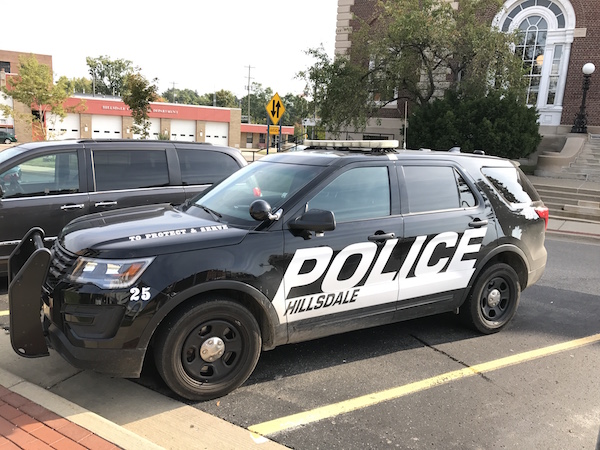
Courtesy | City of Hillsdale
Hillsdale County’s emergency radio system is years behind that of other counties, according to a local official.
“We have a lot of dead spots in the county, where officers can’t communicate back to us,” said Hillsdale County 911 Dispatch Director Thomas Whitaker. “We have areas and even buildings that they go into that we can’t communicate to them. That creates a big safety concern, not only for the officers but for the general public.”
The county’s current emergency communications system is a VHF, or Very High Frequency radio. According to Whitaker, the upgrade of the county’s radio systems to 800 MHz radios is necessary.
Whitaker said that there are many problems with VHF radios, as they are outdated.
Whitaker also said VHF radios cannot communicate with 800 MHz radios. This could pose problems if there was ever a large-scale emergency that required assistance from other counties, Whitaker said, because most of Hillsdale’s surrounding counties and the Michigan State Police use 800 MHz radios.
“When those agencies come in, we can’t communicate with them because the federal agencies use the 800 MHz system as well. So that creates a lot of problems if something did happen,” Whitaker said.
The Hillsdale County Commissioners proposed an upgrade from the VHF system to a new 800 MHz system and placed it on the August primary ballot, but voters rejected the idea, which included a tax increase.
According to Whitaker, replacing the communications systems would be expensive, but worth the cost.
“It is a hefty, hefty price. The original quote that we got was just under $10 million.” Whitaker said.
County Commissioner Brad Benzing, a firefighter and medical first responder, said the 800 MHz system would be better than VHF radios. 800 MHz radios offer clearer communications both in the county, and with agencies in different counties, Benzing said.
“After 9/11, we discovered that when many departments came together, they can’t talk to each other because all of their radio equipment doesn’t communicate well. The 800 MHz system came from that idea,” Benzing said. “800 MHz is what the Michigan State Police use and is the accepted standard throughout the nation. That was the whole intent of going to that system: to have much clearer communication.”
Wright-Waldron Fire and EMS Chief Dennis McNett said the upgrade, while at first expensive, could ultimately save money.
“The state’s going to mandate this, and when they mandate it, everybody is going to jack their prices. So it’s cheaper to upgrade now. And the state, rather than the county, maintains 800 MHz radios,” McNett said.”In the long run, we’re going to end up saving the taxpayers’ dollars.”
VHF radios are not always faulty, according to David Morris, Hillsdale College senior and EMT for Reading Emergency Unit.
“I haven’t personally experienced any problems with the radio, either to dispatch or the hospital. As far as I know, it’s been fine,” Morris said. “Occasionally, I’ll hear something and won’t know what they said. But my partner will know what they said because he’s been in the field longer, and his ear is trained for the radio.”
McNett said the upgrade is necessary for the safety of first responders and residents alike.
“We tried to keep it amongst ourselves, so we don’t have people in the county freaking out. But there’s a point that we need to let people know what we struggle with,” McNett said. “When they call 911, why did it take 20 minutes to get somebody there? Well, because we didn’t get the first few pages.”
