
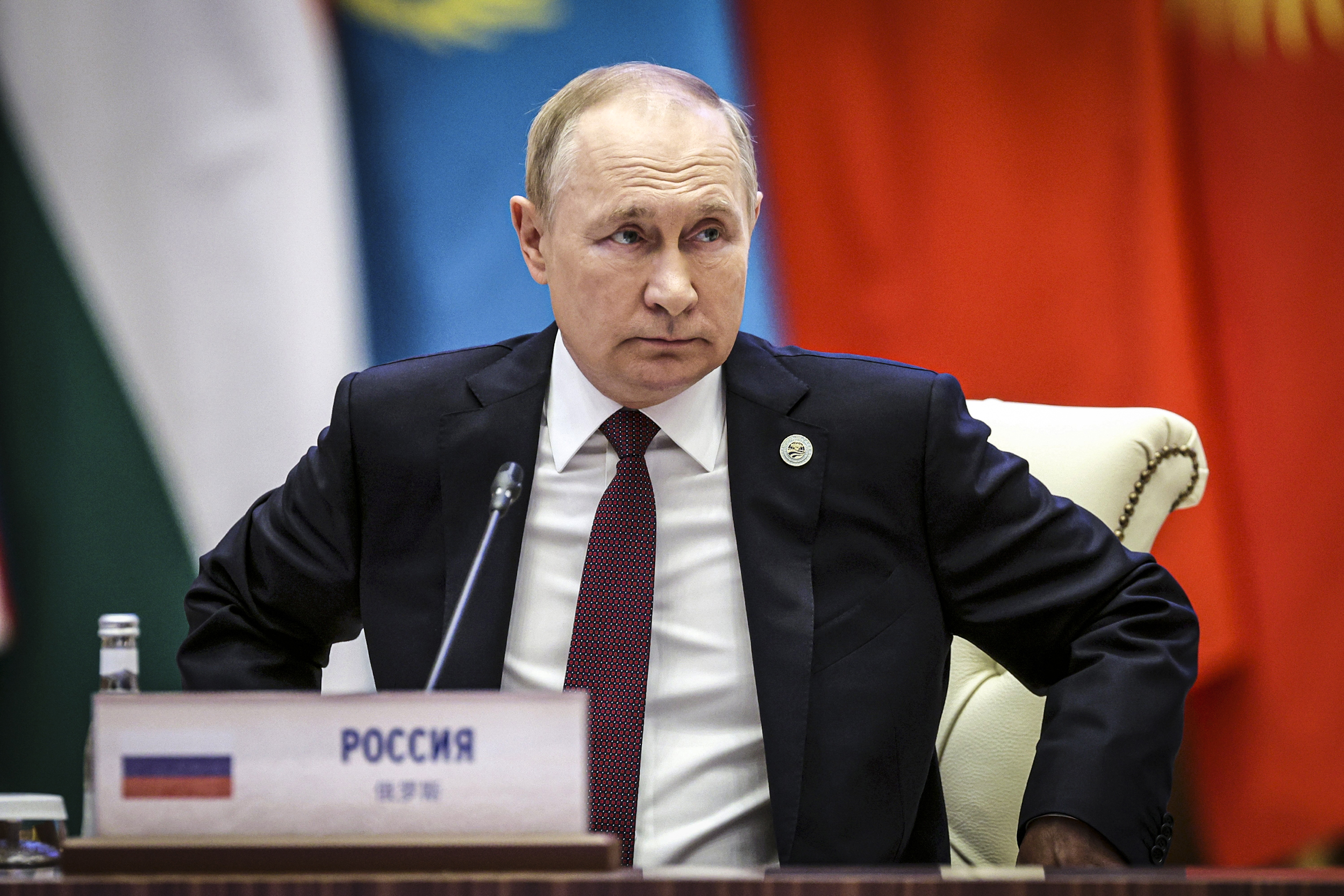
The corruption in American foreign policy contributed to the conflict in Ukraine, Politics Department Chair John Grant said in a debate with defense contractor Daniel Fata.
Professor of History Paul Rahe moderated the debate hosted by the Alexander Hamilton Society in the Heritage Room on Thursday, Sept. 29.
Fata, vice president of defense for Lockheed Martin, pushed for an interventionist policy, arguing the United States should not allow Ukraine to lose to Russia. He emphasized the ideals of democracy, transatlantic cooperation, and international rules-based order.
Grant said America has no business in Ukraine, and national interests should take priority over international interests. He criticized American foreign policy toward Russia, including recent antagonistic sanctions against the Nord Stream 2 pipeline, which he said are an example of the United States overexerting its influence.
“Our ruling class seems to think a perfect harmony of interest among different nations in the world could be obtained if only everyone would act the way we want them to,” Grant said.
Fata said he disagreed that focusing on one issue means having to disregard another one.
“I don’t think it’s an either-or-choice that while we have an issue at home, we have to stop paying attention to the rest of the world,” Fata said.
Grant noted the role America played in creating the current government of Ukraine, including the 2014 CIA-backed coup that ousted Russia-friendly president Viktor Yanukovych and destabilized Ukraine. He also cited the comments made by former Assistant Secretary of State Victoria Nuland, as well as Hunter Biden’s position on the board of Burisma in Ukraine.
“We have our stains on us,” Fata responded, “but the world still looks to us.”
Fata said American interests were not directly at stake as a result of the Ukrainian invasion, but if Russia were to overtake Ukraine, it would share a border with multiple NATO member states. Fata said he was concerned Russia could eventually cut off American access to the Black Sea, but doubts the war in Ukraine will lead to a nuclear conflict and Grant agreed.
“I think we should be concerned, although I don’t know how likely it is,” Grant said.
Both agreed the ideal end to the conflict in Ukraine is a peace treaty negotiated between Russia and Ukraine.
Junior Liam Martin said he wondered what Fata meant by rule-based international order.
“I would have liked for Mr. Fata to have explained what exactly he meant by rules-based international order,” Martin said. “To me, the term tends to be grossly undefined and meaningless.”