
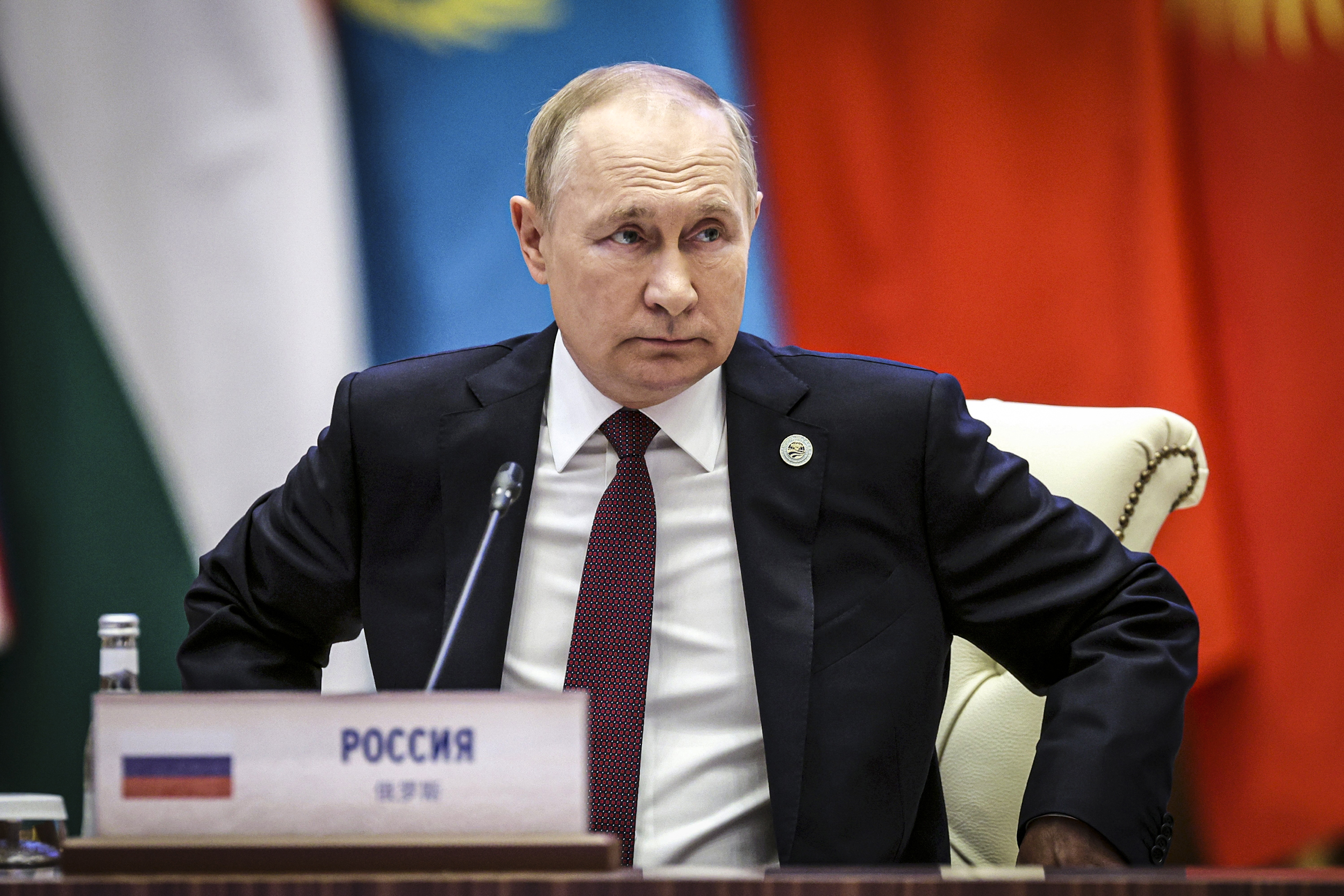
As Russian President Vladimir Putin’s war in Ukraine grinds on, we should ask one question: Why didn’t he invade the Baltic states instead? Estonia, Latvia, and Lithuania, like Ukraine, were Soviet satellites for 50 years. More than a million ethnic Russians still live there, providing a handy excuse for a “special military operation.” More importantly, their combined land area is only 11% the size of Ukraine’s. The Russian army presumably could have surrounded and crushed all three Baltic countries in days.
Putin ignored this easy conquest for one reason: NATO. Since the Baltic states joined the North Atlantic Treaty Organization in 2004, any attack on them is an attack on the world’s largest and most powerful military alliance. This defensive pact is enshrined in Article V of the NATO charter.
Putin has used NATO’s expansion to spin a narrative about Western encirclement, but his propaganda rarely reflects the facts. In 2009, Barack Obama decided not to offer Ukraine a NATO membership action plan, and while the Ukrainians have petitioned for membership since then, the West has refused to commit. To placate Putin, Obama also blocked U.S. weapons shipments to Ukraine. But in 2014, when the Ukrainians impeached their corrupt pro-Russian president, Putin discovered an excuse to seize Crimea and begin the eight-year skirmish in the Donbas that has culminated in the 2022 war. NATO did not provoke Putin into that fight; he went looking for it.
Neither is our piecemeal pre-2022 military assistance to Ukraine responsible for Putin’s aggression, then or now. Unlike Obama, Donald Trump supplied the Ukrainians with javelin anti-tank missiles, and Putin did not retaliate. Joe Biden sent defensive weapons only a month before this year’s invasion, and he delivered too few to deter a Russian attack.
Some Americans blame the Russia-Ukraine war on U.S. meddling in the region. This false assumption denies the agency of both warring nations. Ukraine wants to become more Western, and Russia wants to stop it. No matter how NATO members respond to that dilemma, Putin will conjure an excuse about Western encirclement and attack wherever he thinks he can win, bringing with him rape, torture, and murder. This Soviet-era brutality is something that almost everyone in Ukraine—including 80% of the ethnic Russians living in its free regions—wants to prevent at all costs.
This is Putin’s war, and this is Putin’s fault.
The true lesson of recent history is that, as American resolve flickers, Russia will take what it can, when it can. Some Americans will point to this fact and suggest that the natural state of Eastern Europe is Russian subjugation, that we should stay out of Russia’s zone of control. If our choices were between neutrality and total war, this argument for neutrality would carry much more weight. But we can pursue a third path.
At present, America’s best option is to continue helping the Ukrainians reclaim their territory without igniting a full-scale war with Russia. Before the invasion, Biden and Congress should have remembered Putin’s greed and made the conflict unwinnable for Russia before it started. Our government failed in this, and the war began. Now, the Ukrainians need defensive and short-range offensive weapons to push Putin back without striking into Russian territory. A unified NATO, with U.S. leadership, can easily provide these weapons.
If Biden allows Putin to devour more Ukrainian land, he will repeat Obama’s mistakes and further erode our global credibility. Far from stopping the violence, this territorial compromise would merely delay another vicious onslaught. Our many security guarantees to Ukraine will mean nothing if another U.S. president abrogates them, and the world’s despots love nothing more than a fickle America.
In the future, NATO membership will be the West’s most powerful tool for Russian deterrence, and no third nation should dictate who is in and who is out. That said, extending Article V protection to a war-torn Ukraine is no light matter. After Putin’s invasion is repelled, we should slowly and judiciously begin the process of Ukrainian NATO membership. If incorporation proves impossible, NATO should at least arm the Ukrainians against future attacks.
We should never again be duped into thinking that appeasing thugs like Putin will bring peace. Peace is the fruit of strength.