
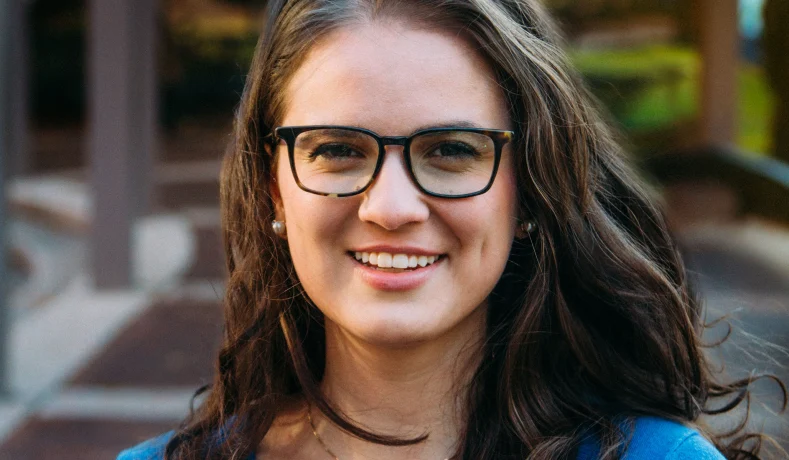
The pro-life movement has more responsibility in the wake of the Supreme Court’s Dobbs v. Jackson Women’s Health decision than ever before, said Alexandra DeSanctis, a fellow at the Ethics and Public Policy Center and writer for the National Review.
DeSanctis, the fall Eugene C. Pulliam Distinguished Visiting Fellow in Journalism, will speak about “The Direction of the Pro-Life Movement After Dobbs” at 8 p.m. on Tuesday, Sept. 27, Plaster Auditorium.
“We have two pathways forward,” DeSanctis said. “One is legal — passing as many laws as possible to protect life — and another is cultural. You can’t understand these separately.”
According to DeSanctis, her lecture will explore why so many people believe abortion is necessary.
“We have to build a pro-life culture where woman, particularly those in crisis pregnancies, feel supported to bring their children into the world,” DeSanctis said.
The end of Roe marks the beginning of a new phase of the pro-life movement, according to DeSanctis.
“In many ways, Roe v. Wade being overturned took us back to the beginning of what should have been the beginning of the abortion debate,” she said. “For 50 years we certainly worked hard as pro-lifers, but we couldn’t really change much.”
Sophomore Rachel Schroder, leader of Hillsdale College for Life, agreed the pro-life movement has to continue to fight.
“The reversal of Roe and Casey returned to the states their responsibility to protect babies in the womb,” Schroder said. “Sadly, pro-abortion forces are using this time to doubly push their radical policy, particularly in Michigan with a deceptively written ballot proposal in this November’s election.”
At this moment in the pro-life movement, there is a responsibility for everyone to act, especially young people, DeSanctis said.
“Look around in your community,” she said. “Are there young parents who you can babysit for or can you throw a baby shower for students who are unexpectedly pregnant? How can you be welcoming where you are?”