
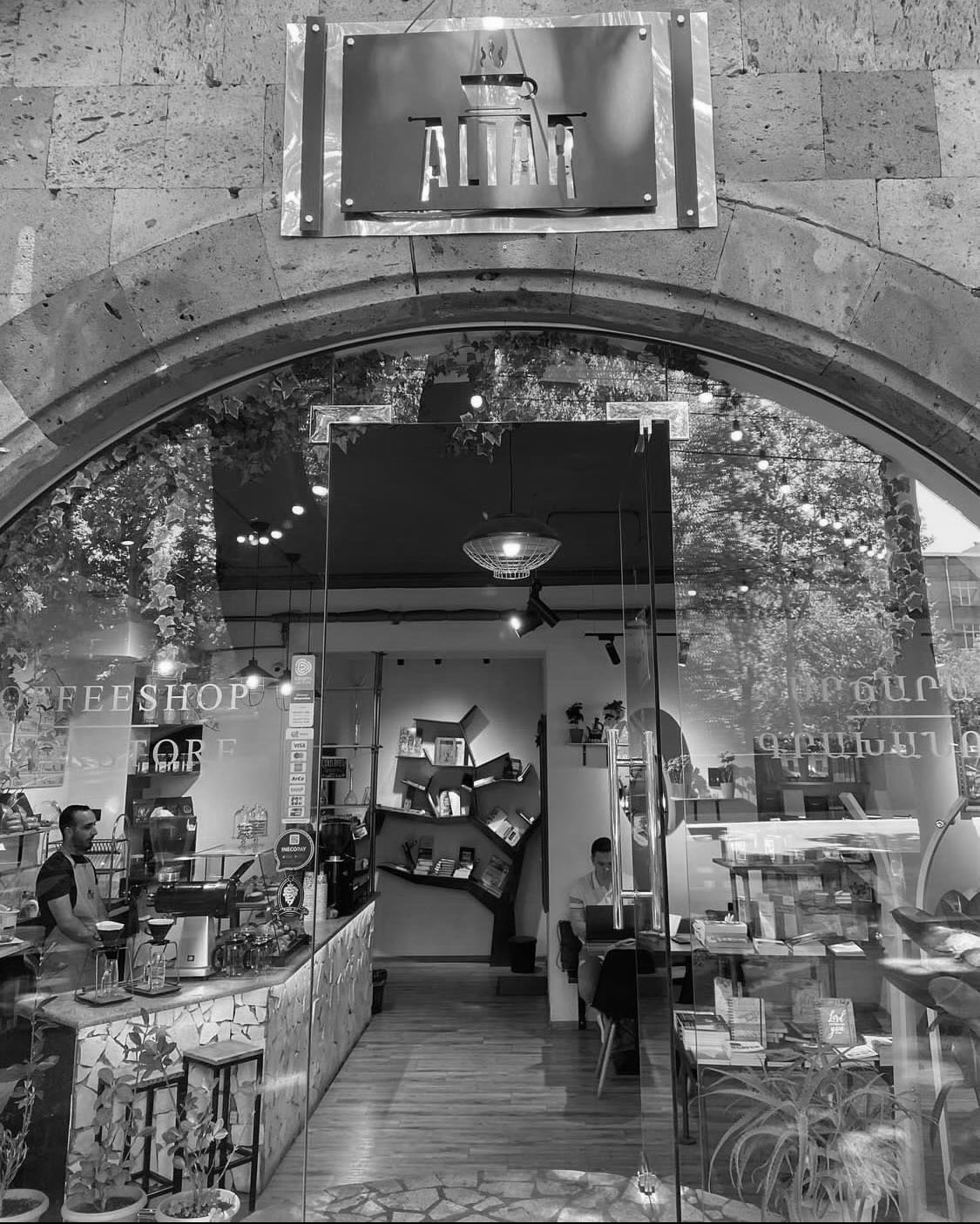
Like most incoming freshmen, Peter Kazarian picked up a part-time job over the summer. His just happened to be in Armenia.
From the end of May to the beginning of July, Kazarian worked as a barista in the capital city of Yerevan. He discovered the warm, welcoming heart of the city’s lifestyle.
“They’re about 10 years behind on a lot of things, but just have this simplicity of life,” Kazarian said. “They’re not so concerned with superfluous, unnecessary things that we often get hung up on. People are living their lives, they’re loving their family, and it’s just so cool to see a society that is so family oriented and content.”
At four years old, Kazarian and his family lived in Armenia for eight months while his father built houses with Habitat for Humanity.
“Ever since then, I wanted to go back to get back into the language and the culture, and I’ve got some family over there as well,” Kazarian said. “This trip was really great because I got to check all those boxes and have a service opportunity.”
Kazarian went through his church, First Armenian Presbyterian Church in Fresno, California. The coffee shop, Altar Coffee and Books, is owned by Peter Telian. Kazarian and the other interns stayed in The Armenian General Benevolent Union, a 10 minute walk from the shop.
“Few things expose our own blinders as Americans like going overseas and seeing what the world is like outside America,” chaplain Adam Rick said. “Just seeing the whole tapestry of God’s work around the whole world draws us out of ourselves, exposes our own biases and blinders as Western Americans, and helps us see the world more from God’s perspective for the beautiful kaleidoscope that it is.”
Kazarian spent half the day brewing coffee, pressing paninis, and toasting bagels in the coffee shop, and the other half reaching out to the community through the program, meeting people and hearing their testimonies and stories, and spending time in the prayer room: a space used by local churches for prayer and worship nights.
“Through the Altar internship, we learned how to serve in a different culture and how to be part of a team seeking to demonstrate uncommon love and care,” Ani Haroutunian, Kazarian’s fellow intern and translator, said. “We also connected with so many amazing people in the bigger body of Christ. God opened doors for new friendships and an even stronger passion for ministry.”
Once a week, Kazarian and his group had a day set aside for exploring old churches and important historical or geographical landmarks.
“We visited Saghmosavank, the Monastery of the Psalms,” Haroutunian said. “It was an altar of worship in Armenia built several centuries ago. Just as in heaven where worship goes on day and night around the throne, the psalms were sung there 24/7.”
Kazarian spent his weekends with his extended family. Once, he attended a wedding in Gyumri, the second largest city in Armenia, to celebrate someone he is only distantly related to.
“They’ll go bankrupt on the wedding,” Kazarian said.
He described course after course of freshly barbecued pork, fish, and lamb and hours of traditional Armenian dancing. There were also hired dancers and entertainers. He enjoyed all of it despite hardly knowing the married couple.
“People that you’ve never met before, barely know how to communicate with them, still love you and will show you the same love and respect that they would show their own family members,” Kazarian said.
European hospitality is foreign to Americans.
“I don’t think I was fully aware of just the almost the American allergy to hospitality till I spent time and other cultures where that’s just more than norm,” Rick said. “Americans are kind. Americans are polite. But we don’t open our homes to outsiders the way people in these other cultures do.”
He said it’s important to have contact with other cultures to make our lives richer.
“Our emphasis on the Western core, the great books of the Western tradition is a cultural inheritance,” Rick said. “It’s the west. The more we can have voices from outside of that corpus or, in the case of Armenia, on the periphery of that corpus, I think the more robust and rich our conversation about human nature will be.”
Kazarian said coming back to the states and moving to Hillsdale was an adjustment in terms of food, culture, and community, but he found a few similarities despite the cultural barriers.
“There’s a sense of community knowing that you’ve had shared experiences with everyone that you meet,” Kazarian said. “You grew up eating the same food, you have parents that teach you the same things, in a sense, and, oftentimes, the same religious beliefs. I mean, that’s similar to Hillsdale in a way in that you’ve got a bunch of like-minded people.”