
The Pepsi Super Bowl LVI Halftime Show brought California to the field.
In the first of its kind, the all-rap halftime show featured a packed lineup of hip-hop and R&B legends. With Dr. Dre, Snoop Dogg, Mary J. Blige, Eminem, and Kendrick Lamar as its leaders, the show evoked history and meaning.
Dr. Dre and Snoop Dogg started the show atop of a massive white house, built to look like a reproduction of Tam’s Burgers, Randy’s Donuts, and the Compton courthouse.
They opened with “The Next Episode,” a song with easily one of the most recognizable introductions. The song comes from Dr. Dre’s formative 1999 album “2001,” and starts the audience at the roots of where modern rap saw its genesis.
The camera followed Snoop Dogg as he ventured down into a living room with supporting musicians. The room was set up with a portrayal of Compton in a window frame, but instead of glass, the image was behind prison bars. More pictures on the walls represented Snoop Dogg’s origins: the cover of his debut album “Doggystyle” and a still from his first music video for “Who Am I? What’s My Name?”
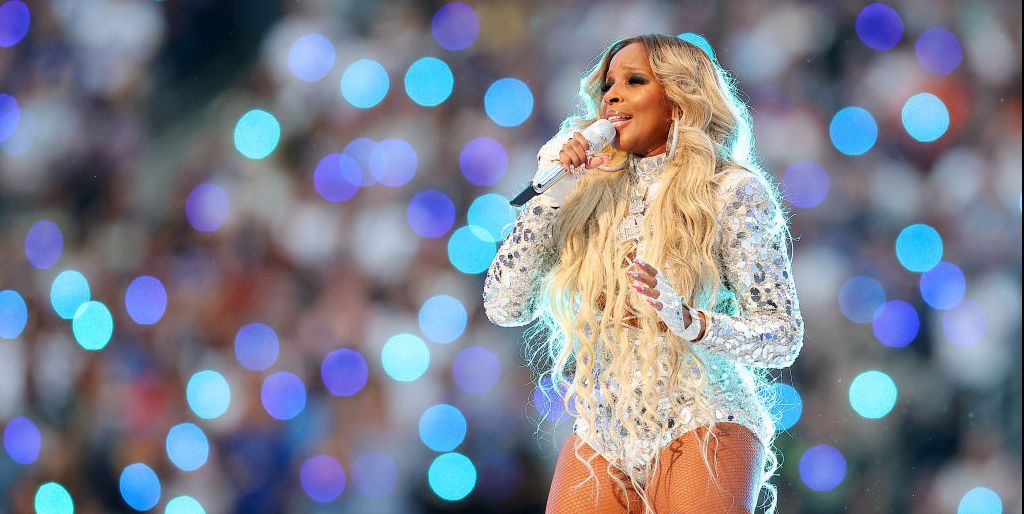
The show continued with Snoop Dogg and Dr. Dre performing “California Love” in front of a crowd that started to accumulate. The camera panned down to reveal 50 Cent, upside down, performing “In Da Club.” Next, Blige performed two of her hits, “Family Affair” and “No More Drama.” Following Blige, Pulitzer Prize winner Lamar performed “m.A.A.d city” and “Alright” alongside a crowd of men dressed with “Dre Day” sashes. Accompanied by Anderson .Paak on drums, Eminem then emerged to perform “Lose Yourself.”
Finally, in a tribute to Tupac Shakur, former collaborator, and rap icon, Dr. Dre performed a section of “I Ain’t Mad At Cha.” During this section, Eminem knelt in what was perceived as an act of solidarity for former NFL quarterback Colin Kaepernick, who knelt during the national anthem to protest racial inequity. It felt more like an honoring of Tupac rather than a protest, but Eminem has not commented on his actions.
The halftime show began and ended with Dr. Dre and Snoop Dogg, signaling that they are the fathers of the rap genre. The difference in generations and derivatives of hip-hop styles still finds its source with the staples of the ‘90s scene. What began in a living room fashioned to commemorate Snoop Dogg’s beginning ends with all of the artists on the rooftop together. The symbolism of the importance of “the streets” to “the top” is clear.
Even the set was designed to pay homage to Compton, California, the origin of the Gangsta-funk era. Eve After Dark, the dance club where Dr. Dre first started gaining popularity, is featured alongside signs that highlight Tam’s Burgers No. 21 and Dale’s Donuts. Panels of the Martin Luther King memorial in Compton are also on one side of the stage. These landmarks added a deeper meaning to the performance.
The set design combined with the layers of each artist and their song choices made this halftime show historic. Instead of just being a bunch of “OGs” revisiting their golden records, it commemorates the cultural impact of the collective and honors the suburb that started it all.
