
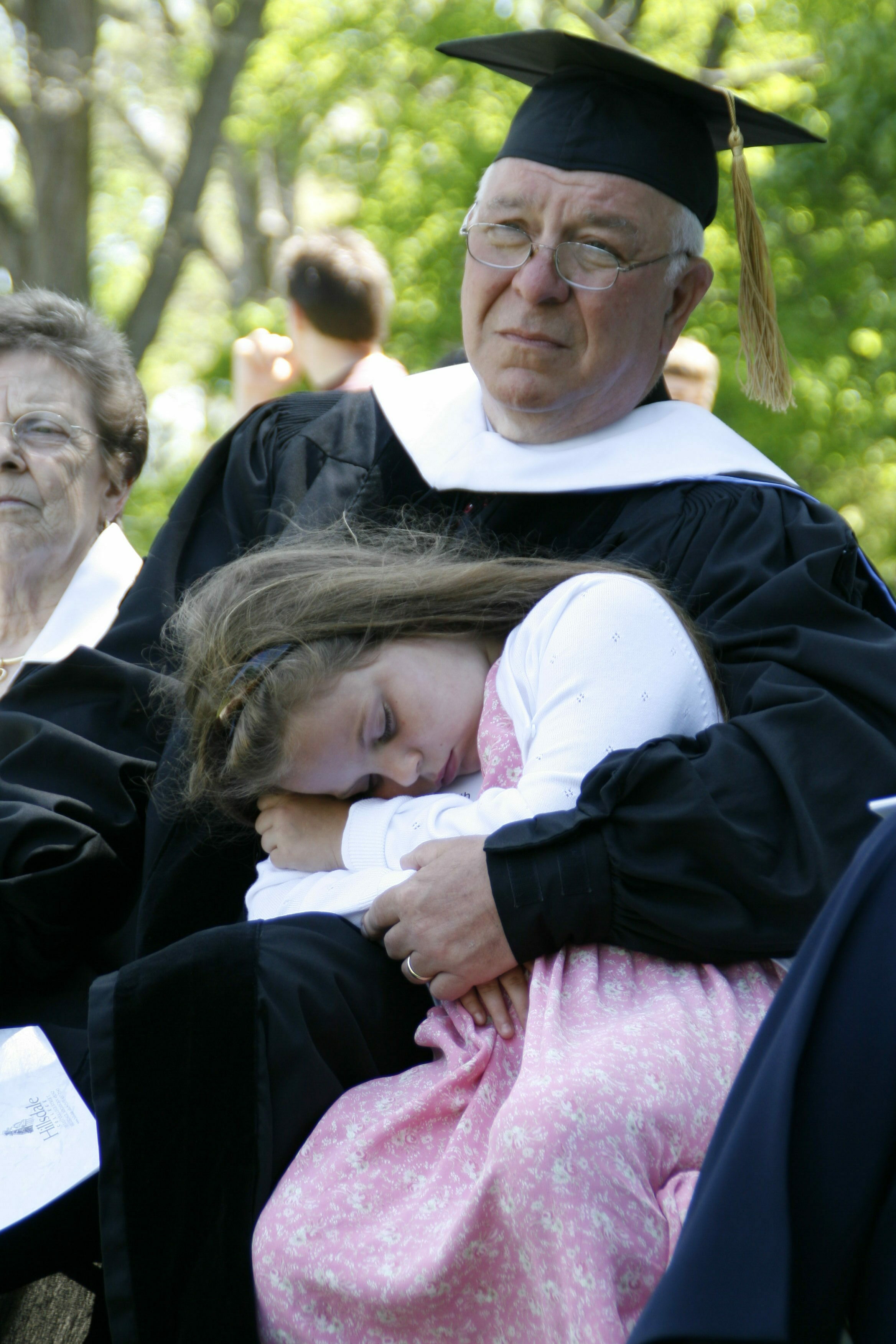

Chuck Bianchi had a saying: “I don’t know the right way to do things, I just know what works.”
His unconventional yet visionary leadership allowed him to see the best in people and inspire them to achieve more than they thought possible.
Bianchi died peacefully at his home on Feb. 15 from complications of prostate cancer and kidney failure at the age of 78. He is survived by his wife Michelle and four children, including junior Elizabeth Bianchi.
Whether it was during his 16 years as CEO of Hillsdale Community Health Center (now Hillsdale Hospital) or his years of service throughout the community, Bianchi is remembered for his service-oriented heart, natural leadership abilities, and his honest, matter-of-fact character. He is also the only local recipient of an Honorary Doctorate Degree from Hillsdale College.
Moving to Hillsdale in 1991 to run the hospital, Bianchi transformed the facility overnight. He entered the role with only a few days of cash on hand and impending closure on the horizon, according to family members. Through his vision and ability to inspire and push the people around him, Bianchi retired from the job 16 years later with $14 million in the hospital’s bank account. It took him 30 days to turn the facility from failing to cash-positive.
Not only did he turn the medical facility around, but he made a lasting impact on Hillsdale through a scholarship program he created that put more than 90 local students through college and into successful medical careers.
Bianchi was born in Norwich, New York, on May 27, 1942. He graduated from high school as a mediocre student and worked as an orderly at a local hospital where he cleaned dishes. Soon, he made friends with a fresh-out-of-school radiologist technician who convinced him to go to school to become a radiologist himself.
Quickly falling in love with the material, Bianchi led his class. After school, he moved between different hospitals in New York and Massachusetts, quickly climbing his way up the ladder.
The work that came to define Bianchi’s career earned him commendations from the governors of Massachusetts and Michigan, along with one from the United States House of Representatives, according to family members.
One of Bianchi’s traits stands clear to those who knew him: his ability to see talent in people before they saw it themselves. He had high expectations and was hard on those he loved, but opened doors for people they would have never tried to open.
Jason Walters said he knows this all too well.
During his high school years in Hillsdale, Walters worked full time as an EMT. After Walters’ graduation, Bianchi interviewed him for a role “that I was not qualified for,” he said.
But Bianchi saw something in him and he was hired. Walters, however, said he hung around the wrong crowd and got involved with drugs. A year into his job, Walters butted heads with his supervisor and was going to be fired, so he quit.
Two weeks later, he was in jail for an attempted robbery.
Walters served 10 years in prison for the crime, but kept in touch with Bianchi throughout. According to Walters, Bianchi partly blamed himself for the situation, as he didn’t help him sooner. But there was hope: the hospital CEO promised Walters a job if he behaved in prison.
A decade later, the promise was fulfilled. Walters worked in various departments at the hospital, working his way up to patient care coordinator in the emergency department.
“My story is a good example of the type of person that he was,” Walters said. “The energy that kept him interested in me through all those years was that he was mad at himself. He didn’t catch and stop me, and I was one of his people — he would do anything for his crew.”
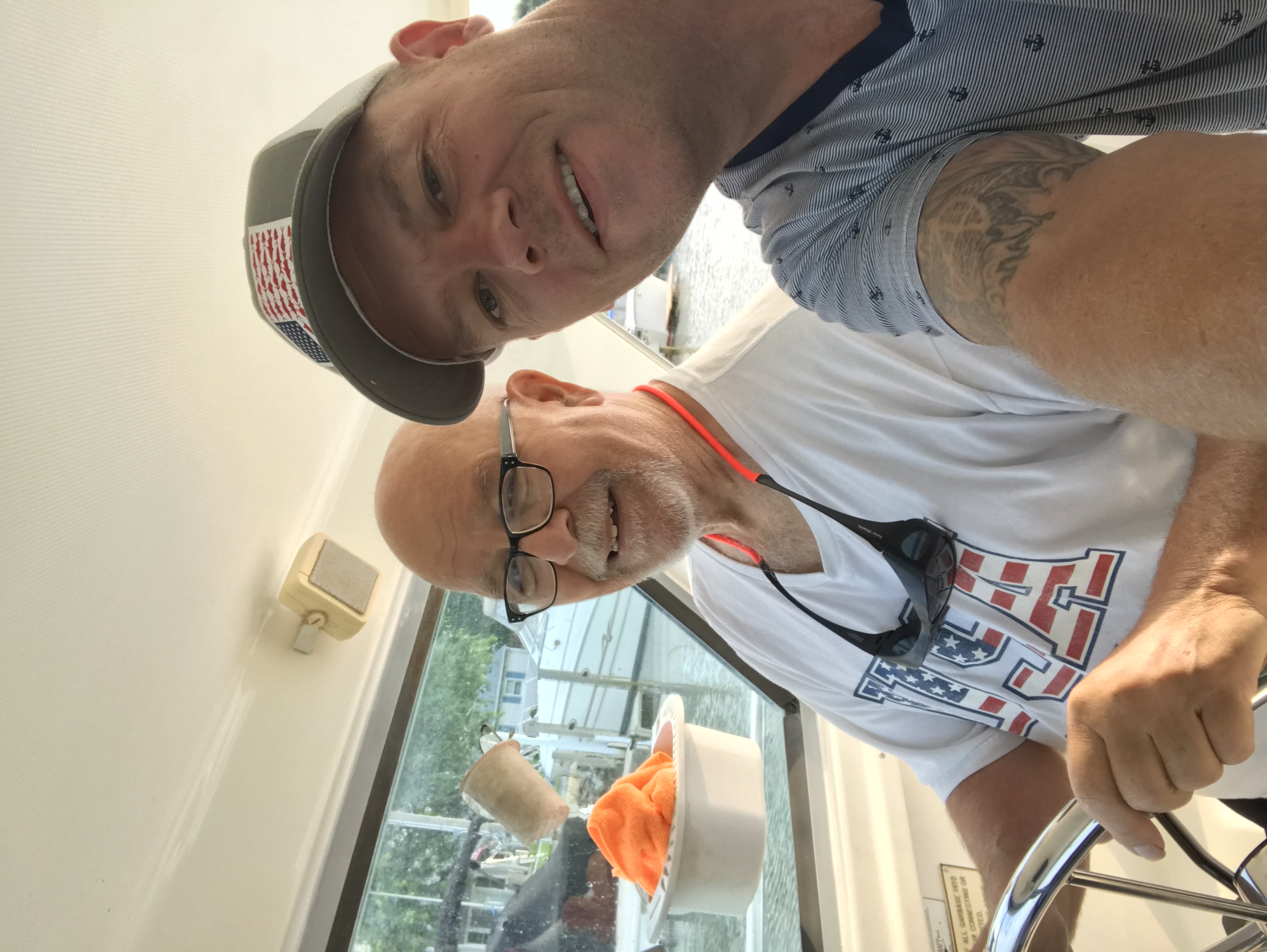
The two developed a close relationship. Father figure, mentor, and best friend are all terms Walters uses to describe it. Bianchi even insisted that he bring his girlfriend to his office to be vetted.
Walters is now married and runs four businesses, including the Local Eatery downtown. He gave one of the eulogies at Bianchi’s funeral on Feb. 20 at St. Anthony Catholic Church.
“He was good at getting people to do more than what they thought they were even capable,” Walters said. “He found the individual that had a good work ethic and moral compass that just needed some better direction. He was good at identifying those individuals and putting them on the right path, it was an art that he had that acquired.”
Walters has a quote from Ronald Reagan on a whiteboard in his restaurant that he believes sums up Bianchi: “The greatest leader is not necessarily the one who does the greatest things. He is the one that gets the people to do the greatest things.”
These leadership abilities may have come naturally, but Bianchi had a long career of practice before ending up in Hillsdale.
His first job post-radiology school was at a community hospital in Syracuse, New York, where he worked as the special procedure tech. One day in 1965, an out-of-town radiologist visited the small hospital and observed Bianchi’s work, quickly asking him to become the chief x-ray tech at his hospital in Plattsburgh, New York.
Bianchi agreed to move, largely because of the ideal hunting and fishing in the Adirondack Mountains. This love for the outdoors would occupy his free time and retirement in the years ahead. He moved his family up north, a few dozen miles from the Canadian border, and bought a house.
He later moved out of New York and became a radiology administrator at one of the largest hospitals in Massachusetts, St. Vincent Hospital. He led a team of 70-80 employees, and they took more than 80,000 X-rays a year.
He started a school of radiology at St. Vincent, teaching students the ins and outs of the profession. The school moved to the local community college and Bianchi kept teaching. He went on to earn teacher of the year.
But a problem arose. Bianchi did not have the proper education for this role, and for that, the college wanted to fire him. The students, however, unanimously threatened to withhold tuition if Bianchi was fired. The administration relented.
Like his students, people looked up to Bianchi throughout his life and sought his instruction. His wife, Michelle, said it was because they trusted him and loved him deeply.
“He had people around him always; they would seek him out,” Bianchi, who serves as the Hillsdale probate court judge, said. “Even in his later years, he would say ‘Why are these people calling me? I’m almost an 80-year old man!’”
During his time at St. Vincent, Bianchi was flown to countries like Denmark, Germany, and Sweden to look at designs of radiology floors. Back in America, Bianchi worked with architects and builders to redesign his floors with more progressive designs. His innovations helped transform the way hospitals in America lay out their radiology departments to this day.
For years, Bianchi moved up in his roles, eventually becoming assistant director of the hospital in the early 1980s. He was responsible for all inpatient and outpatient care. He even won the prestigious Oliver Merrill Award for Outstanding Contributions to the Field of Radiology in Massachusetts.
In 1981, he was asked by the Plattsburgh, New York, hospital, where he had left 10 years prior, to come back, but this time as a vice president. He returned to upstate New York and eventually became chief operating officer at the hospital, which is now called the Champlain Valley Physicians Hospital.
In 1987, Bianchi was asked to become CEO at a failing local hospital in Great Barrington, Massachusetts, called Fairview Hospital.
“He would save dying local hospitals. He really focused on local communities,” his daughter, Hillsdale College junior Elizabeth Bianchi, said. “He got out of the state hospital game because he wanted to focus on smaller, local places.”
Fairview hadn’t turned a profit in more than 10 years and in Bianchi’s first year as leader, it paid off its debts and turned a profit of $1,800.
“He was really happy about that,” Elizabeth Bianchi said with a laugh.
He left the once-sinking Massachusetts hospital with $1 million raised and the title of “best hospital in the system.”
A call came in December 1991 about another failing hospital in a small town called Hillsdale. Seeing the opportunity to buy land on which to fish, hunt, and raise beagles, he applied for the job.
Bianchi’s lack of proper education bothered him throughout his life, but when interviewing for the Hillsdale job, he beat out a Harvard graduate for the role.
“I don’t have the education. I don’t have the degree. I just know what’s right,” Michelle Bianchi said her husband would retort.
Once he got the job and moved to Michigan, Bianchi soon bought “his second love”: a cottage on a channel that connects to Lake Erie.
“He loved, loved being on the big water,” Michelle Bianchi said. “He was an avid walleye fisherman.”
Elizabeth Bianchi said she fondly remembers the trips to the lakehouse when she and her father would blare music by Elvis Presley and Abba.
Those who worked under Bianchi didn’t always have it easy, but the tough-love was for the betterment of the guest experience.
“Hillsdale Hospital would not exist in its current form were it not for Chuck Bianchi’s vision and leadership,” said Janet Marsh, associate vice president of human resources for Hillsdale College. “Chuck resisted multiple offers to merge with other systems so that our fiercely independent, local hospital would be there to serve the community for generations to come.”
Marsh reported to Bianchi when she served as director of human resources at the Hillsdale Community Health Center. She called those years “some of the best of my career.”
In his first year at Hillsdale, Bianchi hired 25 new doctors and turned the operation profitable in just one year.
Just as important to Bianchi as bottom lines was the culture of the hospital for the employees.
For instance, he turned the standard cafeteria in the building into a restaurant where families and members of the community would come every day for lunch.
Bianchi paid for the hospital cook, Stephen Hickman, to attend culinary school and become a chef. In time, the cafe started producing high- quality meals and developed the feeling of a restaurant.
Each day, the line for lunch would wrap through the halls and the environment was warm. Families of doctors and employees would come eat during their loved one’s shifts, fostering a family-oriented environment. Bianchi himself would dine there each day and converse with the community members.
“You can’t understand the value of people from the community eating alongside the doctors that work on them,” Walters said. “And the value of employees eating with their families in the middle of their shifts.”
The food was better than surrounding restaurants and the prices were lower, according to Walters. Bianchi displayed a sign that said their meals were 50 cents cheaper than McDonald’s value meals.
“He did so many unconventional things,” Walters said, referring to the decision to invest in a cook to transform the cafeteria. “How many hospital CEOs can share a story like that?”
Perfecting the environment that his workers and guests experienced was vital. He made a point to personally read every comment card that came through the hospital.
“He created a culture there,” Elizabeth Bianchi said. “It was very familial and he made everybody know they were cared about.”
Those who knew Bianchi often recall how he treated everyone the same, regardless of status or position. “He was very, very just and caring to everyone,” Elizabeth Bianchi said.
His wife said he could identify “with both the CEO and the common man.”
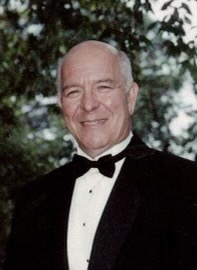
“And he appreciated both of them equally,” she said.
When the hospital was undergoing renovations, he moved his office into a trailer in the parking lot and refused to move back until everyone else moved into their offices first.
Bianchi’s heart was evident in his creation of a scholarship program through the hospital called Technically Advanced Personnel, which over time supported 90 local students at college.
The high school students interested in scholarships would take classes where they became certified EMTs and certified medical assistants. The program was purposefully tough in order to weed out candidates. Upon completing the classes, those who succeeded would receive jobs at the hospital and eventually receive scholarships to go college.
“The purpose of the program was to mold and grow his own people,” Walters said. “Chuck was really good at getting the most out of people.”
Hillsdale College Dean of Men Aaron Petersen saw Bianchi’s compassion through scholarships when his then 3-year-old son Aidan suffered a traumatic incident in 2004.
Petersen’s young son was standing on bleachers at a football game when he fell backward and plummeted 20 feet toward the pavement.
A local high schooler named Sean was walking underneath the bleachers when Aidan fell. Sean reached out and broke the child’s fall, undoubtedly saving him from life-altering injury and possibly death.
“When Chuck heard about that, he called my wife and I,” Petersen said. “He said he was moved by what the young man did to save my son and that he was going to reward him with a scholarship.”
This is a perfect example of Bianchi’s community-mindedness and “strong sense of taking care of his own,” Petersen said.
Michelle Bianchi said people would come up to them frequently to thank Bianchi for giving them a chance.
“People came up to us all the time and said, “You gave us our start. I wouldn’t have done this without you. I would have never gotten my degree,’” she recalled.
The dynamic that Bianchi built created a strong bond among the staff. A statement from current Hillsdale Hospital CEO J.J. Hodshire credits Bianchi’s leadership for a “true turnaround” of the facilities.
“He led the organization out of some of its toughest financial circumstances, starting his role as CEO when the hospital had just a few days cash-on-hand,” Hodshire said. “In an era where the number of rural hospital closures increased so sharply that the federal government intervened with new legislation, Hillsdale Hospital stood strong under Bianchi’s leadership.”
After retiring from the hospital, Bianchi could not sit still. He advised several local businesses and served as a member of the Hillsdale Kiwanis Club, Hillsdale Preparatory School Board, and Hillsdale Salvation Army Advisory Board.
“He was like a 24/7 administrator and he had to keep doing stuff,” Elizabeth Bianchi said, laughing. “He also just loved to serve and wanted to help people all the time.”
Bianchi struggled with health problems dating back to 2008 when he overcame a grim diagnosis of prostate cancer. Since that remarkable recovery, he dealt with various health issues, like diabetes and kidney problems. But he always did what he loved, like shooting, fishing, and spending time with loved ones.
Bianchi will be remembered for his leadership and inspiring others to achieve great things.
“He really just naturally saw the good in people and believed in them,” Elizabeth Bianchi said. “Those people who he thought could do something, he was hard on them and he held them to high expectations. But that was the way he knew how to get results, and it worked.”
