
Courtesy | Ian Renkes
The distance between Bartlett, Illinois and Fairhope, Alabama is 950 miles. About a 13 and a half hour drive by car. To the Troyke family, moving from Illinois to Alabama felt like “moving back to America.”
“They took a trip to Fairhope and people were normal. They weren’t afraid of each other. No one was in your face about masks. That was as much as anyone needed,” senior Max Troyke said. “We can’t wait to get the hell out of dodge. ”
This is just one of the few anecdotal accounts of students whose families have moved for social, political and economic reasons. Draconian lockdown measures, Black Lives Matter protests, and ever increasing restrictions on personal life have led some to take flight to more conservative states.
Troyke is one of two siblings. After his sister started college and his parents began to look forward to retirement, the family looked into moving out of the Midwest.
“They just wanted out of the Midwest. They wanted warmer weather,” Troyke said. “The vibe of Fairhope is people preparing to retire. My parents are kind of in that stage and preparing for it.”
However, a warmer temperature was not the only reason, said Troyke.
“A big thing was taxes. Property taxes are ridiculously lower in Fairhope,” he said. “Illinois’ government is very corrupt.”
The last sign his parents needed was a trip to Fairhope, where the family got to see life seemingly untouched by coronavirus.
“Coronavirus is a serious thing, but if you protect the elderly the vast majority of businesses can open,” Troyke said. “That was a huge thing for me in Fairhope. Seeing people walking around, holding hands, sitting down and eating together. Doing what people are hardwired to do. Social, happy, productive people. In terms of a culture thing, that’s a huge part of it. It’s a lot different from Illinois.”
The family moved down in October of last year.
“I’m happy for my parents,” Troyke said. “My dad is happier already. They deserved to be more comfortable.”
Senior Claire Froman, though her family moved pre-coronavirus, wanted to escape the violence of Chicago, especially after Froman’s grandfather was mugged by gang members as part of an initiation rite in 2008. Froman’s grandfather eventually died from the head wound inflicted.
“That was the deciding factor,” Froman said. “It’s killing us and it’s actually killing our family.”
Froman’s father, who worked two jobs, struggled to provide for a family with five children because of the exorbitant property taxes.
“The property and income taxes are insane,” Froman said. “My dad said to himself, ‘The money that I’m making is not coming back to me.’ We have five kids and he was working so hard. Moving to Ohio, he already feels so much less stressed, and they were able to buy a house with a lot of land.”
Though the Froman family lived in the suburbs of Chicago, Froman has two aunts who live in Chicago proper. Visiting them often meant the family spent time in Chicago. The violence of the city, especially Black Lives Matter violence, also created stress for the family.
“There’s even more violence that’s being justified by the causes of Black Lives Matter,” Froman said.
The family eventually moved to Cincinnati, Ohio in April of 2016. They are better for it, according to Froman.
“My mom feels safer, especially with all the violence that happened this year. The lockdowns have been a lot less severe compared to what people have had to deal with in Chicago,” she said. “They are a lot happier. It took a year or two but I think they’re fine now.”
Sophomore Ethan Tong is also from Chicago, but his family of eight (parents included) decided to move to McKinney, Texas.
The primary pull was his dad’s new job in Texas. However, the family also wanted to escape the taxes, weather, traffic, potholes, violence, etc. Tong’s father owns two buildings, and their property taxes were skyrocketing.
“Chicago compensates for its losses through property taxes,” Tong said. “My dad wanted to get out of there.”
Tong’s parents flew back to Chicago after the move to work on selling the properties. While there, they saw a taste of what they were missing.
“The highway that went to our buildings was blocked off because of BLM protests. It was definitely taking over Chicago, which is another reason why my parents wanted to get out of there,” he said.
Tong also said that the cost of living was better in Texas and that the environment is more welcoming.
“We have a tiny house in Chicago and it got expanded to a very large house in Texas,” he said. “Texas is a better climate for getting exposed to a different view than in Chicago. The people are nicer in Texas. I enjoy the state more because it’s cleaner and better weather.”
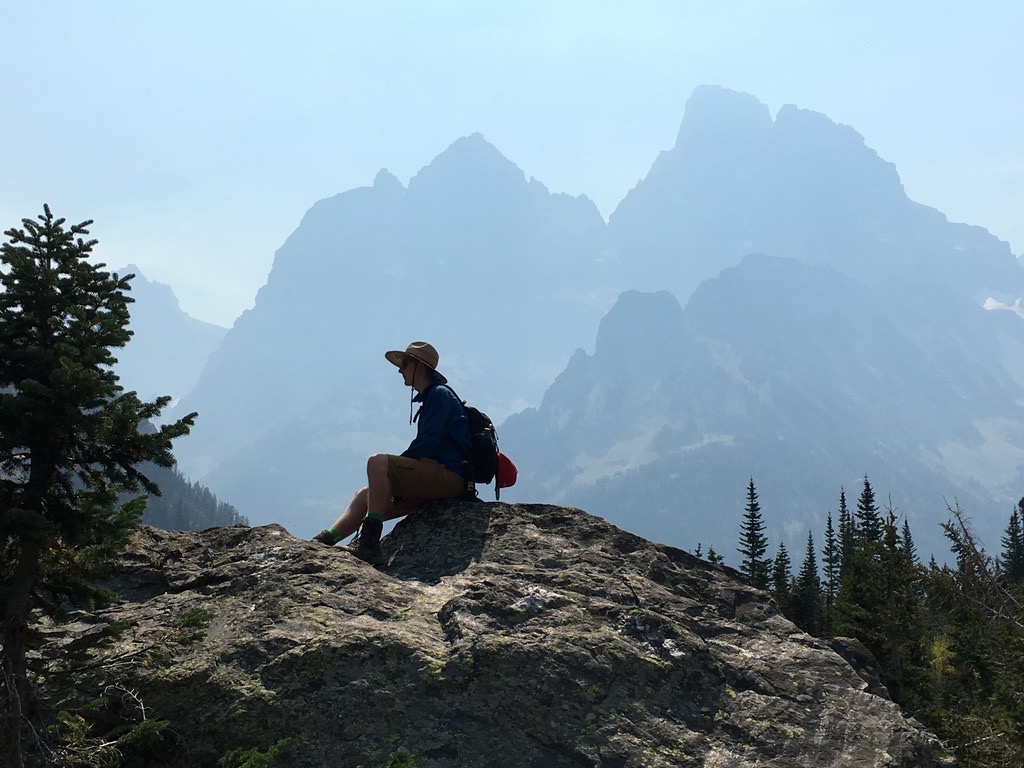
Junior Ian Renkes has a bit more complicated of a story. His mother and father lived in Jackson Hole Wyoming, the “Beverly Hills of Wyoming,” as Renkes described it. However, Renkes’ father, worked as Attorney General for Alaska, went on for a stint in the private sector, and then moved to D.C. to work for the government. Renkes’ mom decided to stay in Wyoming because she liked her job as a shooting instructor and the community.
“We really enjoyed the community where we are in Wyoming. That was probably one of the biggest reasons we didn’t move,” Renkes said. “Moving to Virginia would have been tough not only because of the ties but also the uncertainty of how long this government job would last given my dad’s goals and future.”
The family will ultimately end up back together, as Renkes’ father has taken a job that allows him to spend more time in Wyoming. Though moving and staying always carry a host of influences and causes, Renkes was sure to mention that the pace of life in Wyoming made a difference.
“I was late to school because a couple of these ranchers had cattle that had gotten onto the highway,” he said. “Trying to get through the cattle was a Ferrari. There are two diametrically opposed cultures in Jackson Hole. We’re definitely with the ranchers. That’s more of who we are. They’re the people we assimilate with the best, which is also part of why we don’t want to move to a big city. We feel more at home in Wyoming than in the middle of a big city.”
