
It was a sunny September morning in 1945. Along with the thousands of spectators that lined the streets the whole world was watching. A lone plane soared overhead. As it passed by, the spectators looked on at it, as they had been accustomed to do for months now. But, for the first time, it was not in fear, rather, in wonder. As thousands of Japanese civilians looked on, the lone plane, a B-29 Superfortress, made a low pass over Tokyo Bay, flying by the USS Missouri before continuing inland. Minutes later a few more flew by, then more, and even more, until the sky was filled with hundreds of B-29s. It was a show of force never seen before or since. It was, for the Japanese onlookers, proof of the inevitability of what was occurring simultaneously aboard the USS Missouri: the defeat of Imperial Japan, of which the B-29 was the largest contributor.
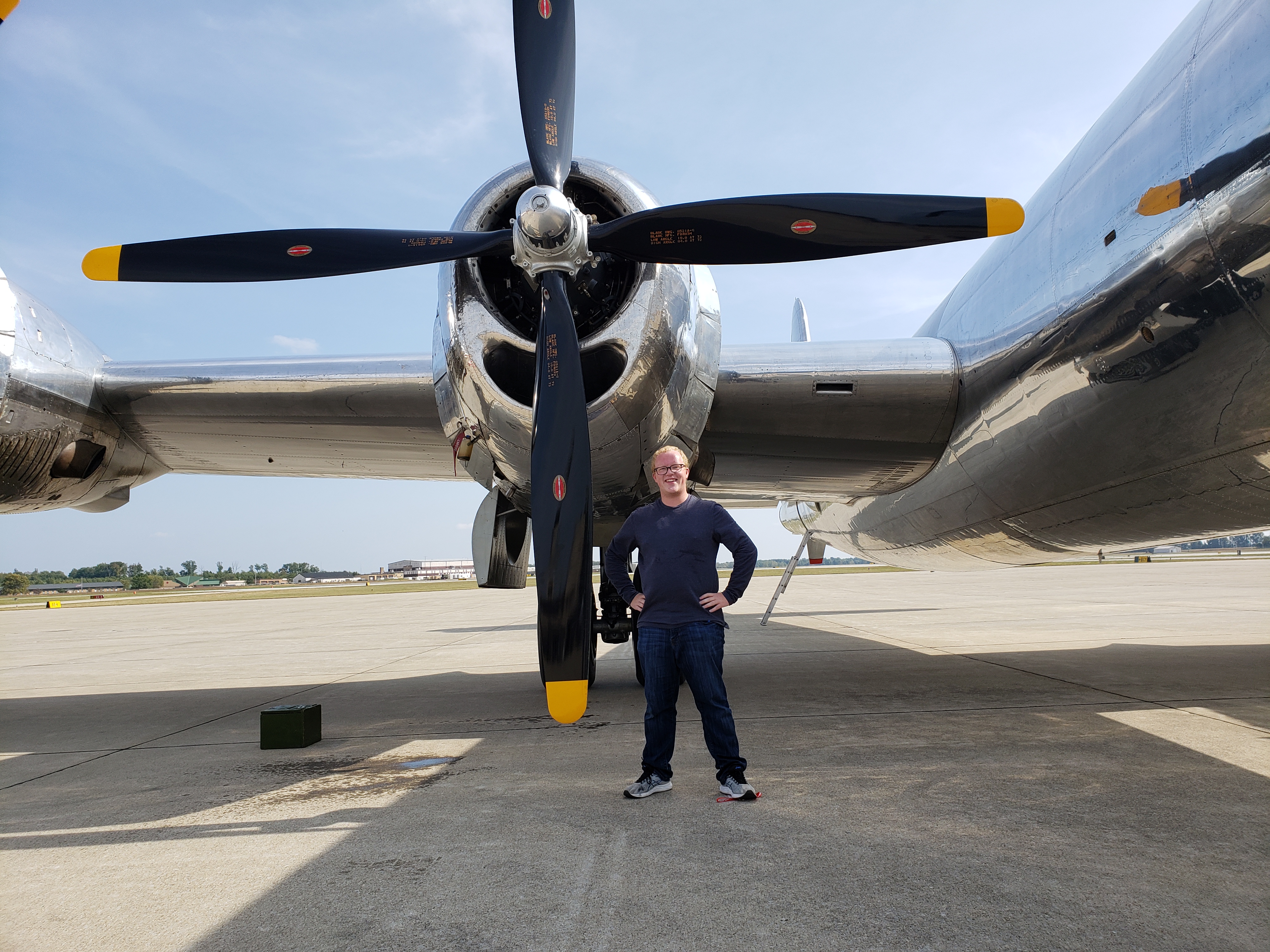
On Sept. 27 I had the chance to buy a ticket and fly on board one of two remaining operational B-29s while it was in Terre Haute, Indiana. The development and service of the B-29 is one of the greatest stories of American ingenuity in World War II, and as I listened from the gunner’s seat to the four engines rev up, I couldn’t help but feel that I was becoming the latest part of the long and storied history of the B-29.
The B-29 first took shape at Boeing’s offices in Seattle in 1940, and first flew in 1942. It was designed for one task: bombing Japan. When it entered service in 1943 it was the most advanced plane in the world. Because it was the first ever pressurized aircraft, it could operate upwards of 30,000 feet, whereas most planes of the period could barely pass 25,000 feet. Boeing accomplished this by splitting the plane into three pressurized compartments. One in the cockpit and one in the gunner’s compartment just aft of the bomb-bay were connected by a 40-foot-long crawl-tube, then the third compartment in the rear was for the tail gunner.
On my flight I sat in the gunner’s compartment, where I marvelled at the B-29’s defenses. It’s guns were remotely controlled and targeting computers (the world’s first) ensured no Japanese fighter was safe from return fire. Gunners aimed using sights positioned in blisters that protruded from the plane to give them the best possible view of the enemy.
After we took off I was able to explore the compartment and see the gunner’s stations before coming upon the sealed hatch leading to the bomb bay. It was only then, when I saw the immense size of it, that I grasped the plane’s true innovation: it could carry more bombs (ten tons of them) higher, faster, and farther than any other bomber in WWII. The four engines were specially designed to accomplish this, with each engine outputting over 2000 horsepower.
All this came at a cost, however: it was the most expensive weapons system developed during the war. Development alone cost over $2 billion, twice as much as the atom bombs it would later drop on Japan.
As I looked out over the landscape of Indiana below, I couldn’t help but imagine what it must have looked like below on a given day in 1945, when B-29s flew in formations of over a thousand in the skies above Japan. Due to its immense cost, the US Army Air Forces had much to prove when they arrived in the Marianas in late 1944, and the stakes could not have been higher: success meant the defeat of Japan, failure, the death of an estimated 1,000,000 American troops, 500,000 Commonwealth troops, and countless millions more Japanese soldiers and civilians.
Initially they tried using their superior technology to achieve success, flying at high altitude and at high speed over their targets in Japan. However, the winds of the jetstream, Japanese flak and fighters, and inexperienced crews severely reduced accuracy. Regularly, as little as 1 percent of the bombs landed on target. Something needed to change…fast.
So, change it did, and in Jan. of 1945 a new commander arrived on the scene: Curtis LeMay. After witnessing the problems for himself, LeMay radically changed strategies: they would fly at low altitude (5,000 feet or less), at night, and use incendiary bombs rather than high-explosive bombs. On the night of March 9-10, 1945 LeMay launched the first of these firebombing missions, with immediate success. Sixteen square miles of Tokyo was destroyed in one night.
Crews, looking on at the destruction from the same vantage point I had on my flight, returned to their bases with their hands shaking in shock. However, the new tactic had proven very effective, and henceforth firebombing would be the key to success for LeMay and the B-29s. In six months, B-29s leveled 70 percent of Japan’s cities, as well as dropping mines in Japanese waters that sank 25 percent of her shipping, as well as bombing countless airfields, railroads, factories, and more. It was the most ruthless and effective aerial bombardment in history, and it was capped off at the end by two atomic blasts over Hiroshima and Nagasaki that, along with what LeMay had already done, forced Japan to surrender. Although it had come at an immense cost in both money and lives, the B-29 proved its worth.
After the war the B-29s served in Korea and elsewhere until the last of them were retired in the 1960s. A handful went to museums, most to scrap, and the rest to bombing ranges to be used for target practice. The once proud B-29 force that had, on Sept. 2, 1945, flown over Tokyo Bay numbering over a thousand, had become a shell of its former self.
For many veterans, it was a disgrace to see their beloved planes be used for target practice, and efforts were made to get a B-29 flying again to showcase at least a portion of what had defeated Japan. The first, named “Fifi,” was rescued from China Lake, California in 1971 and began flying later that year. For many years it was the only flying Superfortress, until, in 2000, another plane was rescued from China Lake. This plane, named “Doc” (in a squadron whose planes were named for Snow White and the seven dwarves), was restored in Wichita, Kansas, the site of an original B-29 factory. It flew once again in 2017 and now, along with Fifi, tours the US sharing the history of the B-29.
Flying in Doc and hearing the roar the engines, the climbing around through narrow corridors while the plane shook and rattled stealing my balance, looking out the same windows that crews 75 years ago would have looked out of to see Japan, and experiencing many other small aspects of what it was like for those crews on their 16 hour missions to and from Japan was an honor and a privilege. As we commemorate the 75th anniversary of the surrender of Japan, it’s important not to overlook the planes and crews that made it happen. Doc and Fifi tell their stories in the most unique and insightful way possible: by allowing you to live it, even if only for a short while. If you would like to take a ride on Doc or Fifi, they tour the country every summer. Tickets for hour-long rides are sold online through their websites starting at around $600 for a gunner’s seat in the rear compartment. If you ever find yourself at the right place at the right time and with enough money, I cannot recommend it enough. If you can’t afford the ride, even watching a B-29 take off and fly is an amazing experience.
