
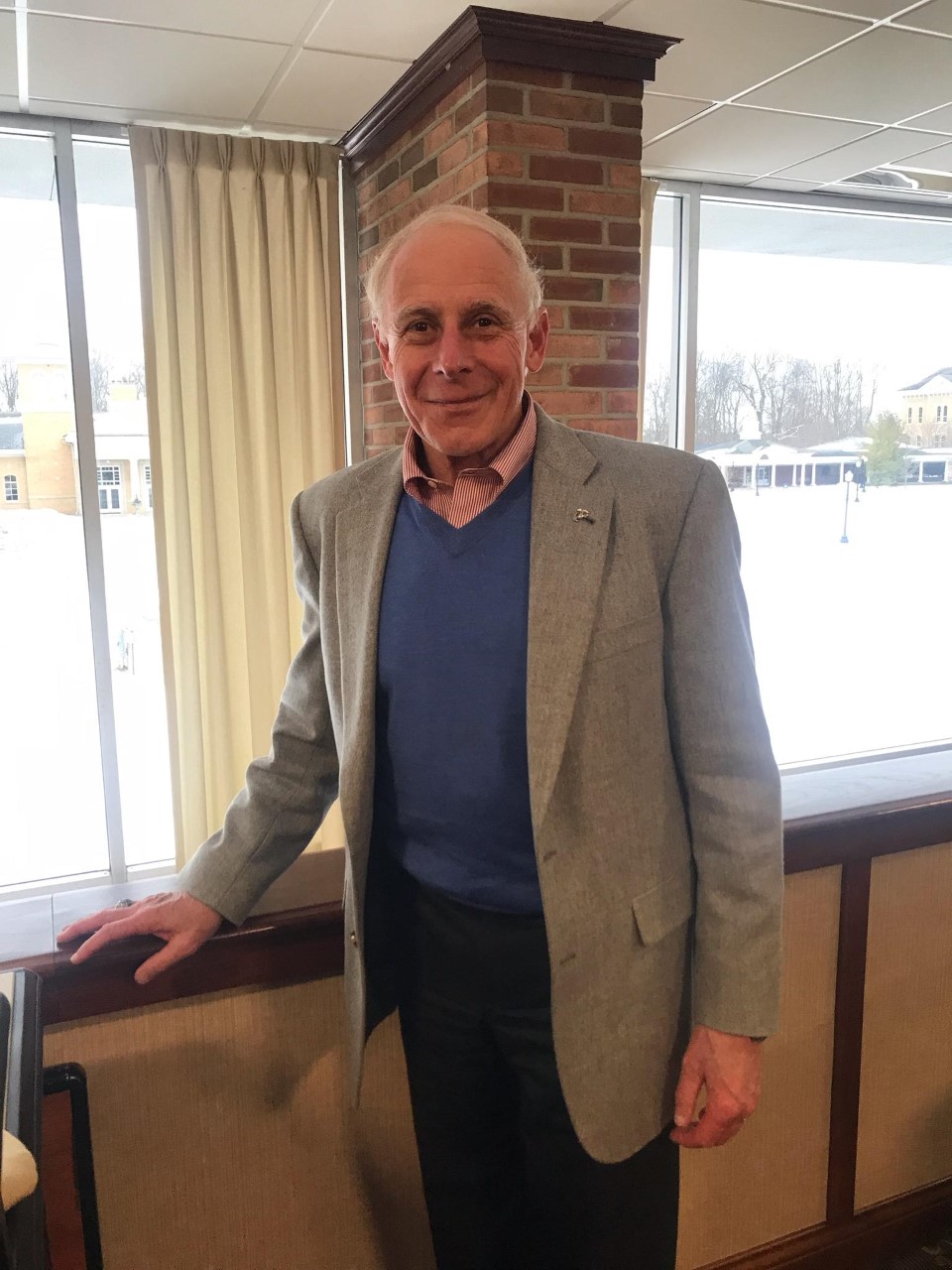
Why did you choose this path, knowing that you would have to sacrifice years of your life to service for your country?
My dad had fought in World War Two in Korea, and my uncle also served. I’m a baby boomer, not unlike how Victor David Hanson describes growing up, observing his dad and all of his uncles giving years of their lives to serving in the military. The military seemed like the natural thing to do. I saw the nature of being a Marine, and I was attracted to the complexities and the demands and the challenges, including the risks.
How has being in the military affected your idea of what it means to be an American?
I’ve been around the world a bit, and I’ve seen other places. I know the great difference between what it is to live here and to have the opportunities and the privileges granted to us as a consequence of the Constitution, and as a consequence of those who formed our country. You can easily take it for granted. I have been in the Marine Corps for over 30 years, and once, as I was reviewing one of the class profiles, heading out to a first class, I thought, “What a remarkable group of young people who have chosen to sere our country as Marines in a time of war.” I was humbled by that. So, I guess I see being American as a privilege. I also see that being an American is a responsibility, one that was significant enough that it warranted my time and attention, my adult life.
What are traits that you believe are necessary for a leader to have?
The Marine Corps has distilled the leadership traits of integrity, courage, and decisiveness. The leaders are exceptional, and they’ve stood the test of time, along with defining who we are individually and collectively. I really believe that it is more than a trait, it is a behavior. It’s modeling and providing the example. It really is a practice of behavior by which nobody should ever question who or what you are, for the behavior of the leader should say it all. You measure people against what they do, and not just against what they say.
What is the importance of men being able to trust their leaders in the Marine Corps?
In the business where people are expected to sacrifice and put others ahead of themselves, any hesitation, or doubt, creates massive problems. When time is of the essence, when action has to be immediate and you can’t stop, if I start doubting your values, I am at risk, not because of the circumstances, but because I don’t have confidence in you and I don’t trust you. Once, when I was an operations officer of an infantry regiment, I had two commanding officers. They could’t have been more different in how they did business. I mean, dramatically different. I trusted them implicitly, and I would unhesitatingly act on anything they said, without any question, because I had that much confidence in them. It was trust. You absolutely have to go forward with the thought that whatever you are being told by your leaders, it is for your best, regardless of the risk.
How has your faith in Christ affected your leadership and your service in the military?
There was an alignment and a consistency that my faith gave me that reinforced me being the best that I could be. And being anything less than the best I could be wasn’t good enough. Because of my faith in God, expectations went even higher. And instead of just being a good leader, I really sought to model in my professional life and personal life those things that my faith taught me were right. The perfect model of leadership is Christ, and seeking to model ourselves after Him is a tremendously high challenge. It helped inspire me to higher and better performance. My faith also gave me greater compassion and empathy and affection in dealing with Marines individually and collectively.
Is there any advice that you would give to a Hillsdale student considering giving their lives to service in the military?
I think that students here need to grasp that they are being instilled with the knowledge of how to think. That is what we seek in leaders in the Marine Corps. When we hire officers, we hire officers to make decisions. As a senior, I have come to appreciate that you can always find a lot of hard guys. It’s better to have smart guys. And the more intelligent the Marine, not only is there a greater likelihood for success in the mission, but there is also a greater likelihood that the other marines will be taken care of in the process.
