
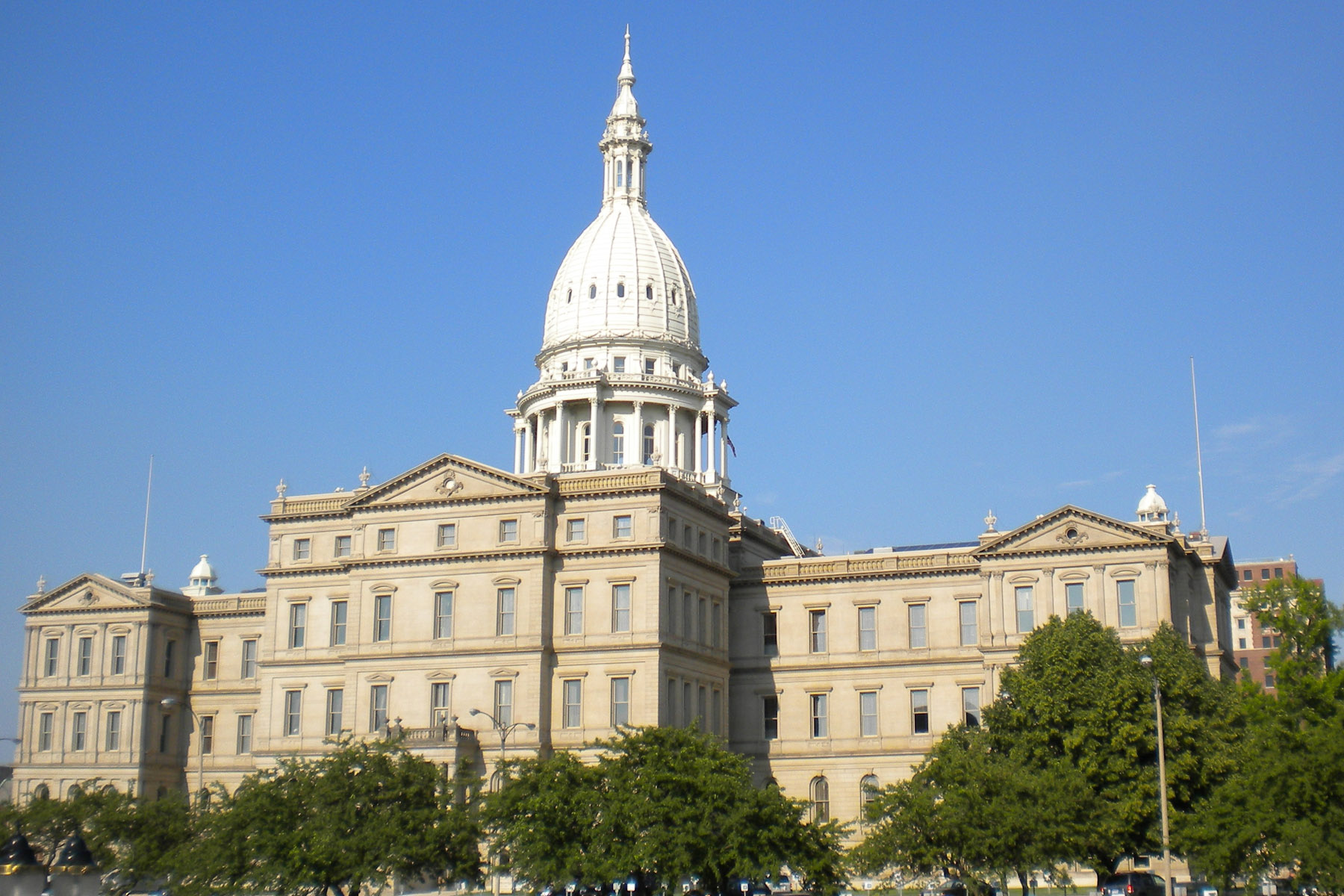
Michigan placed 38th in the country in the annual Truth in Accounting’s Financial State of the States report, which was released in September. Michigan received a “D” grade for its accounting practices.
The report says Michigan’s $5 billion in debt has not been addressed and would result in a $17,000 burden for each taxpayer in the state.
Truth in Accounting is a nonprofit, nonpartisan organization that has released this report for the past 10 years, highlighting many states’ illegitimate bookkeeping practices. The report says 40 states did not have enough money to cover its expenditures in fiscal year 2018, which is required by law in 49 states. The report claims that states will often hide or underreport expenditures in order to appear as if they are law-abiding.
Bill Bergman, director of research for Truth in Accounting, said Michigan has made improvements over the past 10 years and has risen consistently since its 2012, 44th-place ranking.
“Once you’ve dug a hole, the first thing you have to do is stop digging. And Michigan has, for the large part, stopped digging the hole,” Bergman said.
The states received a grade-ranking based on the state’s taxpayer burden or taxpayer surplus. A “D” ranking indicates a per-taxpayer burden of between $5,000 and $20,000.
Bergman said that although the group’s grading system is arbitrary, it predicts the states’ actual accounting standings better than the credit rating system — which, like a personal credit rating, estimates the state’s debt and its ability to pay the debt back. And Michigan’s credit rating has stayed consistent over the past ten years.
“Michigan state government has done a good job of ‘walking the walk’ and keeping expenses lower than overall revenue,” Bergman said. “Illinois has not done that in five of the past seven years, so Michigan has a lot to be thankful for.
Hillsdale College Professor of Economics and Political Economy Gary Wolfram said he was concerned that Michigan’s 38th-place ranking is misleading because it fails to take into account the steps Michigan has already taken to address their unfunded liability problem.
Bergman, however, said the grades are not based on yearly change or improvements.
“They take everything, including past conditions, into account.”
The total state budget deficit for all 50 states in fiscal year 2018 was $1.5 trillion, which decreased by $62.6 billion from fiscal year 2017, according to the report. Two of the largest categories of this debt are unfunded pension payments, at $824 billion, and other post-employment benefits (OPEB) at $664.6 billion.
Hillsdale City Manager David Mackie said the issue is more of a statewide problem than a city problem. Hillsdale, for example, has roughly 80-85% of its liabilities, city retirement plans, paid for, though it might change a point or two based on the health of the stock market. Other small cities and communities are the same, according to Mackie.
“They’ll have to pay off the debt some day,” Mackie said.
