
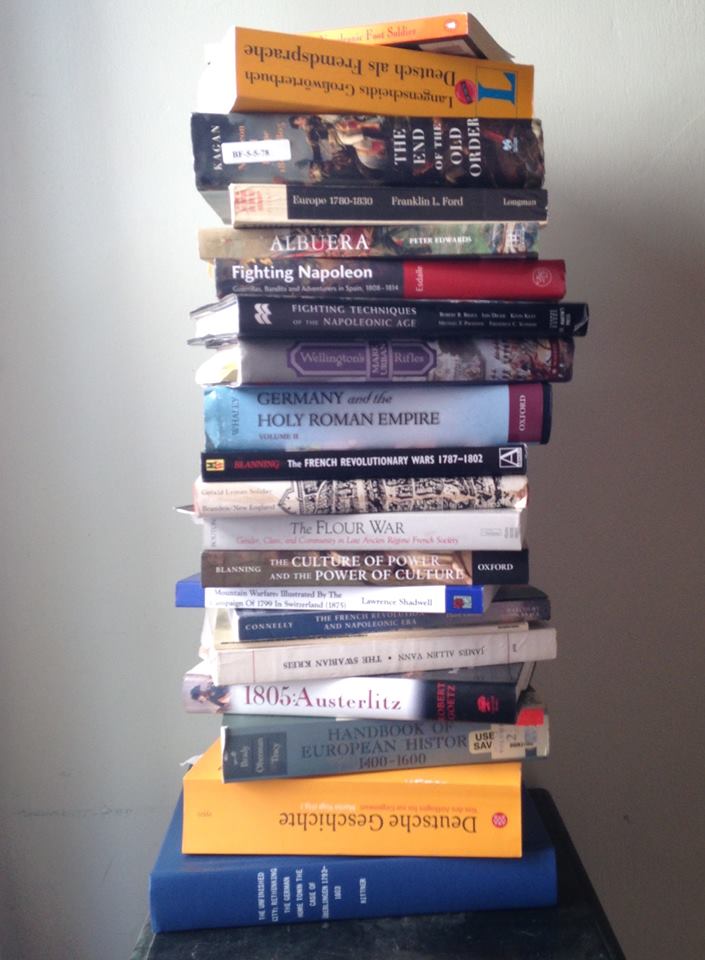
Psychology poses an important question: Should it be considered a study of the sciences or humanities? The answer seems obvious: Human beings can neither be explained by wholly scientific or wholly subjective means, and therefore a study of human beings would be incomplete without both approaches. There is a complexity to our nature that makes us challenging and unique, and to embrace one facet of humanity at the exclusion of another diminishes the beauty of what it is to participate in this life.
Hillsdale students should apply this principle to their academic studies: It is a weakness to value the contributions of one’s own discipline at the exclusion of others. Hillsdale students should take advantage of the opportunity to learn from academic studies other than their own major — only then will we be well-rounded.
In my three years at Hillsdale College, I have frequently encountered the “If you’re a hammer, everything looks like a nail” phenomenon. As I’ve moved through various introduction courses in the core curriculum, it seems that the student of any discipline believes his teachings and worldview are the ones best equipped to explain policy solutions and questions about human nature. And when students begin to compare their areas of studies to other, the superiority complex progresses. I’ve fell into the same trap — it’s easy to conclude that one major is superior to the others in its ability to provide the correct answers. But one introduction course is not enough to adequately judge what any particular academic field has to offer.
As an economics major and a politics minor, I have often felt a tension between the two departments. At times, it seems that politics students look down on economics as a means to an end. Economists are too focused on passionless ends like efficiency and profit, they argue. On the other hand, economics students see politics and many other humanities majors as flimsy, malleable, and too subjective. Economics students tend to think there shouldn’t be a discussion about most policy questions beyond an inquiry into the most efficient, free-market-promoting plan; but those who study politics see this view as rigid, with an inability to prudently recognize that a cookie cutter solution doesn’t always work.
But human beings are complex. While politics and economics often seem at odds with each other, both contribute an important insight into our nature and what is good for us. Like psychology, both parts are vital for the whole. We are both rational and emotional, educated and rationally ignorant, self-interested and called to serve bigger causes. The data explained and theories posited by economics can and should provide great assistance to questions about policy, but an understanding of political necessity and practicality must play a factor in decision-making. Likewise, the ability to understand ripple effects in markets and the difficulty of anticipating the net consequences of policies can be informative for politics students who believe that one change can be made in isolation without having unintended repercussions. These two fields, when taken together, allow for a more holistic and useful understanding of human beings and their choices . By allowing them to build on each other and wrestling with their seemingly conflicting conclusions, one will be able develop a more nuanced understanding of human nature in general, but also how to effectively work with it in particular circumstances.
There is a proper place for all disciplines and their considerations in a well-rounded understanding of human beings and our place within the world, but there needs to exist within each discipline, and chiefly within each individual, a recognition of the limitations of any isolated ideology to address the complex questions of humanity. Politics or economics alone will not solve our problems, and neither will psychology, philosophy, or any other field by itself. Not everything is a nail, so we need to stop thinking of ourselves as the right hammer.
Guenevere Hellickson is a George Washington Fellow and a junior studying Economics.
