
The first pea soup I ever ate was George Washington’s pea soup. I’ve never had much of a taste for anyone else’s.
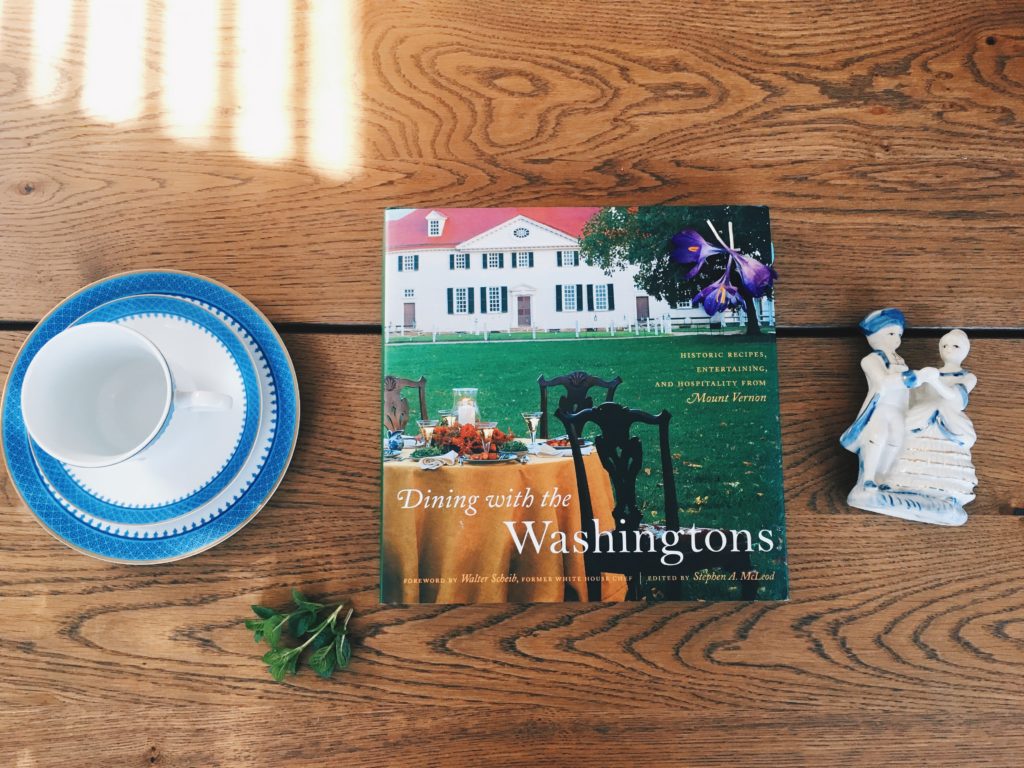
On one of multiple summer road trips to Virginia, my family toured Mount Vernon, the beautiful historic home of the first American president George Washington. Rather unsurprisingly, when perusing the gift shop, I asked my dad to buy “Dining with the Washingtons,” a cookbook edited by Stephen A. McLeod and published by the Mount Vernon Ladies’ Association in 2011.
The cookbook, composed of recipes the Washingtons either used or were likely to have used, boasts not only historically accurate recipes, but also stories about the guests who dined with the Washingtons, what dishes would traditionally be served together, and what a Washington tablescape would have looked like.
Many of Washington’s family recipes come from “The Art of Cookery,” which was first published in 1747, or “The Ladies Companion,” from 1753 — but though Martha Washington was familiar with them, she followed only a few of the recipes to the letter, filling her own manuscript cookbook which she would later pass to her granddaughter Nelly Custis, and which the authors consulted heavily in putting together the cookbook.
The book dedicates a whole section to the workings of the Mount Vernon kitchen, too, which sprang to life at 4:30 each morning, and of which Martha Washington was an essential part, though she did not do all her own cooking.
George Washington’s pea soup is so much more than the modern dish of lumpy, green-grey slop that most people envision when they hear the words “pea soup.” It’s vibrant green, chock full of mint and spinach, and garnished with fresh yellow calendula petals, also known as “pot marigolds.” The tangy bite of mace weaves between the fresh vegetables and marries with butter and onions in each sweet, clean bite.
(The recipe is originally French, where peas were sown in boxes in order to be ready in early spring, and is a reproduction of a classic Potage St. Germain.)
Fricasseed chicken is another classic we still eat today, though we’ve simplified it. Similar to a white wine chicken, fricasseed chicken is stewed in a broth mixture that includes marjoram, thyme, nutmeg and dry white wine. The leftover chicken liquids are then thickened with butter, flour, cream, and — very carefully, so that they don’t curdle — whisked eggs. The result is a rich and creamy chicken dish with a lemon-pepper flavor that lingers on the tongue.
The idea of eating the same foods the American founders ate is felicitous to say the least. It’s one of the things that make food such a pervasive medium: though recipes are recreated multiple times throughout each era, one bite of “Ragoo of Asparagus” transports you back 250 years in an instant.
And cooking with these old recipes, it’s hard to miss how little has actually changed in those two and a half centuries: at the end of the day, we all still love apple pie, even if our methods of making it are different.
“Apple pie seems to have been a favorite of George Washington,” the book editors note. “In an August 1779 letter from West Point inviting friends to dine with him, he noted that they might be treated to an apple pie. ‘[The cook] has had the surprising luck to discover that apples will make pyes,’ the general wrote.”
But what makes the Mount Vernon recipes so classic is not just their age, or even the American heritage they represent. Each are flavorful recipes in their own right, and create delicious food for any era. Like the traditional values espoused by our founding documents, good food transcends time period. What was good for them is still — serendipitously — good today.
