
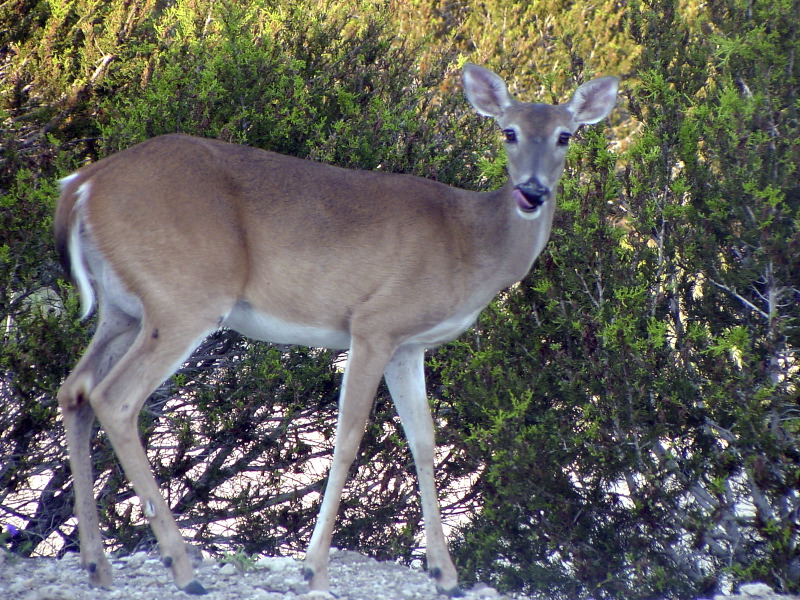
Officials are keeping their eyes on local deer as disease has spread widely throughout the country.
The Michigan Department of Natural Resources has been testing deer in Hillsdale County for chronic wasting disease — a fatal disease which can cause deer to have a “zombie-like” appearance, complete with severe malnutrition, drooling, and neurological problems — after an infected deer was found in Jackson County in July 2018.
Although no infected deer were found in Hillsdale County or neighboring Calhoun County, two infected deer have been found in Jackson County. Neither Branch County or Lenawee County, which both have adjacent border to Hillsdale County, are currently being tested.
The DNR is testing deer in Michigan as part of a management solution for chronic wasting disease, which requires any county within 10 miles of an infected deer to be tested.
CWD is in the same family as “mad-cow” disease, according to Matt Dunfee, director of special programs for the Wildlife Management Institute and CWD Alliance Coordinator. It is caused by a misfolded protein, which then duplicates, causing the animal to degenerate.
Although humans have similar proteins, it cannot spread to them, Dunfee said.
“What is different about this disease is it isn’t caused by bacteria or viruses,” Dunfee said.
Instead, CWD is spread between deer from contact with shed proteins, such as in saliva or feces. But if enough infected deer are in one area, it can spread through the environment as well. Because CWD is not alive — like a virus would be — it can be active in the open environment.
“There’s not a quick, easy answer for what CWD is,” Dunfee said.
An infected deer can not show signs of the disease for up to two years, according to Dennis Tyson, a biologist with the Department of Natural Resources. Infected deer will show signs of malnutrition, excess saliva, and neurological problems. Anyone who sees a possibly infected deer is encourage to report it to their local DNR.
Montcalm County in Michigan is currently at the heart of the CWD outbreak, with 45 infected deer found. The next-highest is Kent County, with only nine infected deer found.
“It’s important to control it in the wild, because we don’t want it to spread exponentially,” said Tyson.
To see a complete list of tested areas, visit the Michigan Department of Natural Resources website.
