
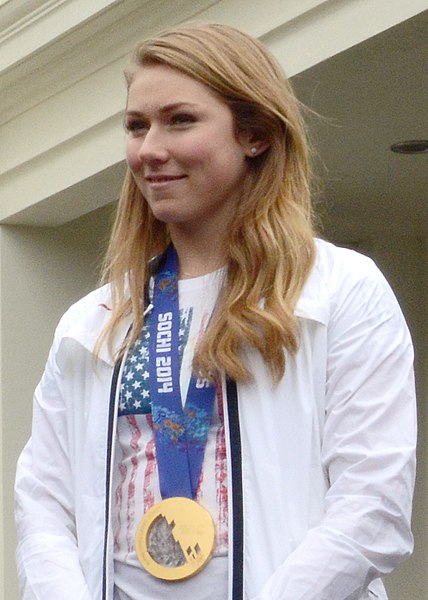
“The most important thing is that you just stay true to your own idea of what is beautiful,” said Mikaela Shiffrin, an American two-time Olympic gold medalist.
Her message on Maxim magazine’s HOT 100 list landed with a hollow, dull thud instead of the powerful, ultra-feminist punch it tried to pack. Since 2000, Maxim touts a list of the “World’s Sexiest Women” based on physical and superficial standards. When asked to participate in Maxim’s 2018 shoot, Shiffrin opted to wear her ski jacket and gold medals over a bikini or dress because she rejects the idea that appearances alone makes a woman “sexy.” Her great declaration headlined on CNN, but like so many narratives that repeat themselves and have little insight, her argument falls flat.
Throughout her on-camera interview, Shiffrin equated women photographing in their bikinis with societal objectification. She fell into the dangerous assumption that because society associates physical demeanor with sexiness, it somehow pressures these women into showing off their physique. It’s hard to believe that all of these women would willingly participate in something they felt wholly degraded by (which is, after all, the essence of objectification). In fact, these women seemed flattered to receive recognition for their beauty along with their accomplishments.
Shiffrin also assumed that she is making some sort of an impact on the culture’s perception of “hot” or “sexy” by refusing to wear a bikini. But she is not a role model — she is a puppet for the ruthless world of celebrity. At the end of the day, Shiffrin in her ski jacket still made Maxim’s HOT 100 because her beauty, success, and fame allowed her to remain a viable candidate for their magazine’s aesthetic.
If anything, Shiffrin’s statement was an even bigger gain for Maxim’s brand. The magazine is able to pretend they agree that “sexy” isn’t always necessarily physical while maintaining the status-quo by filling their pages with sumptuous, lavish beauty.
Shiffrin gave them a new edge to market their magazine, which they used to preface their list:
“It would be easy to make the 2018 Maxim HOT 100 list all about physical beauty — after all, this year’s nominees have that in spades. But they’re far more than just pretty faces: The women who inspire us are multi-hyphenates, entrepreneurs, and risk-takers. Now more than ever, we need to celebrate smart, powerful women who are breaking boundaries (and looking damn good doing it).”
Maxim’s disclosure would be true if they were referring to any other list of women. Think: Maxim’s HOT 100, but without the same public faces plucked from the aisles of grocery magazines racks. A look at the HOT 100 list shows that the accomplishments and abilities of these women are secondary to the glamazon image they are truly promoting. When all the flowery language of “true beauty” tires, it’s really the physical attributes that determine who makes the cut for pop culture’s “World’s Sexiest.”
Shiffrin wanted to stay true to her own idea of beautiful, but nobody got the message. All the readers got were the typical, mind-numbing pages upon pages of beauty, and oh yeah — there’s the Olympic gold medalist, clearly there by proxy of her physical looks like the rest of them, despite showing less skin.
In a way, Shiffrin is right: Beauty doesn’t always have to be physical. But when it’s sandwiched between a glossy movie star in an evening gown and a seductive singer in a bikini, it’s hard to draw a different conclusion.
Corinne Prost is a senior studying American Studies.
