
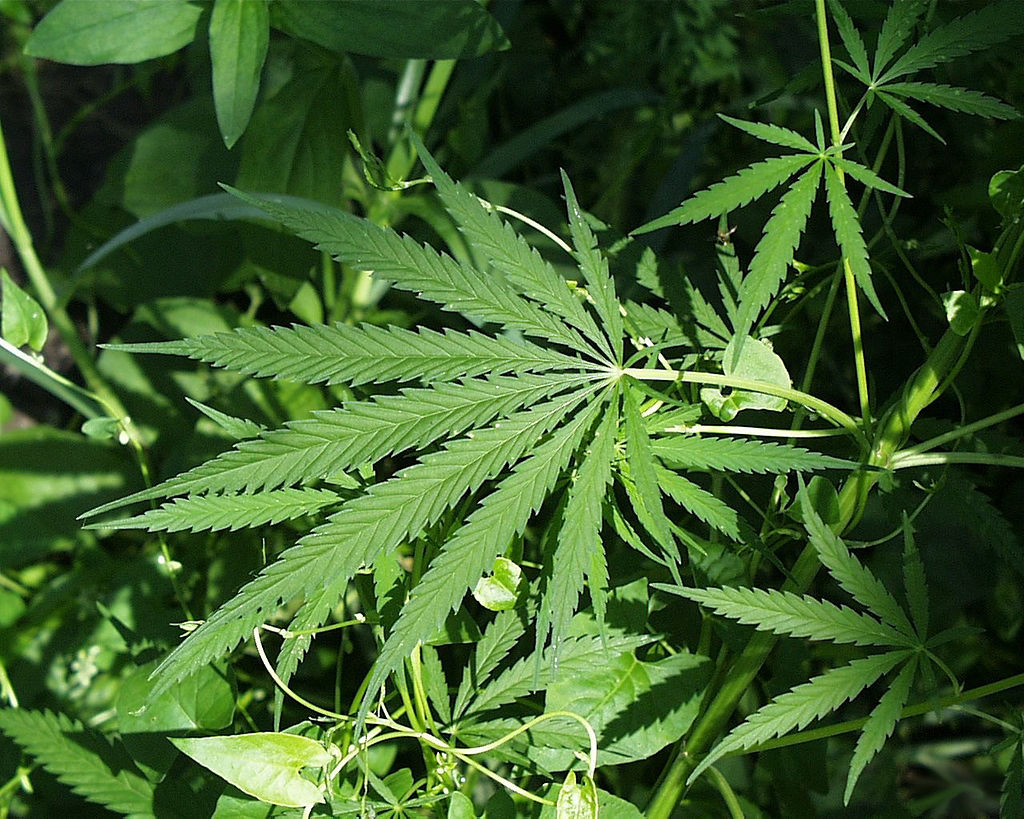
Michigan voters will decide next week whether the Great Lakes State will become the tenth state in the union to legalize recreational marijuana. Proposal 1 comes a decade after Michigan legalized medical marijuana, which will remain legal regardless of the election’s outcome.
“Our goal is to end marijuana prohibition because we feel that prohibition has been more of a problem than the substance it’s trying to protect us from,” Josh Hovey, communications director of the Coalition to Regulate Marijuana Like Alcohol, told The Collegian. “We believe marijuana should be legalized, regulated, and taxed similarly to alcohol and that adults 21 and over should have the personal liberty to choose what they put into their bodies for themselves.”
Besides ensuring individual freedom, legalization would make possible regulation that is vital for public safety, particularly among youth, Hovey said.
“It’s true that marijuana content is much stronger today than it was in the 1960s,” he said. “That’s why we should have it regulated. The state will require very clear packaging and child-proof containers. They would very strictly ban marijuana in edibles that would be appealing to children and that could be confused with non-marijuana infused candy.”
Laurie Brandes, coordinator for the Hillsdale County Substance Abuse Prevention Coalition, however, said she believes the consequences to society, especially for children, would be too great. While technically only adults ages 21 and over would be able to purchase marijuana, she’s confident this won’t stop youth from getting their hands on weed.
“For me, it’s all about our young people,” she said. “The teenage brain is not finished maturing until the age of 24 or 25, and marijuana has a very significant impact on brain development. The longer I’ve spent in the social service department, the more I think the government needs to play some role in protecting children, even if that means keeping it illegal.”
Proponents of recreational marijuana claim that legalization would deliver economic benefits, such as additional government revenue from taxing marijuana sales. They argue that the new businesses would crop up with the spread of dispensaries across the state and that the market for marijuana paraphernalia would broaden. The need for a method for law enforcement to test those driving under the influence of marijuana would also offer a significant economic incentive.
But Brandes said she fears that the proposal could actually hurt businesses and the economy. She shared the example of a local business that posted a job opening. Of the 40 people who applied, only four could pass a drug test.
“I’m very concerned that if this passes, it will limit the growth of industry because there just won’t be enough employable folks,” she said.
Brandes said she’s also skeptical whether the passage of the proposal would eliminate the black market, which proponents present as one of legalization’s biggest selling points.
“The black market won’t go away because there will still be a demand for cheaper, untaxed marijuana,” she said.
If Michigan approves the initiative, Brandes said HCSAPC will be forced to double down on its efforts to educate youth on the dangers of marijuana.
“I think the legalization of recreational marijuana sends the message that it’s not harmful,” she said. “If it passes, we’ll have to do some really, really good prevention work. But we’re asking kids to make adult decisions for themselves when they’re not developmentally there yet. Legalizing something we then tell them not to do makes prevention work very difficult.”
In addition to legalizing marijuana, the ballot initiative would allow for the cultivation of hemp. Like marijuana, hemp is part of the cannabis plant family. Yet it doesn’t contain THC, the chemical that induces the feeling of being high, and is used purely for medicinal and health purposes.
Darlene Webb, co-owner of Hillsdale’s J.R. Smoke Shop, said she supports Proposal 1 because of the additional sales opportunities it would make possible.
“If recreational marijuana is legalized, then hemp will be legalized and we can sell that in our shop,” she said. “That would help our business.”
Judge Sara Lisznyai serves on the local District Drug Court and opposes legalization for two reasons. Her first concern stems from the poor wording of the proposal, which she says lacks specifics and leaves much in question.
“I don’t think the way the statute is written would apply much regulation at all,” she said. “It would be the most lenient marijuana statute on the books in any state, even Colorado. It allows for the greatest quantity of marijuana and the most amount of people to use it.”
If the proposal passes, it will be difficult to change, requiring a two-thirds majority vote by both houses of the legislature to pass. It took 10 years to fix flaws in Michigan’s medical marijuana laws, which Lisznyai said included weaknesses similar to those in Proposal 1.
Lisznyai has a more personal basis for her opposition as well.
“My other reason has to do with the kind of cases I’ve seen in my work over the years,” she said. “I’ve done some research and what I’m finding is that a third of the people who come before me with serious drug charges are people I’ve seen for marijuana charges on an earlier occasion. That’s probably more than anything the reason why I oppose it.”
The debate over legalizing recreational marijuana has also divided Hillsdale students.
Junior Montie Montgomery, secretary for Hillsdale College Young Americans for Liberty, said he supports the initiative as a matter of principle.
“It’s just the idea of government telling you what you can and can’t put into your body that’s sort of annoying,” he said. “It’s like an overbearing mom at that point. You don’t want government to be in your living room when you’re having a party enjoying a joint.”
He added that the passage of Proposal 1 would be a boon for Michigan.
“I’m riled up about it because I feel like marijuana is a stupid thing to be illegal,” he said. “You have people getting arrested and put in jail for pot usage and you stifle an industry that could provide a really positive economic good for downtrodden and urban communities. I think this is an industry that for the benefit of society needs to be legalized.”
Jacky Eubanks, a junior politics major and economics minor, disagrees. Eubanks said she lost an entire friend group after they discovered she opposed the use and legalization of recreational marijuana. Since then, the issue has become very personal for her. She said the push for legalization reflects the moral decay in society.
“We’re becoming incredibly hedonistic,” she said. “The sole reason to smoke marijuana is because you enjoy the feeling of being high. It’s not to be creative or smarter. And if you want to feel high, you have to ask yourself if it’s to escape reality. I think that says a lot about the moral and spiritual state of our culture when we need some kind of escape from reality because we can’t handle our first-world problems.”
Michigan voters will continue to discuss and debate the pros and cons of legalization. If the proposal passes, however, it will be history in the making.
“The states were intended to be laboratories of democracy and all big changes like this happen at the state level first,” Hovey said. “This is a change that’s happening right before our eyes.”
