
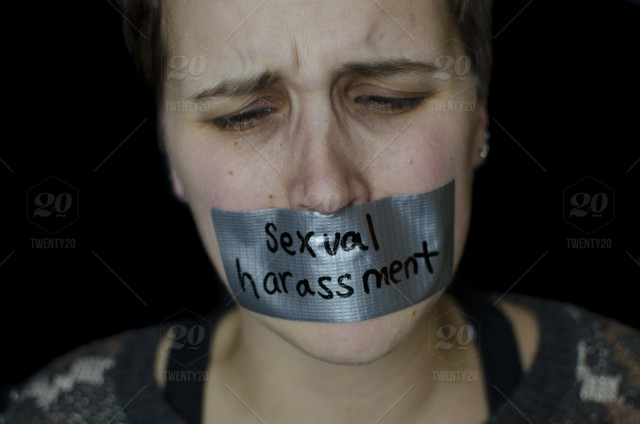
“What would you do?” Professor of Psychology Kari McArthur asked the audience.
At The Fairfield Society’s Tuesday night panel on sexual harassment in the workplace, sponsored by Lighthouse, three female professors — McArthur, Professor of French Sherri Rose, and Professor of Biology Angie Pytel — shared anecdotal experience and professional advice with, and answered public questions from, the 40 listeners.
McArthur distinguished between quid-pro-quo (sexual favors for job security, for example) and a hostile work environment. She recalled experiencing the latter while working in a male-dominated field — hearing lewd jokes and seeing calendars with nude women.
“Things were just different then,” she said. “Maybe things are still there; maybe they’re just more covert.”
McArthur provided a step-by-step approach: First, document the “who, what, when, where, why, and how” of the incident.Then, only if it’s safe, confront the harasser. Third, check to see if the company has an anti-harassment policy. If not, talk with a supervisor. Fourth, report within 48 hours. Finally, know that the Equal Employment Opportunity Commission protects accusers between 180 and 300 days, and if they find just cause, will supply lawyers.
Pytel said because women have historically been treated as objects, not as transcendent beings with their own minds, some men can’t parse out that sexual desire which objectifies women.
She said that a solution would require understanding how women feel when they’re objectified, and understanding how men think and how to react to that.
“As long as there’s mutual respect, sexual harassment isn’t going to happen,” Pytel said.
McArthur and Rose both addressed the bystander effect, where the more people witness an incident, the less likely people are to report it.
“One takeaway from the #MeToo movement is the importance of speaking up,” Rose added. “Staying silent is a form of complicity.”
Pytel also gave concrete tips for being aware of one’s surroundings, like making eye contact with people or unplugging earbuds: “This place is a good place to work, but not every place is wonderful, so just be careful.”
After the talk, senior Monicah Wanjiru said she came because of the national discussion.
“Large, mostly liberal schools deal with social justice issues sometimes more than a school like this would, and sometimes completely ignore the topic because the other side is dealing with it, maybe even wrongly,” Wanjiru said.
Wanjiru, who said she comes from a culture that is more vocal about sexual harassment than Hillsdale is, suggested formal conversations at orientation.
“I want to see Hillsdale start a conversation on that, and not just be silent,” Wanjiru said. “I would want to see the administration more vocal about this.”
Fairfield Society co-president sophomore Madeline Hedrick said several people talked to her afterward, grateful for the information.
“We thought that narrowing it down to sexual harassment in the workplace would make it applicable for us, especially because we are such a driven campus of young, current or future professionals,” Hedrick said.
Sophomore Mary Kate Boyle, the communications director of the Fairfield Society, said students at Hillsdale are lucky to be in an environment that’s generally safe and respectful, but that the sense of security can cause people to think, “It can’t happen here.”
“I think we want people to be aware of their surroundings, and we want people to be thoughtful about the way they treat each other and what it’s like when they’re not in a bubble like Hillsdale.”
Editor’s note: If you have experienced sexual harassment or know of someone who has, please, document the incident(s), talk to a counselor, and reach out to the deans’ office. The college’s policy regarding sexual harassment is available on the website.
