
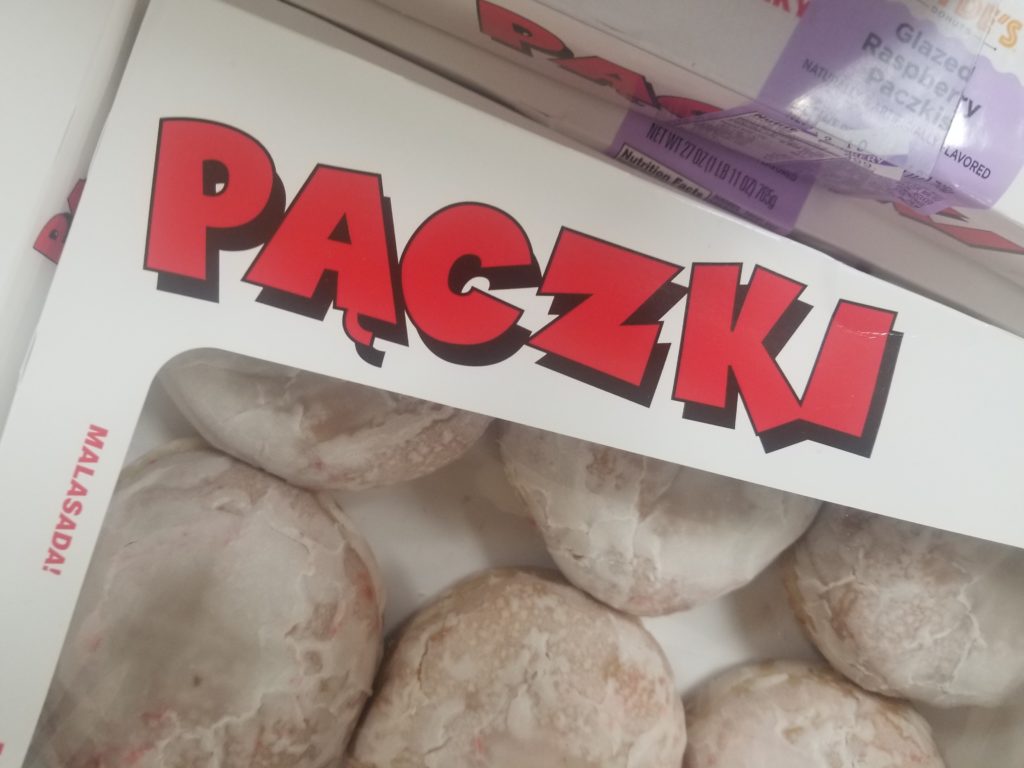
Fat Tuesday in Michigan is just that with pączki.
Packed with sugar, butter, and lard, these Polish “packages” are special doughnuts stuffed with cream or fruit. At this time of year, bakeries mostly in the Midwest sell the pastries, a tradition born from the large number of Polish immigrants who came to cities such as Detroit and Chicago decades ago.
“The Polish brought it here, and it’s fostered and grown into a tradition,” said Greg Kowalski, the chairman of the historical commission of Hamtramck, Michigan, a 2 square-mile city surrounded by Detroit that is known for its Pączki Day celebration.
The holiday marks the final day before Ash Wednesday. Traditionally, people in Poland would make the doughnuts to use up any rich ingredients prior to the beginning of the Lenten fasting season.
Today, many people still celebrate Mardi Gras with the dessert, even lining up at 2 or 3 a.m. in the morning outside bakeries as they have since the 1910s.
To preserve the tradition, Hamtramck began a festival in honor of Pączki Day, complete with a parade and a 5K run in which participants cross the finish line to receive the doughnut and a beer. Hamtramck once had the second largest Polish population in the United States, though now it is the most diverse city in Michigan, according to Kowalski.
“Bakeries go crazy and are open all night,” Kowalski said. “People will line up outside them, even when it’s below zero.”
Hillsdalians can purchase pączki, too. Kroger, Market House, and Wal-Mart all are selling pączki now, and the Jonesville Bakery will do so on Monday and Tuesday.
Kroger also is holding pączki “engagement events” for people customize the flavors in a box of four pączki at 10 a.m. to 4 p.m. on Sunday, 8 a.m. to 8 p.m. on Monday, and 6 a.m. to 4 p.m. on Tuesday.
Kowalski, however, insisted that there is nothing like a Hamtramck pączek.
“We’ve got the reputation,” he said. “They’ve got to be packed with like 1,000 calories.”
